Agents
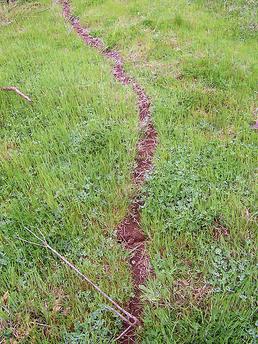
An agent-based model (also sometimes related to the term multi-agent system or multi-agent simulation) is a class of computational models for simulating the actions and interactions of autonomous agents (both individual or collective entities such as organizations or groups) with a view to assessing their effects on the system as a whole. It combines elements of game theory, complex systems, emergence, computational sociology, multi-agent systems, and evolutionary programming. Monte Carlo Methods are used to introduce randomness. ABM's are also called individual-based models. (More from Wikipedia).
Image shows an ant trail.
For queries about this topic, contact Richard Watson.
View the calendar of events relating to this topic.
Projects
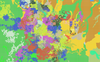
A spatially-explicit agent-based model of jaguar population dynamics
Jason Noble, Patrick Doncaster (Investigators), Angela Watkins
A single species spatially-explicit agent-based model has been developed that illustrates the role of simulation modelling, integrated with an adapted least-cost modelling approach and real-world geographical data, in exploring jaguar population dynamics.
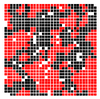
Adding social ties to the Schelling model
Seth Bullock, Sally Brailsford (Investigators), Elisabeth zu-Erbach-Schoenberg
The Schelling model is an abstract model for segregation in
a spatially arranged population. We extended the traditional model by the addition of a dynamic social network. The social network influences the spatial dynamics of agents moving on the grid by changing the agents’ evaluation of their neighbourhood. In turn, the spatial arrangement influences the change of the social network.

Agent-Based Modelling of High Frequency Traders
Frank McGroarty, Enrico Gerding (Investigators), Alvaro Perez-Diaz
Agent-Based Modelling of High Frequency Traders
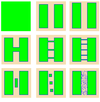
Agent-based simulations of jaguar movements through conservation corridors
Jason Noble, Patrick Doncaster (Investigators), Angela Watkins
We present an agent-based model of jaguars (Panthera onca),
scaled for fragmented habitat in Belize where proposals already exist for creating a jaguar corridor. We use a least cost approach to simulate movement paths through alternative possible landscapes.
Amorphous Computation, Random Graphs and Complex Biological Networks
Seth Bullock (Investigator)
This interdisciplinary research collaboration arose within the Simple Models of Complex Networks research cluster funded by the EPSRC www.epsrca.ac.uk through the Novel Computation Initiative. Here, leading groups from the Universities of Leeds, Sheffield, Nottingham, Southampton, Royal Holloway and King’s College and industrial partners BT are brought together for the first time to develop novel amorphous computation methods based on the theory of random graphs.
An Evolutionary Economic Approach to the Household?
Jason Hilton
The household is a fundamental societal unit. In a huge array of contexts, our understanding of social behaviour relies on an interpretation of how decision are taken at the household level.This work aims to model individual decision-making and interactions between individuals explicitly within the framework of agent-based modelling, following the work of Potts (2000). Potts describes how economic problems can better be dealt with by considering how agents with incomplete, evolving preferences in the form of decision rules interact on a network, and how they cooperate and form ties to produce combinatorial technologies. Following the work of Gary Becker, he then considers how this ostensibly economic framework might hypothetically describe partnership search and household formation and dissolution.

An investigation in to the effects of information provision on driver learning
Ben Waterson, Hans Fangohr (Investigators), James Snowdon
This work aims to better understand and model the role of individual learning and experience on driver route choice. We intend to demonstrate that vehicle-driver agent based models stand alone in being able to capture the complex reciprocal interactions between drivers and their environment, and allow us to incorporate the effects of prior knowledge from previous trips and advice from official information sources and social networks.

An Investigation into the Cascade Effect of Mergers on the Global Financial Markets
Seth Bullock, Antonella Ianni (Investigators), Camillia Zedan
An investigation into the external effects that horizontal mergers have on the interconnected global markets.
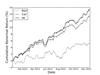
Automated Algorithmic Trading with Intelligent Execution
Frank McGroarty, Enrico Gerding (Investigators), Ash Booth
In this project, we introduce the first fully automated trading system for real-world stock trading that uses time-adaptive execution algorithm to minimise market impact while increasing profitability com- pared to benchmark strategies.
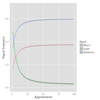
Bayesian Agents as Models for the Disclosure Behaviour of Pregnant Drinkers
Seth Bullock, Jakub Bijak (Investigators), Jonathan Gray
Examining the feasibility of signalling games, played by Bayesian decision theoretic agents as a model for the disclosure of drinking behaviour by pregnant women to their midwives.
Bioclimatic Architecture
Seth Bullock (Investigator), Nicholas Hill
This was a review report on bioclimatic architecture and how such architecture may be designed by agent-based models inspired by the building behaviour of insects.

Care Life Cycle
Seth Bullock, Sally Brailsford, Jason Noble, Jakub Bijak (Investigators), Elisabeth zu-Erbach-Schoenberg, Jason Hilton, Jonathan Gray
This research programme brings together teams of researchers from social sciences, management science and complexity science to develop a suite of models representing the socio-economic and demographic processes and organisations implicated in the UK’s health and social care provision. Integral to the project is working with our partners in the public sector and communicating the results of these models to policymakers allowing them to effectively plan for the future.
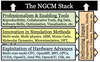
Centre for Doctoral Training in Next Generation Computational Modelling
Hans Fangohr, Ian Hawke, Peter Horak (Investigators), Susanne Ufermann Fangohr, Thorsten Wittemeier, Kieran Selvon, Alvaro Perez-Diaz, David Lusher, Ashley Setter, Emanuele Zappia, Hossam Ragheb, Ryan Pepper, Stephen Gow, Jan Kamenik, Paul Chambers, Robert Entwistle, Rory Brown, Joshua Greenhalgh, James Harrison, Jonathon Waters, Ioannis Begleris, Craig Rafter
The £10million Centre for Doctoral Training was launched in November 2013 and is jointly funded by EPSRC, the University of Southampton, and its partners.
The NGCM brings together world-class simulation modelling research activities from across the University of Southampton and hosts a 4-year doctoral training programme that is the first of its kind in the UK.

Controlling Ant-Based Construction
Seth Bullock (Investigator), Lenka Pitonakova
This paper investigates dynamics of ant nest building and shows that algorithms capable of generating ant-like structures can also be used to create nests, shapes of which are imposed from outside of the system.

CRISIS – Complexity Research Initiative for Systemic InstabilitieS
Frank McGroarty (Investigator), Bob De Caux
A new approach to modelling and understanding financial system and macroeconomic risk and instability

Design of Unmanned Air Vehicles
James Scanlan (Investigator), Robert Entwistle
Using computational modelling of a 3D airspace simulation environment to meet the safety and collision-avoidance requirements of the certification authorities.

Evolving Behaviour-Dependent Strategies in Agent Negotiations
Enrico Gerding, Markus Brede (Investigators), Darius Pepe Falahat
We use genetic algorithms to evolve trading strategies for iterative bilateral negotiations between buyers and sellers. In contrast to previous work we evolve purely reactive strategies that base decisions on memories of behaviour in previous negotiation rounds. A paper was written on this research and was published in the proceedings for the European Conference on Artificial Life 2013.

Evolving Resilience to Leverage Based Crashes
Frank McGroarty, Enrico Gerding (Investigators), Ash Booth
This project analyses the maturation, initiation and evolution of crashes in the financial markets using an agent-based model.
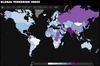
Excitable Boys: An Exploration of the Role of Social Groups in the Self-radicalisation Process Using Agent-based Modelling.
Jason Noble (Investigator), Lewys Brace
This work built upon the seminal work of Sageman (2008), and his hypothesis that the self-radicalisation phenomenon that we are currently witnessing across Europe and the United States stems from self-organising ‘bunches of guys’. More specifically, there was a focus on how individuals can influence one another through social links; and how this can lead to behaviour, similar to deindividuation, arising through their interactions. Complexity theory and agent-based modelling were used in order to explore the interactions that are believed to lie at the heart of this psycho-social phenomenon, and justification is given for this approach. The model presented demonstrated that social bonds can lead to a greater number of individuals ‘rebelling’ against the status quo.
Fracturing of small social networks
Seth Bullock, Sally Brailsford (Investigators), Elisabeth zu-Erbach-Schoenberg
A connected social network is a very important factor for the success of groups and organisations. We investigate which factors make a group more resistant to the effects of disagreements which commonly happen in small social networks.
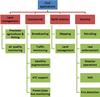
Generic Operational Simulation of Civil Unmanned Air Vehicle Operations
Hans Fangohr, James Scanlan (Investigators)
This project creates a generic operational simulation of Unmanned Air Vehicle Operations. UAVs can be valued for their mission-suitability and compared against various configurations.
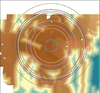
Integrating least-cost models with agent-based simulations: example hedgehog responses to fragmented landscapes
Jason Noble, Patrick Doncaster (Investigators), Angela Watkins
This study presents a novel analysis of an agent-based model of hedgehog movements integrated with a least-cost model of hedgehog dispersal and validated in landscapes with a varying degree of habitat fragmentation. A comparison of the fitness of individual agents reveals that incorporating a simple rule into
individual agents, to better mimic movement choices by real hedgehogs, dramatically affects the relationship between individual fitness and fragmentation.
Is the decline in East African lesser flamingo population a natural concequence of soda ake dynamics?
Seth Bullock
An interdisciplinary approach using palaeoenvironmental data analysis and a modelling is being used investigate the dramatic fluctuations in conditions in the East African Rift Valley soda lakes, and how these changes may be impacting the lesser flamingo population.
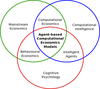
It takes all sorts: the mathematics of people’s behaviour in financial markets
Valerio Restocchi (Investigator), Frank McGroarty, Enrico Gerding
Agent-based models provide a deeper understanding of financial markets than classic models. We model people's behaviour and use agent-based simulations to study financial markets. By analysing the emerging complex dynamics, we achieve a deeper understanding of market participants' behaviours, which are necessary for a deeper comprehension of financial markets themselves.
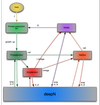
Lagrangian modelling of ecosystem dynamics at the Bermuda Atlantic Time-series Study station
Tom Anderson, Seth Bullock (Investigators), Melissa Saeland
Focus in the marine ecosystem modelling community is starting to shift towards the use of Lagrangian, agent-based models as these are believed to produce more realistic results. The basic assumptions behind these models have not been thoroughly tested, and this project aims to undertake a detailed study of Lagrangian marine ecosystem models, before creating one to investigate the dynamics at the Bermuda Atlantic Time-series Study station (BATS).
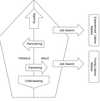
Modelling the Easterlin Effect
Jason Hilton
This project is an attempt to formalise the Easterlin hypothesis in a simulation model and test its plausibility.
The Easterlin Hypothesis, developed by economist Richard Easterlin, purports to describe a mechanism whereby the fertility decisions of a particular cohort of individuals are linked to population level conditions that held sway when they were born The empirical support for the theory is quite strong for the certain periods in the history of the United States, but elsewhere it is circumstantial and patchy. A simulation model may allows us to test under what conditions it may hold and not hold, and also might help inform more general theory building.
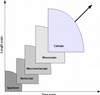
Multiscale Modelling of Cellular Calcium Signalling
Hans Fangohr, Jonathan Essex (Investigators), Dan Mason
Calcium ions play a vitally important role in signal transduction and are key to many cellular processes including muscle contraction and cell apoptosis (cell death). This importance has made calcium an active area in biomedical science and mathematical modelling.
Network Analysis of Roman Transport Routes in the Imperial Roman Mediterranean
David Potts
This research is designed to explore the nature of the relationships between Portus, Rome, and other selected ports in the Mediterranean and to establish patterns and the changing nature of trading networks derived from the distribution of known Roman artefacts.
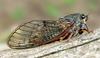
New Forest Cicada Project
Alexander Rogers, Geoff Merrett (Investigators), Davide Zilli, Oliver Parson
Rediscover the critically endangered New Forest cicada with crowdsourced smartphone biodiversity monitoring techniques.
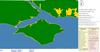
Operational Simulation of the Solent Search-and-Rescue environment
James Scanlan, Kenji Takeda, Hans Fangohr (Investigators), Ben Schumann
This project aims to identify useful metrics for a proposed Search-and-Rescue UAV and test it virtually in a realistic environment.
Quantifying Collective Construction
Seth Bullock (Investigator), Nicholas Hill
This was an initial investigation into how best to develop quantifying and discriminating measures of both the processes and results of collective construction.
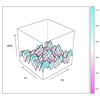
Replication of Sayama Group Decision Model
Jason Noble (Investigator), Jonathan Gray
Replication of a model of group decision making from Sayama et al. (2011), with a revised methodology that alters a conclusion from the original paper.
Selection pressure for language and theory-of-mind in monkeys
Jason Noble (Investigator)
To what extent are the alarm calls of putty-nosed monkeys likely to be a good model for human language evolution? Simulation is used to classify evolutionary trajectories as either plausible or implausible, and to put lower bounds on the cognitive complexity required to perform particular behaviours.
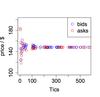
Self Interest & the Evolutionary Optimisation of Adaptive Trading Agents for Continuous Double Auctions
Frank McGroarty, Enrico Gerding (Investigators), Ash Booth
One cannot escape the recent crises in economics and the lack of understanding of financial markets that has been highlighted by them. Improvements to current market models are already being made and a realisation of the power of agent based modelling in such models is evident. In this project we seek to explore an existing model by Cliff of trader behaviour in continuous double auctions. We investigate the strategies that arise in such auctions when trader parameters are evolved with intent to maximise personal profit. Results show different trading strategies to those evolved by Cliff and explanations are given with regards to the self-interest.
Sensitivity of the critical depth to the choice of particle movement rules in Lagrangian models and the consequences for the predicted timing of the spring bloom
Tom Anderson (Investigator), Melissa Saeland
Individual-based (Lagrangian) models lend themselves to the study of the controls of the spring bloom in the ocean, due to their ability to represent both the turbulence and the phytoplankton motion. Here, we use a Lagrangian phytoplankton model to test some of the most prevalent hypotheses (e.g. critical depth and critical turbulence).
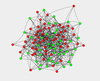
Separation of timescales in models of complex networks
Seth Bullock (Investigator), Elisabeth zu-Erbach-Schoenberg, Connor McCabe
In many real-world systems several processes act on the system state. The way these processes interact can have implications for the resulting system state. We investigate how separation of the timescales of two processes influences the system's equilibrium state.
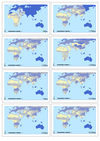
Simulating Human Expansion in the Early Pleistocene
Seth Bullock, Fraser Sturt (Investigators), Iza Romanowska
Using Agent-based modelling to investigate the first human dispersal almost 2 million years ago.

Simulating Multi-Agent Negotiation with Agents that use Incomplete Information
Enrico Gerding (Investigator), Darius Pepe Falahat
An investigation into multi-agent negotiation where the participants have incomplete information about each other. This project consisted of a literature review and creating a simulation model based on the research being reviewed.

Simulation modelling of habitat permeability for mammalian wildlife
Patrick Doncaster, Jason Noble (Investigators), Angela Watkins
Using and integrating least-cost models and agent-based simulations to explore the way in which mammals interact with, and hence move, through fragmented landscapes.

Simulation of Parking Choice Behaviour
Ben Waterson, Hans Fangohr (Investigators), James Snowdon
Exploring how psychological models of individual parking search behaviours can be combined into an accurate simulation of vehicle flows, allowing for assessment of the impact on searching traffic of different demand/ supply ratios, different driver population characteristics and different charging regimes.

Spatial Mobility in the Formation of Agent-Based Economic Networks
Antonella Ianni, Seth Bullock (Investigators), Camillia Zedan
An investigation into the effect of spatial mobility on endogenous economic network formation.
Spatially Embedded Complex Systems Engineering
Seth Bullock (Investigator)
SECSE brought together an interdisciplinary team of scientists working on an ambitious three-and-a-half year project titled. The research cluster spanned neuroscience, artificial intelligence, geography, and complex systems in an attempt to understand the role of spatial organization and spatial processes in complex networks within the domains of neural control, geo-information systems and distributed IT systems such as those implicated in air-traffic control.
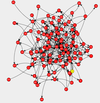
The Endogenous Formation of Economic Networks
Antonella Ianni, Seth Bullock (Investigators), Camillia Zedan
An investigation into endogenous network formation using a simple agent-based approach.
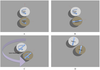
The Origins of Communication Revisited
Jason Noble (Investigator), Jordi Arranz
Quinn (2001) sought to demonstrate that communication be- tween simulated agents could be evolved without pre-defined communication channels. Quinn’s work was exciting because it showed the potential for ALife models to look at the real origin of communication; however, the work has never been replicated. In order to test the generality of Quinn’s result we use a similar task but a completely different agent architecture. We find that qualitatively similar behaviours emerge, but it is not clear whether they are genuinely communicative. We extend Quinn’s work by adding perceptual noise and internal state to the agents in order to promote ritualization of the nascent signal. Results were inconclusive; philosophical implications are discussed.
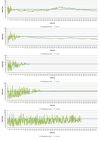
The Role of Information in Price Discovery
Antonella Ianni, Seth Bullock (Investigators), Camillia Zedan
The recent economic crisis has highlighted a continued vulnerability and lack of understanding in the financial markets. In order to overcome this, many believe that current market models must be improved. Recently, a trend towards agent-based modelling has emerged. Viewing the economy as a complex system is beginning to be seen as key to explaining certain market characteristics that were originally considered anomalies.
One of the fundamental assumptions in economics is that of information efficiency: that the price of a stock reflects its worth, that all possible information about a security is publicly known, and that any changes to price take place instantaneously. In reality, however, this is not the case.
This project considers the use of agents in modelling economic systems and demonstrates the effect of information levels on price discovery using a simple market simulation.
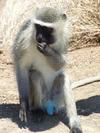
The Social-cognitive Niche: An Exploration of the Co-evolutionary Relationship between Human Mind and language, with a Particular Focus of the Self-organisational properties of the Emergence of Symbolic Representation.
Jason Noble, Glyn Hicks (Investigators), Lewys Brace
This work explored the relationship between the origin and subsequent evolution of the human mind and language; a relationship that is believed to be symbiotic in nature. This piece aimed to achieve two objectives. Firstly, it set out a theoretical framework, using the principles of complexity theory and self-organisation, which attempts to explain this relationship from a holistic perspective.
Secondly, it presented an agent-based model of a vervet monkey social group, which sought to investigate the variables that were perceived to underpin the emergence of symbolic representation within a population of language users.
The belief here was that, by understanding the influence of these variables, one would be able to better understand the genesis of the aforementioned relationship.
Towards design patterns for robot swarms
Richard Crowder, Seth Bullock (Investigators), Lenka Pitonakova
Swarm robotics is an inter-disciplinary field that seeks to design the behaviour of robots that can cooperate effectively on tasks like search and retrieval, reconnaissance, construction, etc. In this project, we are aiming towards a theoretical understanding of swarm intelligence and the development of design patterns for effective robot swarms.

Understanding the Role of Recruitment in Robot Foraging
Seth Bullock, Richard Crowder (Investigators), Lenka Pitonakova
It is shown that recruitment among foraging robots is useful when resources are hard to find, but that the extra cost associated with such robots is not returned when there are many locations to gather from or simply when the relative gain from using communication is low.
People
 Jakub Bijak
Professor, Social Sciences (FSHS)
 Sally Brailsford
Professor, Management (FBL)
 Seth Bullock
Professor, Electronics and Computer Science (FPAS)
 Andrew Collins
Professor, Medicine (FM)
 Jonathan Essex
Professor, Chemistry (FNES)
 Hans Fangohr
Professor, Engineering Sciences (FEE)
 Frank McGroarty
Professor, Management (FBL)
 James Scanlan
Professor, Engineering Sciences (FEE)
 Patrick Doncaster
Reader, Biological Sciences (FNES)
 Peter Horak
Reader, Optoelectronics Research Centre
Markus BredeSenior Lecturer, Electronics and Computer Science (FPAS)
 Richard Crowder
Senior Lecturer, Electronics and Computer Science (FPAS)
 Antonella Ianni
Senior Lecturer, Social Sciences (FSHS)
 Fraser Sturt
Senior Lecturer, Humanities (FH)
Mohamed BakoushLecturer, Management (FBL)
 Ian Hawke
Lecturer, Mathematics (FSHS)
 Glyn Hicks
Lecturer, Humanities (FH)
 Geoff Merrett
Lecturer, Electronics and Computer Science (FPAS)
 Alexander Rogers
Lecturer, Electronics and Computer Science (FPAS)
 Ben Waterson
Lecturer, Civil Engineering & the Environment (FEE)
 Tom Anderson
Principal Research Fellow, National Oceanography Centre (FNES)
 Jason Hilton
Research Fellow, Social Sciences (FSHS)
 Jason Noble
Research Fellow, Electronics and Computer Science (FPAS)
 Simon Alderton
Postgraduate Research Student, Geography (FSHS)
 David Arden
Postgraduate Research Student, Electronics and Computer Science (FPAS)
 Jordi Arranz
Postgraduate Research Student, Electronics and Computer Science (FPAS)
 Alice Ball
Postgraduate Research Student, Electronics and Computer Science (FPAS)
 Ioannis Begleris
Postgraduate Research Student, Engineering Sciences (FEE)
 Harry Beviss
Postgraduate Research Student, Electronics and Computer Science (FPAS)
 Ash Booth
Postgraduate Research Student, Electronics and Computer Science (FPAS)
 Lewys Brace
Postgraduate Research Student, Electronics and Computer Science (FPAS)
 Rory Brown
Postgraduate Research Student, Civil Engineering & the Environment (FEE)
 Paul Chambers
Postgraduate Research Student, Engineering Sciences (FEE)
 Evander DaCosta
Postgraduate Research Student, Electronics and Computer Science (FPAS)
 Bob De Caux
Postgraduate Research Student, Electronics and Computer Science (FPAS)
 Anastasia Eleftheriou
Postgraduate Research Student, Electronics and Computer Science (FPAS)
Graham ElliottPostgraduate Research Student, Electronics and Computer Science (FPAS)
 Robert Entwistle
Postgraduate Research Student, Engineering Sciences (FEE)
 Darius Pepe Falahat
Postgraduate Research Student, Electronics and Computer Science (FPAS)
 Greg Fisher
Postgraduate Research Student, Electronics and Computer Science (FPAS)
 Stephen Gow
Postgraduate Research Student, Engineering Sciences (FEE)
 Jonathan Gray
Postgraduate Research Student, Social Sciences (FSHS)
 Joshua Greenhalgh
Postgraduate Research Student, Engineering Sciences (FEE)
 James Harrison
Postgraduate Research Student, Engineering Sciences (FEE)
 Tom Hebbron
Postgraduate Research Student, Electronics and Computer Science (FPAS)
Nicholas HillPostgraduate Research Student, Electronics and Computer Science (FPAS)
 Jason Hilton
Postgraduate Research Student, Social Sciences (FSHS)
 William Hurndall
Postgraduate Research Student, Electronics and Computer Science (FPAS)
 Adam Jackson
Postgraduate Research Student, Electronics and Computer Science (FPAS)
 Leo Jofeh
Postgraduate Research Student, Electronics and Computer Science (FPAS)
Konstantinos KouvarisPostgraduate Research Student, Electronics and Computer Science (FPAS)
 David Lusher
Postgraduate Research Student, Engineering Sciences (FEE)
 Vincent Marmion
Postgraduate Research Student, Psychology (FSHS)
 Connor McCabe
Postgraduate Research Student, Electronics and Computer Science (FPAS)
 Patricia Murrieta Flores
Postgraduate Research Student, Humanities (FH)
 Alvaro Perez-Diaz
Postgraduate Research Student, Engineering Sciences (FEE)
 Lyuboslav Petrov
Postgraduate Research Student, Electronics and Computer Science (FPAS)
 Lenka Pitonakova
Postgraduate Research Student, University of Southampton
 David Potts
Postgraduate Research Student, Humanities (FH)
 Daniel Powell
Postgraduate Research Student, Engineering Sciences (FEE)
 Craig Rafter
Postgraduate Research Student, Engineering Sciences (FEE)
 Hossam Ragheb
Postgraduate Research Student, Engineering Sciences (FEE)
 Sabin Roman
Postgraduate Research Student, University of Southampton
 Iza Romanowska
Postgraduate Research Student, Humanities (FH)
 Álvaro Ruiz-Serrano
Postgraduate Research Student, Chemistry (FNES)
 Melissa Saeland
Postgraduate Research Student, National Oceanography Centre (FNES)
 Ben Schumann
Postgraduate Research Student, Engineering Sciences (FEE)
 Jacob Selmes
Postgraduate Research Student, Electronics and Computer Science (FPAS)
 Kieran Selvon
Postgraduate Research Student, Engineering Sciences (FEE)
 Ashley Setter
Postgraduate Research Student, Engineering Sciences (FEE)
 Nathan Smith
Postgraduate Research Student, Electronics and Computer Science (FPAS)
 James Snowdon
Postgraduate Research Student, Civil Engineering & the Environment (FEE)
 Nick Synes
Postgraduate Research Student, Electronics and Computer Science (FPAS)
Johannes Van Der HorstPostgraduate Research Student, Electronics and Computer Science (FPAS)
 Jonathon Waters
Postgraduate Research Student, Engineering Sciences (FEE)
 Angela Watkins
Postgraduate Research Student, Biological Sciences (FNES)
 Thorsten Wittemeier
Postgraduate Research Student, Engineering Sciences (FEE)
 Emanuele Zappia
Postgraduate Research Student, Engineering Sciences (FEE)
 Camillia Zedan
Postgraduate Research Student, Electronics and Computer Science (FPAS)
 Davide Zilli
Postgraduate Research Student, Electronics and Computer Science (FPAS)
 Elisabeth zu-Erbach-Schoenberg
Postgraduate Research Student, Management (FBL)
 Petrina Butler
Administrative Staff, Research and Innovation Services
 Susanne Ufermann Fangohr
Administrative Staff, Civil Engineering & the Environment (FEE)
 Jan Kamenik
Alumnus, University of Southampton
 Dan Mason
Alumnus, University of Southampton
 Mohsen Mesgarpour
Alumnus, University of Southampton
Oliver ParsonAlumnus, Electronics and Computer Science (FPAS)
 Joe Scutt Phillips
Alumnus, Centre for the Environment, Fisheries and Aquaculture Sciences
 Kenji Takeda
Alumnus, Engineering Sciences (FEE)
 Mark Vousden
External Member, University of Southampton
Enrico GerdingNone, None
Valerio RestocchiNone, None