Finite differences
The finite difference method.
For queries about this topic, contact Ian Hawke.
View the calendar of events relating to this topic.
Projects
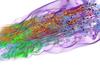
Advanced modelling for two-phase reacting flow
Edward Richardson (Investigator)
Engine designers want computer programs to help them invent ways to use less fuel and produce less pollution. This research aims to provide an accurate and practical model for the injection and combustion of liquid fuel blends.
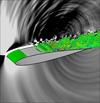
Aerofoil noise
Richard Sandberg (Investigator)
High-performance computing is used to identify noise sources on aerofoils.
Body Forces in Particle Suspensions in Turbulence
Gabriel Amine-Eddine (Investigator)
The behaviour of multiphase flows is of primary importance in many engineering applications. In the past, experimental observations have provided many researchers with the ability to understand and probe the phenomena and physical processes occurring in such flows. With advancements in modern day computational power, we now have the ability to gain an even greater wealth of knowledge, from what used to be a physical experiment, is now a virtual simulation.
Amine-Eddine, G.H. (2015) Body forces in particle suspensions in turbulence. University of Southampton, Faculty of Engineering and the Environment, Doctoral Thesis , 283pp.
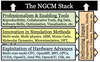
Centre for Doctoral Training in Next Generation Computational Modelling
Hans Fangohr, Ian Hawke, Peter Horak (Investigators), Susanne Ufermann Fangohr, Thorsten Wittemeier, Kieran Selvon, Alvaro Perez-Diaz, David Lusher, Ashley Setter, Emanuele Zappia, Hossam Ragheb, Ryan Pepper, Stephen Gow, Jan Kamenik, Paul Chambers, Robert Entwistle, Rory Brown, Joshua Greenhalgh, James Harrison, Jonathon Waters, Ioannis Begleris, Craig Rafter
The £10million Centre for Doctoral Training was launched in November 2013 and is jointly funded by EPSRC, the University of Southampton, and its partners.
The NGCM brings together world-class simulation modelling research activities from across the University of Southampton and hosts a 4-year doctoral training programme that is the first of its kind in the UK.
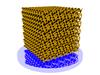
Computational electromagnetic modelling of 3D photonic structures
Marc Molinari, Darren Bagnall, Simon Cox (Investigators), Asa Asadollahbaik, Elizabeth Hart
Nano-structured materials can provide very specific and often very special optical effects which can be exploited for a large range of optical applications including wavelength filters, LEDs, micro-lasers, HDTV, solar-cell coatings, optical high-Q fibres, diffraction gratings, polarisation devices, optical switches, etc. This research in “Computational Electromagnetic Modelling of 3D Photonic Structures” aims to address the need for accurate and fast three-dimensional modelling, simulation and analysis processes in the photonics industry. A FEM/FDTD software suite will be developed to simulate Maxwell’s field equations and thin-film quantum effects (plasmons) in the visible and near-infrared EM frequency spectrum. The results obtained from running the software on suitable compute clusters will then be compared to the analysis results of experimentally manufactured materials. We will investigate structures occurring in nature such as iridescent butterfly wings, white/black reflecting beetle shells, etc., and aim to optimise artificially designed structures with periodic, quasi-periodic and random configurations.
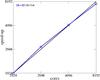
Development of a novel Navier-Stokes solver (HiPSTAR)
Richard Sandberg (Investigator)
Development of a highly efficient Navier-Stokes solver for HPC.
Development of wide-ranging functionality in ONETEP
Chris-Kriton Skylaris (Investigator), Jacek Dziedzic
ONETEP is at the cutting edge of developments in first principles calculations. However, while the fundamental difficulties of performing accurate first-principles calculations with linear-scaling cost have been solved, only a small core of functionality is currently available in ONETEP which prevents its wide application. In this collaborative project between three Universities, the original developers of ONETEP will lead an ambitious workplan whereby the functionality of the code will be rapidly and significantly enriched.
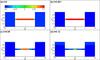
Diffusion at solute/solvent interfaces
Anatoliy Vorobev (Investigator), Ruilin Xie
We aim to develop the theoretical model that would provide an accurate description for the mixing process of two miscible liquids, and, in particular, would reproduce our experimental optical observations. The model based on the phase-field (Cahn-Hilliard) approach is adopted for the mixture of two miscible liquids. The model takes into account the surface tension effects, the non-Fickian diffusion across the liquid/liquid interface, and hydrodynamic flows that might be generated near the interface by the concentration gradients.

Direct Numerical Simulations of transsonic turbine tip gap flow
Richard Sandberg (Investigator)
Direct Numerical Simulations are conducted of the transsonic flow through the tip gap at real engine conditions.
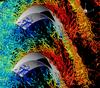
Eddy-resol?ving Simulation?s for Turbomachi?nery Applicatio?ns
Richard Sandberg (Investigator), Li-Wei Chen
Traditionally, the design of turbomachinery components has been exclusively accomplished with steady CFD, with Reynolds Averaged Navier-Stokes (RANS) models being the predominant choice. With computing power continuously increasing, high-fidelity numerical simulations of turbomachinery components are now becoming a valuable research tool for validating the design process and continued development of design tool.
In the current project, Direct Numerical Simulations (DNS) and other eddy-resolving approaches will be performed of turbomachinery components to establish benchmark data for design tools, and to investigate physical mechanisms that cannot be captured by traditional CFD approaches.
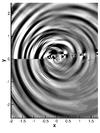
Effects of trailing edge elasticity on trailing edge noise
Richard Sandberg (Investigator), Stefan C. Schlanderer
This work considers the effect of trailing edge elasticity on the acoustic and hydrodynamic field of a trailing edge flow. To that end direct numerical simulations that are fully coupled to a structural solver are conducted.
Gravitational waves from neutron stars
Ian Hawke (Investigator)
Gravitational waves, once detected, will give information about the extremes of space and time. Compact objects such as neutron stars are perfect locations for generating such waves.
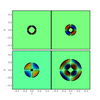
High-resolution shock-capturing (HRSC) methods for elastic matter in general relativity
Carsten Gundlach, Ian Hawke, Stephanie Erickson (Investigators)
We are designing HRSC methods for numerical simulation of elastic matter coupled to general relativity and later magnetic fields, with the ultimate aim of simulating old neutron stars, which have elastic crusts.
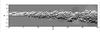
Is fine-scale turbulence universal?
Richard Sandberg (Investigator), Patrick Bechlars
Complementary numerical simulations and experiments of various canonical flows will try to answer the question whether fine-scale turbulence is universal.
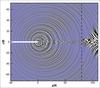
Jet noise
Richard Sandberg (Investigator), Neil Sandham
Direct numerical simulations are used to investigate jet noise.
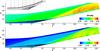
Laminar to Turbulent Transition in Hypersonic Flows
Neil Sandham, Heinrich Luedeke
Understanding of laminar to turbulent transition in hypersonic boundary-layer flows is crucial for re-entry vehicle design and optimization. The boundary-layer state directly affects the temperatures on the vehicle surface and its viscous drag. Therefore transition has to be considered to correctly compensate for drag and to properly design the thermal protection system.
For the proposed study, in order to obtain a clear understanding of the transition process, the configuration is kept as simple as possible by varying only a minimum number of parameters affecting transition on a simple test geometry such as a swept ramp at different sweep angles. To investigate the influence of such sweep angles on the transition process in the hypersonic regime, Direct Numerical Simulations (DNS) of the turbulent flow field are carried out on the Iridis cluster.
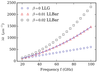
Magnetic dynamics under the Landau-Lifshitz-Baryakhtar equation
Hans Fangohr (Investigator), Weiwei Wang
Magnetic dynamics using the Landau-Lifshitz-Baryakhtar (LLBar) equation that the nonlocal damping is included as well as the scalar Gilbert damping.
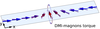
Magnon-Driven Domain-Wall Dynamics in the presence of Dzyaloshinskii-Moriya Interaction
Hans Fangohr (Investigator), Weiwei Wang
The domain wall motion induced by spin waves (magnons) in the presence of Dzyaloshinskii-Moriya Interaction is studied in this project.
Mathematical modelling of plant nutrient uptake
Tiina Roose (Investigator)
In this project I will describe a model of plant water and nutrient uptake and how to translate this model and experimental data from the single root scale to the root branching structure scale.
Micromagnetic simulation of Magnetoelectric Multiferroics
Hans Fangohr (Investigator), Rebecca Carey
The focus of this project is towards the understanding of the magnetic and electric couplings in multiferroic materials, in order to create a magnetoelectric micromagnetic model.
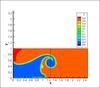
Miscible multiphase systems with phase transition
Andrea Boghi
We aim to develop the computational model for the miscible displacement of liquid occupying a porous bulk, as, for instance, in the processes of vegetable solvent extraction, soil remediation or enhanced oil recovery. All these process includes the dissolution of solute and the displacement of solution from porous media. The focus of our current research work is, therefore, twofold: (i) to develop and verify a theoretical model for an evolving miscible displacement, by taking into account dynamic surface tension and mass diffusion through the interphase boundary, and (ii) to provide a model for the solute/solvent displacement from the porous volume.
Modelling micromagnetism at elevated temperature
Hans Fangohr, Kees de Groot, Peter de_Groot (Investigators), Dmitri Chernyshenko
We aim to develop a multiscale multiphysics model of
micromagnetism at elevated temperatures with atomistic simulations for
material parameter. The tool will be used to guide the development of the next generation magnetic data storage technology: heat assisted magnetic recording.
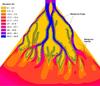
Modelling the morphodynamic evolution of the Ganges-Brahmaputra-Meghna (GBM) Delta over centennial time scales
Stephen Darby (Investigator), Balaji Angamuthu
Around 0.5 Billion people live in deltaic environments where they are threatened by flooding and land loss frequently. Yet, our understanding of the threats posed by land dynamic process remains limited. In this work, we try to address this issue through a land dynamic simulation of the largest and most populated of all the deltas, the GBM Delta, using the CFD software Delft3D for a range of climate change and management scenarios. The results provide new insight into the factors controlling past morphodynamics that, in turn, are helpful when assessing the possible trajectories of future evolution.
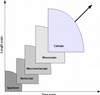
Multiscale Modelling of Cellular Calcium Signalling
Hans Fangohr, Jonathan Essex (Investigators), Dan Mason
Calcium ions play a vitally important role in signal transduction and are key to many cellular processes including muscle contraction and cell apoptosis (cell death). This importance has made calcium an active area in biomedical science and mathematical modelling.

Multiscale Relativistic Simulations
Ian Hawke (Investigator), Alex Wright
There has been recent success in experiments, such as LIGO, in detecting the mergers of celestial objects via the gravitational waves they emit. By implementing numerical methods, we aim to speed up the numerical simulations of these events but up to two orders of magnitudes, and study binary inspirals in greater detail and over much larger timespans.

Multiscale Relativistic Simulations
There has been recent success in experiments, such as LIGO, in detecting the mergers of celestial objects via the gravitational waves they emit. I will use numerical methods to simulate the inspiral of a black hole/neutron star binary system.
NGCM-0054 - Automatic Code Generation for Computational Science
Hans Fangohr (Investigator), Gary Downing
Automatically generate code to solve partial differential equations specified symbolically.
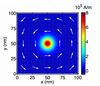
Nmag finite difference
Hans Fangohr (Investigator), Dmitri Chernyshenko, Matteo Franchin, Massoud Najafi
The goal of this project is to extends the finite element based micromagnetic simulation tool Nmag by the finite difference based extension Nmagfd and so to get an simulation tool where the user can easily switch between the used discretization method.
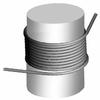
Nonlinear Optics in Structured Material
Peter Horak, Neil Broderick (Investigators)
Structured materials such as photonic crystals, optical fibres, Bragg gratings etc. are the ideal material for nonlinear optics. Properly engineered materials allows one to control which nonlinear interactions are observed and enhanced whilst other nonlinear interactions can be neglected. This work looks both at fundamental ideas as well as the fabrication of devices for advanced telecommunications.
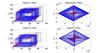
On the applicability of nonlinear timeseries methods for partial discharge analysis
Paul Lewin (Investigator), Lyuboslav Petrov
The governing processes of Partial Discharge (PD)
phenomena trigger aperiodic chains of events resulting in ’ap-
parently’ stochastic data, for which the widely adopted analysis
methodology is of statistical nature. However, it can be shown,
that nonlinear analysis methods can prove more adequate in
detecting certain trends and patterns in complex PD timeseries.
In this work, the application of nonlinear invariants and phase
space methods for PD analysis are discussed and potential pitfalls
are identified. Unsupervised statistical inference techniques based
on the use of surrogate data sets are proposed and employed for
the purpose of testing the applicability of nonlinear algorithms
and methods. The Generalized Hurst Exponent and Lempel Ziv
Complexity are used for finding the location of the system under
test on the spectrum between determinism and stochasticity. The
algorithms are found to have strong classification abilities at
discerning between surrogates and original point series, giving
motivation for further investigations.

OpenDreamKit
Hans Fangohr (Investigator), Marijan Beg
OpenDreamKit is a [Horizon 2020](https://ec.europa.eu/programmes/horizon2020/) European Research Infrastructure project (#676541) providing substantial funding to the open-source computational mathematics ecosystem, and in particular popular tools such as LinBox, MPIR, SageMath, GAP, Pari/GP, LMFDB, Singular, MathHub, and the IPython/Jupyter interactive computing environment.
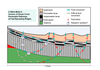
Porous Media and Hydrothermal Circulation in Weakened Ocean Crust
Formation of oceanic crust is an interplay between magma and the cooling hydrothermal system above that its own heat drives. To understand this system we must understand where and how water circulates through the crust.
Ocean crust is riddled with faults and other permeable pathways along which water preferentially flows. We seek to use basic numerical models of circulation in porous media to understand how much of an influence on crust formation these anomalous features have, compared to the bulk, unfractured crust.
Pushing the Envelope of Planetary Formation and Evolution Simulations
Peter Bartram
A full understanding of the formation and the early evolution of the Solar System and extrasolar planetary systems ranks among natural science's grand challenges, and at present, even the dominant processes responsible for generating the observed planetary architecture remain elusive.
pyQCD
Matthew Spraggs
A basic Python package to perform coarse lattice QCD simulations on desktop and workstation computers.
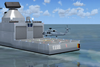
Real-time CFD for helicopter flight simulation
Kenji Takeda (Investigator), James Kenny
Project aims to show how real-time computational fluid dynamics (CFD) could be used to improve the realism of helicopter flight simulators.
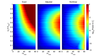
Relativistic multifluids
Ian Hawke (Investigator)
Multiphase flow is a central model in fluid dynamics. Its extension to relativity is crucial for tackling many astrophysics problems, and has fascinating mathematical features.
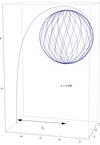
Self-Force and Black Hole Inspirals
Sam Dolan (Investigator)
We use IRIDIS to compute the self-force acting on a solar-mass black hole orbiting a supermassive black hole.
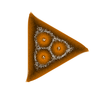
Simulations of Magnetic Skyrmions
Hans Fangohr (Investigator), Ryan Pepper
The manipulation of magnetic skyrmions could prove to be a useful technique for storing data on an unprecedented density scale. In this project we seek to better understand their properties and ways to control them.

Skyrmionic states in confined nanostructures
Hans Fangohr (Investigator), Marijan Beg
An ever increasing need for data storage creates great challenges for the development of high-capacity storage devices that are cheap, fast, reliable, and robust. Because of the fundamental constraints of today's technologies, further progress requires radically different approaches. Magnetic skyrmions are very promising candidates for the development of future low-power, high-capacity, non-volatile data storage devices.
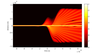
Soft x-ray science on a tabletop
Peter Horak, Jeremy Frey, Bill Brocklesby (Investigators), Patrick Anderson, Arthur Degen-Knifton
Complex numerical simulations are being performed to aid experimentalists at Southampton realize the next generation of high brightness tabletop sources of coherent soft x-rays.?
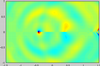
Stochastic computational methods for aero-acoustics
Gwenael Gabard (Investigator), Martina Dieste
Stochastic methods are used to synthesize a turbulent flow which is then used to model the sound radiated by an airfoil interacting with this turbulence. This approach is faster than performing a complete simulation of the flow field.
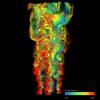
Stratified combustion physics and modelling
Edward Richardson (Investigator)
Full-resolution simulation data for turbulent combustion are used to investigate the fundamental impact, and practical modelling, of fuel-air stratification.

Study of global instability in separated flows at high Mach number
Neil Sandham, Zhiwei Hu (Investigators), Kangping Zhang
Flow instability is observed when extending two-dimensional (2D) stable flow into three-dimensional (3D). Development of instability varies along different spanwise length. Thresholds are also discovered for the flow studied to become instable.
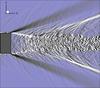
Supersonic axisymmetric wakes
Richard Sandberg (Investigator)
Direct numerical simulations are used to shed more light on structure formation and evolution in supersonic wakes.
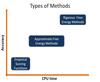
The application and critical assessment of protein-ligand binding affinities
Jonathan Essex (Investigator), Ioannis Haldoupis
A method that can accurately predict the binding affinity of small molecules to a protein target would be imperative to pharmaceutical development due to the time and resources that could be saved. A head-to-head comparison of such methodology, ranging from approximate methods to more rigorous methods, is performed in order to assess their accuracy and utility across a range of targets.
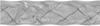
The effect of roughness upon turbulent supersonic flows
Neil Sandham (Investigator), Christopher Tyson
Understanding the interaction between surface roughness and supersonic air flows are crucial in the design of high speed vehicles, including space re-entry vehicles. Numerical simulations of these flows has been conducted in order to examine and understand how the surface roughness interacts with high speed flows in terms of drag prediction and heat transfer to the wall surface.

Towards biologically-inspired active-compliant-wing micro-air-vehicles
Richard Sandberg (Investigator), Sonia Serrano-Galiano
Despite a good knowledge of the physiology of bats and birds, engineering applications with active dynamic wing compliance capability are currently few and far between. Recent advances in development of electroactive materials together with high-fidelity numerical/experimental methods provide a foundation to develop biologically-inspired dynamically-active wings that can achieve "on-demand" aerodynamic performance. However this requires first to develop a thorough understanding of the dynamic coupling between the electro-mechanical structure of the membrane wing and its unsteady aerodynamics. In this collaborative initiative between the University of Southampton and Imperial College London, we are developing an integrated research programme that carries out high-fidelity experiments and computations to achieve a fundamental understanding of the dynamics of aero-electro-mechanical coupling in dynamically-actuated compliant wings. The goal is to utilise our understanding and devise control strategies that use integral actuation schemes to improve aerodynamic performance of membrane wings. The long-term goal of this project is to enable the use of soft robotics technology to build integrally-actuated wings for Micro Air Vehicles (MAV) that mimic the dynamic shape control capabilities of natural flyers.

Transition to turbulence in high-speed boundary layers
Neil Sandham (Investigator), Nicola De Tullio
This work is focused on the numerical simulation of hypersonic transition to turbulence in boundary layers. We use direct numerical simulations of the Navier-Stokes equations to analyse the effects of different flow conditions and external disturbances on the transition process. The main objective is to gain insight into the different aspects of transition to turbulence at high speeds, which can lead to the design of new transition models and transition control techniques for high-speed flows.
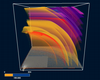
Whisky Code
Ian Hawke (Investigator)
A 3D finite volume code for simulating compact relativistic hydrodynamics.
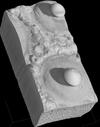
µ-VIS Computed Tomography Centre
Ian Sinclair, Richard Boardman, Dmitry Grinev, Philipp Thurner, Simon Cox, Jeremy Frey, Mark Spearing, Kenji Takeda (Investigators)
A dedicated centre for computed tomography (CT) at Southampton, providing complete support for 3D imaging science, serving Engineering, Biomedical, Environmental and Archaeological Sciences. The centre encompasses five complementary scanning systems supporting resolutions down to 200nm and imaging volumes in excess of one metre: from a matchstick to a tree trunk, from an ant's wing to a gas turbine blade.
People
 Darren Bagnall
Professor, Electronics and Computer Science (FPAS)
 Andrew Collins
Professor, Medicine (FM)
 Simon Cox
Professor, Engineering Sciences (FEE)
 Stephen Darby
Professor, Geography (FSHS)
 Kees de Groot
Professor, Electronics and Computer Science (FPAS)
 Jonathan Essex
Professor, Chemistry (FNES)
 Hans Fangohr
Professor, Engineering Sciences (FEE)
 Jeremy Frey
Professor, Chemistry (FNES)
Carsten GundlachProfessor, Mathematics (FSHS)
Paul LewinProfessor, Electronics and Computer Science (FPAS)
 Richard Sandberg
Professor, Engineering Sciences (FEE)
 Neil Sandham
Professor, Engineering Sciences (FEE)
John ShrimptonProfessor, Engineering Sciences (FEE)
 Ian Sinclair
Professor, Engineering Sciences (FEE)
 Mark Spearing
Professor, Engineering Sciences (FEE)
 Bill Brocklesby
Reader, Optoelectronics Research Centre
 Peter Horak
Reader, Optoelectronics Research Centre
Tobias KellerReader, Ocean & Earth Science (FNES)
 Tiina Roose
Reader, Engineering Sciences (FEE)
 Edward Richardson
Senior Lecturer, Engineering Sciences (FEE)
 Neil Broderick
Lecturer, Optoelectronics Research Centre
 Gwenael Gabard
Lecturer, Institute of Sound & Vibration Research (FEE)
 Ian Hawke
Lecturer, Mathematics (FSHS)
 Chris-Kriton Skylaris
Lecturer, Chemistry (FNES)
 Philipp Thurner
Lecturer, Engineering Sciences (FEE)
 Anatoliy Vorobev
Lecturer, Engineering Sciences (FEE)
 Richard Boardman
Senior Research Fellow, Engineering Sciences (FEE)
 Francesco Poletti
Senior Research Fellow, Optoelectronics Research Centre
Rie SugimotoSenior Research Fellow, Institute of Sound & Vibration Research (FEE)
Felipe Alves PortelaResearch Fellow, Engineering Sciences (FEE)
 Andrea Boghi
Research Fellow, Engineering Sciences (FEE)
Petros BogiatzisResearch Fellow, Ocean & Earth Science (FNES)
Nicola De TullioResearch Fellow, Engineering Sciences (FEE)
 Sam Dolan
Research Fellow, Mathematics (FSHS)
 Aleksander Dubas
Research Fellow, Engineering Sciences (FEE)
 Jacek Dziedzic
Research Fellow, Chemistry (FNES)
Dmitry GrinevResearch Fellow, Engineering Sciences (FEE)
Elizabeth HartResearch Fellow, Engineering Sciences (FEE)
 Heinrich Luedeke
Research Fellow, Engineering Sciences (FEE)
 Joseph Abram
Postgraduate Research Student, Electronics and Computer Science (FPAS)
 Gabriel Amine-Eddine
Postgraduate Research Student, Engineering Sciences (FEE)
Patrick AndersonPostgraduate Research Student, Optoelectronics Research Centre
Balaji AngamuthuPostgraduate Research Student, Geography (FSHS)
 Asa Asadollahbaik
Postgraduate Research Student, Engineering Sciences (FEE)
Peter BartramPostgraduate Research Student, University of Southampton
 Patrick Bechlars
Postgraduate Research Student, Engineering Sciences (FEE)
 Ioannis Begleris
Postgraduate Research Student, Engineering Sciences (FEE)
 Rory Brown
Postgraduate Research Student, Civil Engineering & the Environment (FEE)
 Rebecca Carey
Postgraduate Research Student, Engineering Sciences (FEE)
 Paul Chambers
Postgraduate Research Student, Engineering Sciences (FEE)
 Dmitri Chernyshenko
Postgraduate Research Student, Engineering Sciences (FEE)
 David Cortes
Postgraduate Research Student, Engineering Sciences (FEE)
 Nicola De Tullio
Postgraduate Research Student, Engineering Sciences (FEE)
Martina DiestePostgraduate Research Student, Institute of Sound & Vibration Research (FEE)
Gary DowningPostgraduate Research Student, Engineering Sciences (FEE)
 Robert Entwistle
Postgraduate Research Student, Engineering Sciences (FEE)
 Stephanie Erickson
Postgraduate Research Student, Mathematics (FSHS)
 Stephen Gow
Postgraduate Research Student, Engineering Sciences (FEE)
 Joshua Greenhalgh
Postgraduate Research Student, Engineering Sciences (FEE)
 Ioannis Haldoupis
Postgraduate Research Student, Chemistry (FNES)
 James Harrison
Postgraduate Research Student, Engineering Sciences (FEE)
Alex JamesPostgraduate Research Student, Institute of Sound & Vibration Research (FEE)
 Justin Lovegrove
Postgraduate Research Student, Mathematics (FSHS)
 David Lusher
Postgraduate Research Student, Engineering Sciences (FEE)
 Sam Mangham
Postgraduate Research Student, Electronics and Computer Science (FPAS)
 Juraj Mihalik
Postgraduate Research Student, Engineering Sciences (FEE)
 Alvaro Perez-Diaz
Postgraduate Research Student, Engineering Sciences (FEE)
 Lyuboslav Petrov
Postgraduate Research Student, Electronics and Computer Science (FPAS)
Richard PichlerPostgraduate Research Student, Civil Engineering & the Environment (FEE)
 Daniel Powell
Postgraduate Research Student, Engineering Sciences (FEE)
Stephen PowellPostgraduate Research Student, Engineering Sciences (FEE)
 Craig Rafter
Postgraduate Research Student, Engineering Sciences (FEE)
 Hossam Ragheb
Postgraduate Research Student, Engineering Sciences (FEE)
Watchapon RojanaratanangkulePostgraduate Research Student, Engineering Sciences (FEE)
 Álvaro Ruiz-Serrano
Postgraduate Research Student, Chemistry (FNES)
 Stefan C. Schlanderer
Postgraduate Research Student, Engineering Sciences (FEE)
 Kieran Selvon
Postgraduate Research Student, Engineering Sciences (FEE)
 Sonia Serrano-Galiano
Postgraduate Research Student, Engineering Sciences (FEE)
 Ashley Setter
Postgraduate Research Student, Engineering Sciences (FEE)
 Matthew Spraggs
Postgraduate Research Student, Electronics and Computer Science (FPAS)
 Daniele Trimarchi
Postgraduate Research Student, Engineering Sciences (FEE)
Jacob TurnerPostgraduate Research Student, Engineering Sciences (FEE)
Christopher TysonPostgraduate Research Student, Engineering Sciences (FEE)
 Jonathon Waters
Postgraduate Research Student, Engineering Sciences (FEE)
 Thorsten Wittemeier
Postgraduate Research Student, Engineering Sciences (FEE)
 Martin Wood
Postgraduate Research Student, Ocean & Earth Science (FNES)
 Alex Wright
Postgraduate Research Student, Civil Engineering & the Environment (FEE)
Ruilin XiePostgraduate Research Student, Engineering Sciences (FEE)
 Emanuele Zappia
Postgraduate Research Student, Engineering Sciences (FEE)
 Kangping Zhang
Postgraduate Research Student, Engineering Sciences (FEE)
 Petrina Butler
Administrative Staff, Research and Innovation Services
 Susanne Ufermann Fangohr
Administrative Staff, Civil Engineering & the Environment (FEE)
 Erika Quaranta
Enterprise staff, Engineering Sciences (FEE)
 Li-Wei Chen
Alumnus, Osney Thermo-Fluids Laboratory, Oxford University
 Peter de_Groot
Alumnus, Physics & Astronomy (FPAS)
 Matteo Franchin
Alumnus, Engineering Sciences (FEE)
 Jan Kamenik
Alumnus, University of Southampton
Kondwani KanjereAlumnus, Engineering Sciences (FEE)
 James Kenny
Alumnus, Engineering Sciences (FEE)
 Dan Mason
Alumnus, University of Southampton
 Marc Molinari
Alumnus, Engineering Sciences (FEE)
 Massoud Najafi
Alumnus, Arbeitsbereich Technische Informatik Systeme, University of Hamburg, Germany
Alkin NasufAlumnus, Engineering Sciences (FEE)
 Kenji Takeda
Alumnus, Engineering Sciences (FEE)
 Weiwei Wang
Alumnus, Ningbo University
 Marijan Beg
External Member, Imperial College London
Arthur Degen-KniftonNone, None
Zhiwei HuNone, None
Daisuke SasakiNone, None