Neuroscience
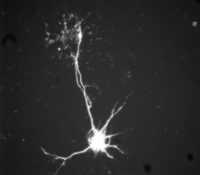
Neuroscience is an interdisciplinary science that studies the nervous system. Neuroscience projects range from electrophysiology on single nerve cells to complex biological and physcological interactions. More information on the breadth of Neuroscience activities at the Univseristy of Southampton can be found at the Southampton Neuroscience Group (SoNG) homepage: http://www.southampton.ac.uk/song/.
For queries about this topic, contact Richard Edwards.
View the calendar of events relating to this topic.
Projects

Amorphous Computation, Random Graphs and Complex Biological Networks
Seth Bullock (Investigator)
This interdisciplinary research collaboration arose within the Simple Models of Complex Networks research cluster funded by the EPSRC www.epsrca.ac.uk through the Novel Computation Initiative. Here, leading groups from the Universities of Leeds, Sheffield, Nottingham, Southampton, Royal Holloway and King’s College and industrial partners BT are brought together for the first time to develop novel amorphous computation methods based on the theory of random graphs.

Associative learning in ecosystems: Network level adaptation as an emergent propery of local selection
Richard Watson, James Dyke (Investigators), Daniel Power
Ecosystems may exhibit collective adaptive properties that arise from natural selection operating on their component species. These properties include the ability of the ecosystem to return to specific configurations of species, in a manner highly analogous to mechanisms of associative learning in neural networks.
Bioinformatic identification and physiological analysis of ethanol-related genes in C. elegans
Richard Edwards, Vincent O'Connor, Lindy Holden-Dye (Investigators), Ben Ient
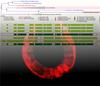
Investigating the broad molecular, cellular and systems level impacts of acute and chronic ethanol in the nematode, Caenorhabditis elegans, as a model.
Identification of Gene-Modules Associated to a Predisposition of Post-Traumatic Stress Disorder
Christopher Woelk (Investigator), Michael Breen
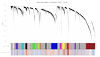
The predisposing genetic factors associated to Post-Traumatic Stress Disorder (PTSD) are altogether unknown. Since not all trauma-survivors later develop the PTSD, it has been hypothesized that transcript differentiation prior–to-trauma exposure could be associated to the risk and resilience of PTSD. We apply a systems-level approach to investigate changes in transcript abundance (gene expression profiles) in whole blood of U.S. Marines sampled prior-to-deployment to the battlefield and followed through-out a seven month deployment to obtain disorder related outcomes.
Modelling neuronal activity at the knee joint
Mark Taylor, Tiina Roose (Investigators), Gwen Palmer
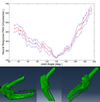
The function of the knee joint is reliant on proprioception, which involves the response of nerve endings in the tissues at the joint. This project will be concentrating on the neuronal activity, caused by mechanical stimuli, of the more common receptors found at the knee (Ruffini, Paciniform, Golgi and Nociceptor).
There are three stages to this project:
1. Modelling the behaviour of each individual receptor, with the use of the Hodgkin-Huxley model [1].
2. These models will then be applied to the soft tissues around a knee, where a global deformation of the tissue will result in local stimulation of receptors.
3. The soft tissue models will then be applied to structures in the knee.
[1] - Hodgkin, A.L. and A.F. Huxley, A quantitative description of membrane current and its application to conduction and excitation in nerve. Journal of Physiology, 1952. 117: p. 500-544.
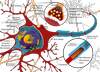
Multiscale Modelling of Electrochemical Processes in Neurons
John Chad (Investigator), Stuart George
Using asymptotic expansions to determine how the signalling behaviour of neurons is related to their microstructure.
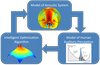
Optimisation of Acoustic Systems for Perceived Sound Quality
Jordan Cheer (Investigator), Daniel Wallace
Acoustic systems have traditionally been optimised on the basis of minimising an objective acoustic measure, such as sound pressure level. The project investigates the use of subjective measures of sound quality, such as "loudness", "harshness" etc. in optimisation algorithms.
Prediction of Psychopathology by MRT data
We aim to predict psychopathological outcomes in adults by functional brain data using multilevel regression and crossvaligdation strategies.
Spatially Embedded Complex Systems Engineering
Seth Bullock (Investigator)
SECSE brought together an interdisciplinary team of scientists working on an ambitious three-and-a-half year project titled. The research cluster spanned neuroscience, artificial intelligence, geography, and complex systems in an attempt to understand the role of spatial organization and spatial processes in complex networks within the domains of neural control, geo-information systems and distributed IT systems such as those implicated in air-traffic control.
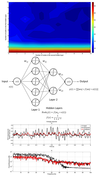
The tarsal intersegmental reflex control system in the locust hind leg
David Simpson, Philip Newland (Investigators), Alicia Costalago Meruelo
Locomotion is vital for vertebrates and invertebrates to survive. Despite that feet are responsible for stability and agility in most animals, research on feet movements and their reflexes is scarce.
In this thesis, the tarsal reflex responses of locust will be studied and modelled with ANNs to achieve a deeper comprehension of how stability and agility is accomplished.
The choice of ANNs is linked to the applicability of the method into other fields, such as technological designs or medical treatment.
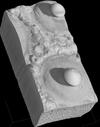
µ-VIS Computed Tomography Centre
Ian Sinclair, Richard Boardman, Dmitry Grinev, Philipp Thurner, Simon Cox, Jeremy Frey, Mark Spearing, Kenji Takeda (Investigators)
A dedicated centre for computed tomography (CT) at Southampton, providing complete support for 3D imaging science, serving Engineering, Biomedical, Environmental and Archaeological Sciences. The centre encompasses five complementary scanning systems supporting resolutions down to 200nm and imaging volumes in excess of one metre: from a matchstick to a tree trunk, from an ant's wing to a gas turbine blade.
People
 Seth Bullock
Professor, Electronics and Computer Science (FPAS)
 Simon Cox
Professor, Engineering Sciences (FEE)
 Jeremy Frey
Professor, Chemistry (FNES)
 Lindy Holden-Dye
Professor, Biological Sciences (FNES)
 Philip Newland
Professor, Biological Sciences (FNES)
 Ian Sinclair
Professor, Engineering Sciences (FEE)
 Mark Spearing
Professor, Engineering Sciences (FEE)
 Mark Taylor
Professor, Engineering Sciences (FEE)
 Vincent O'Connor
Reader, Biological Sciences (FNES)
 Tiina Roose
Reader, Engineering Sciences (FEE)
 Thomas Blumensath
Senior Lecturer, Institute of Sound & Vibration Research (FEE)
 John Chad
Senior Lecturer, Biological Sciences (FNES)
 David Simpson
Senior Lecturer, Institute of Sound & Vibration Research (FEE)
 Richard Watson
Senior Lecturer, Electronics and Computer Science (FPAS)
 Neil Broderick
Lecturer, Optoelectronics Research Centre
 Jordan Cheer
Lecturer, Institute of Sound & Vibration Research (FEE)
 James Dyke
Lecturer, Electronics and Computer Science (FPAS)
 Philipp Thurner
Lecturer, Engineering Sciences (FEE)
 Richard Boardman
Senior Research Fellow, Engineering Sciences (FEE)
 Philip Williamson
Senior Research Fellow, Biological Sciences (FNES)
Dmitry GrinevResearch Fellow, Engineering Sciences (FEE)
 Rob Mills
Research Fellow, Electronics and Computer Science (FPAS)
 Gwen Palmer
Research Fellow, Engineering Sciences (FEE)
 Roxana Aldea
Postgraduate Research Student, Mathematics (FSHS)
 Jordi Arranz
Postgraduate Research Student, Electronics and Computer Science (FPAS)
Michael BreenPostgraduate Research Student, Medicine (FM)
 Alicia Costalago Meruelo
Postgraduate Research Student, University of Southampton
Paul CrossPostgraduate Research Student, Engineering Sciences (FEE)
 Evander DaCosta
Postgraduate Research Student, Electronics and Computer Science (FPAS)
 Stuart George
Postgraduate Research Student, Mathematics (FSHS)
 Juraj Mihalik
Postgraduate Research Student, Engineering Sciences (FEE)
 Can Pervane
Postgraduate Research Student, Electronics and Computer Science (FPAS)
 Daniel Power
Postgraduate Research Student, Electronics and Computer Science (FPAS)
 Nathan Smith
Postgraduate Research Student, Electronics and Computer Science (FPAS)
 Pegah Tayaranian Hosseini
Postgraduate Research Student, Institute of Sound & Vibration Research (FEE)
 Daniel Wallace
Postgraduate Research Student, Engineering Sciences (FEE)
Matthew HigginsUndergraduate Research Student, Biological Sciences (FNES)
 Elena Vataga
Technical Staff, iSolutions
 Petrina Butler
Administrative Staff, Research and Innovation Services
 Richard Edwards
Alumnus, University of New South Wales, Australia
Ben IentAlumnus, Biological Sciences (FNES)
 Kenji Takeda
Alumnus, Engineering Sciences (FEE)
Christopher WoelkNone, None