Acoustics
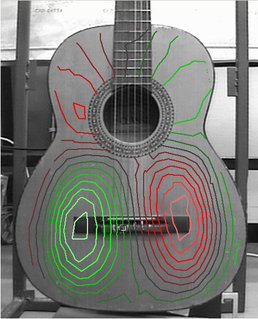
Acoustics is the interdisciplinary science that deals with the study of sound, ultrasound, infra-sound (all mechanical waves in gases, liquids, and solids). This topic covers the development or the use of computational methods for predicting the production, propagation, absorption and perception of acoustic waves. This has many applications including transport noise (aircraft, trains), musical acoustics as well as medical applications (ultrasound and lithotripsy). For more information see http://en.wikipedia.org/wiki/Acoustics
For queries about this topic, contact Gwenael Gabard.
View the calendar of events relating to this topic.
Projects
Aerofoil noise
Richard Sandberg (Investigator)
High-performance computing is used to identify noise sources on aerofoils.
Computational Methods for Aircraft Noise Prediction
Gwenael Gabard (Investigator), Albert Prinn
The aim of this project is to develop and test an efficient flow acoustics solver based on the finite element method and the potential flow theory.
Development of a novel Navier-Stokes solver (HiPSTAR)
Richard Sandberg (Investigator)
Development of a highly efficient Navier-Stokes solver for HPC.
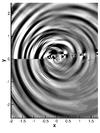
Effects of trailing edge elasticity on trailing edge noise
Richard Sandberg (Investigator), Stefan C. Schlanderer
This work considers the effect of trailing edge elasticity on the acoustic and hydrodynamic field of a trailing edge flow. To that end direct numerical simulations that are fully coupled to a structural solver are conducted.
Investigation of acoustic radiation forces on micro-particles and cells in ultrasonic particle manipulation
Martyn Hill (Investigator), Puja Mishra
A Finite Element model is developed to investigate the force generated on a particle of arbitrary geometry and composition in a sound field. The model overcame the drawbacks of existing analytical solutions of size restriction and provided the flexibility of particle representation. This suggested useful results on shape dependency, effect of elasticity of particle and dominancy of nucleus in a cell in estimating the force on a single particle.
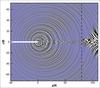
Jet noise
Richard Sandberg (Investigator), Neil Sandham
Direct numerical simulations are used to investigate jet noise.
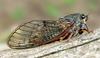
New Forest Cicada Project
Alexander Rogers, Geoff Merrett (Investigators), Davide Zilli, Oliver Parson
Rediscover the critically endangered New Forest cicada with crowdsourced smartphone biodiversity monitoring techniques.
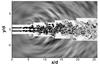
Numerical investigation of the true sources of jet noise
Anurag Agarwal (Investigator), Samuel Sinayoko
Aircraft noise severely impacts the quality of life of people living close to airports. Noise generation by aircrafts is especially large during take-off. Jet noise is the dominant noise source during take-off. It is produced by the high speed flow generated by the engine. However, the actual source of sound remains unknown. A deeper understanding of the sources of jet noise is need to be able to reduce the noise. The aim of this project is to implement a innovative method that would allow to identify the sources of jet noise.
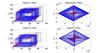
On the applicability of nonlinear timeseries methods for partial discharge analysis
Paul Lewin (Investigator), Lyuboslav Petrov
The governing processes of Partial Discharge (PD)
phenomena trigger aperiodic chains of events resulting in ’ap-
parently’ stochastic data, for which the widely adopted analysis
methodology is of statistical nature. However, it can be shown,
that nonlinear analysis methods can prove more adequate in
detecting certain trends and patterns in complex PD timeseries.
In this work, the application of nonlinear invariants and phase
space methods for PD analysis are discussed and potential pitfalls
are identified. Unsupervised statistical inference techniques based
on the use of surrogate data sets are proposed and employed for
the purpose of testing the applicability of nonlinear algorithms
and methods. The Generalized Hurst Exponent and Lempel Ziv
Complexity are used for finding the location of the system under
test on the spectrum between determinism and stochasticity. The
algorithms are found to have strong classification abilities at
discerning between surrogates and original point series, giving
motivation for further investigations.
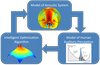
Optimisation of Acoustic Systems for Perceived Sound Quality
Jordan Cheer (Investigator), Daniel Wallace
Acoustic systems have traditionally been optimised on the basis of minimising an objective acoustic measure, such as sound pressure level. The project investigates the use of subjective measures of sound quality, such as "loudness", "harshness" etc. in optimisation algorithms.
Optimizing objective detection methods for auditory evoked responses
Michael Chesnaye
Optimizing objective detection methods for auditory evoked responses
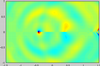
Stochastic computational methods for aero-acoustics
Gwenael Gabard (Investigator), Martina Dieste
Stochastic methods are used to synthesize a turbulent flow which is then used to model the sound radiated by an airfoil interacting with this turbulence. This approach is faster than performing a complete simulation of the flow field.
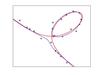
Structured low-rank approximation
Ivan Markovsky
Today's state-of-the-art methods for data processing are model based. We propose a fundamentally new approach that does not depend on an explicit model representation and can be used for model-free data processing. From a theoretical point of view, the prime advantage of the newly proposed paradigm is conceptual unification of existing methods. From a practical point of view, the proposed paradigm opens new possibilities for development of computational methods for data processing.
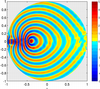
Wave-based discontinuous Galerkin methods
Gwenael Gabard (Investigator), Greg Kennedy
Wave-based computational methods are developed to model sound propagation in moving inhomogeneous media.
People
 Martyn Hill
Professor, Engineering Sciences (FEE)
 Paul Lewin
Professor, Electronics and Computer Science (FPAS)
 Richard Sandberg
Professor, Engineering Sciences (FEE)
 Neil Sandham
Professor, Engineering Sciences (FEE)
 Thomas Blumensath
Senior Lecturer, Institute of Sound & Vibration Research (FEE)
 Edward Richardson
Senior Lecturer, Engineering Sciences (FEE)
Jordan CheerLecturer, Institute of Sound & Vibration Research (FEE)
 Gwenael Gabard
Lecturer, Institute of Sound & Vibration Research (FEE)
 Ivan Markovsky
Lecturer, Electronics and Computer Science (FPAS)
 Geoff Merrett
Lecturer, Electronics and Computer Science (FPAS)
 Alexander Rogers
Lecturer, Electronics and Computer Science (FPAS)
 Anatoliy Vorobev
Lecturer, Engineering Sciences (FEE)
Rie SugimotoSenior Research Fellow, Institute of Sound & Vibration Research (FEE)
Petros BogiatzisResearch Fellow, Ocean & Earth Science (FNES)
Michael ChesnayePostgraduate Research Student, Institute of Sound & Vibration Research (FEE)
 Alicia Costalago Meruelo
Postgraduate Research Student, University of Southampton
Paul CrossPostgraduate Research Student, Engineering Sciences (FEE)
Martina DiestePostgraduate Research Student, Institute of Sound & Vibration Research (FEE)
Alex JamesPostgraduate Research Student, Institute of Sound & Vibration Research (FEE)
Greg KennedyPostgraduate Research Student, Institute of Sound & Vibration Research (FEE)
Nicholas McCawPostgraduate Research Student, Engineering Sciences (FEE)
Puja MishraPostgraduate Research Student, Engineering Sciences (FEE)
 Sarah Neenan
Postgraduate Research Student, Institute of Sound & Vibration Research (FEE)
Stephen PowellPostgraduate Research Student, Engineering Sciences (FEE)
 Stefan C. Schlanderer
Postgraduate Research Student, Engineering Sciences (FEE)
 Stefano Spagnolo
Postgraduate Research Student, Engineering Sciences (FEE)
Jacob TurnerPostgraduate Research Student, Engineering Sciences (FEE)
Koen van MierloPostgraduate Research Student, Engineering Sciences (FEE)
 Daniel Wallace
Postgraduate Research Student, Engineering Sciences (FEE)
 Davide Zilli
Postgraduate Research Student, Electronics and Computer Science (FPAS)
 Petrina Butler
Administrative Staff, Research and Innovation Services
 Erika Quaranta
Enterprise staff, Engineering Sciences (FEE)
Anurag AgarwalAlumnus, Institute of Sound & Vibration Research (FEE)
Kondwani KanjereAlumnus, Engineering Sciences (FEE)
Oliver ParsonAlumnus, Electronics and Computer Science (FPAS)
Albert PrinnAlumnus, Institute of Sound & Vibration Research (FEE)
 Samuel Sinayoko
Alumnus, BMLL
Daisuke SasakiNone, None
Yeping XiongNone, None