C++
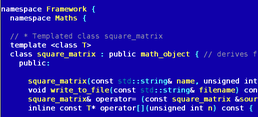
C++ is a general-purpose, strongly-typed programming language, with notable support for object-oriented and generic programming. C++ has an ISO standard, and the current version is C++03, which is C++98 with very minor revisions. A major rehaul, provisionally termed C++0x, is planned for 2011.
A good overview (and more) of the language can be found in Bruce Eckel's Thinking in C++, the PDF of which can be downloaded for free HERE. Another recommended read is The C++ Programming Language by Bjarne Stroustrup who created the language. This book cannot be downloaded for free, but for anyone with a serious interest in the subject, I highly recommend having a paper copy.
For queries about this topic, contact Jacek Dziedzic.
View the calendar of events relating to this topic.
Projects
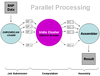
A composite likelihood approach to genome-wide data analyses.
Andrew Collins (Investigator), Jane Gibson, Ioannis Politopoulos
We describe composite likelihood-based analysis of a genome-wide breast cancer case-control sample by determining genome regions of fixed size on a linkage disequilibrium map which delimit comparable levels of linkage disequilibrium. Analysis of findings suggests further validation in more samples from other cohorts as well as the exploitation of novel computationally-intensive methods such as next-generation sequencing.
Advanced modelling for two-phase reacting flow
Edward Richardson (Investigator)
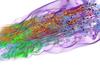
Engine designers want computer programs to help them invent ways to use less fuel and produce less pollution. This research aims to provide an accurate and practical model for the injection and combustion of liquid fuel blends.
Assessment of the performance of novel RANS and hybrid turbulence models on the flow around a cylinder
Manuel Diaz Brito
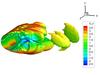
The turbulent flow around a circular cylinder is a widely studied problem in fluid dynamics. At a certain characteristic Reynolds numbers the development of a turbulent wake occurs simultaneously with separation of the laminar boundary layer. The mechanisms defining this critical flow state are very complex to predict computationally. In this project the suitability of novel non-linear eddy viscosity closures and a hybrid Flow Simulation Methodology formulation to face these massively separated flows is studied. The flow predicting capabilities of the baseline EASM, ?-?-EASM and FSM-?-?-EASM tested are contrasted with the industrial renowned k-?-SST turbulence model. In the visualisation of the results it is evident that the ?-?-EASM has greater flexibility estimating the components of the Reynolds stresses with respect to the baseline EASM and the k-?-SST. Although dome differences are observed, the prediction of the critical flow around a cylinder is not accurately achieved by any of these RANS models, but the FSM-?-?-EASM shows great resemblance with the validation data, demonstrating capabilities of resolving very complex flow phenomena with minimum user input if the computational grid is fine enough. In order to demonstrate even greater advantages of non-linear models it was postulated that the addition of a streamwise impinging vortex hitting the leading edge of the cylinder would make the flow field fully three-dimensional. First attempts were tried in this route but time constraints limited the ultimate scope of the present work.
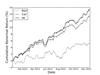
Automated Algorithmic Trading with Intelligent Execution
Frank McGroarty, Enrico Gerding (Investigators), Ash Booth
In this project, we introduce the first fully automated trading system for real-world stock trading that uses time-adaptive execution algorithm to minimise market impact while increasing profitability com- pared to benchmark strategies.

B-meson coupling with relativistic heavy quarks
Jonathan Flynn (Investigator), Ben Samways, Dirk Broemmel, Patrick Fritzsch
We non-perturbatively compute the coupling between B* and B pi meson states relying on relativistic heavy quarks and domain wall light fermions. The coupling is of importance for an effective description of hadronic heavy meson decays.
Bioclimatic Architecture
Seth Bullock (Investigator), Nicholas Hill
This was a review report on bioclimatic architecture and how such architecture may be designed by agent-based models inspired by the building behaviour of insects.
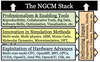
Centre for Doctoral Training in Next Generation Computational Modelling
Hans Fangohr, Ian Hawke, Peter Horak (Investigators), Susanne Ufermann Fangohr, Thorsten Wittemeier, Kieran Selvon, Alvaro Perez-Diaz, David Lusher, Ashley Setter, Emanuele Zappia, Hossam Ragheb, Ryan Pepper, Stephen Gow, Jan Kamenik, Paul Chambers, Robert Entwistle, Rory Brown, Joshua Greenhalgh, James Harrison, Jonathon Waters, Ioannis Begleris, Craig Rafter
The £10million Centre for Doctoral Training was launched in November 2013 and is jointly funded by EPSRC, the University of Southampton, and its partners.
The NGCM brings together world-class simulation modelling research activities from across the University of Southampton and hosts a 4-year doctoral training programme that is the first of its kind in the UK.
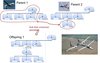
Challenging Topological Prejudice - Automated Airframe Layout Design
Andras Sobester (Investigator), Paul Chambers
Aircraft preliminary design scopes are drastically narrowed by topological prejudice. Modern aircraft have settled on the same 'tube plus wing and cruciform tail' type topology that has been adopted through their ancestry, with no scientific evidence that this layout is optimal. This research project poses the question:
“Given a topologically flexible aircraft geometry that is free of prejudice or bias, would a sophisticated multi-disciplinary optimization process yield a conventional layout?”
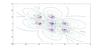
Chaotic Analysis of Partial Discharge
Paul Lewin (Investigator), Lyuboslav Petrov
The deterministic character of PD pulses predicted by theory has been shown to be existent for certain PD events. Finding characteristic patterns in phase space enables field-data PD detection with high reliability.
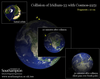
Cloud Computing for Planetary Defense
Hugh Lewis, Kenji Takeda (Investigators), Steven Johnston
We demonstrate how a cloud-based computing architecture can be used for planetary defense and space situational awareness (SSA). We show how utility compute can facilitate both a financially economical and highly scalable solution for space debris and near-earth object impact analysis. As we improve our ability to track smaller space objects, and satellite collisions occur, the volume of objects being tracked vastly increases, increasing computational demands. Propagating trajectories and calculating conjunctions becomes increasingly time critical, thus requiring an architecture which can scale with demand. The extension of this to tackle the problem of a future near-earth object impact is discussed, and how cloud computing can play a key role in this civilisation-threatening scenario.
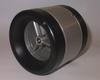
Complexity in Modelling Electric Marine Propulsive Devices
Suleiman Sharkh, Neil Bressloff, Hans Fangohr (Investigators), Aleksander Dubas
This project involves the simulation of turbulent flow around a marine rim-driven thruster and the complex interaction of flow features involved through computational fluid dynamics. Following this, the optimisation of design parameters using computational fluid dynamics to calculate the objective function is performed and surrogate modelling utilised to estimate optimum design configuration.
Data Science and HPC
Are Data science and HPC really different fields or are people just repackaging old ideas with new words.
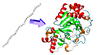
Deep Optimisation
Jamie Caldwell
The project will develop the implementation and application of a new optimisation technique. 'Deep optimisation' combines deep learning techniques in neural networks with distributed optimisation methods to create a dynamically re-scalable optimisation process. This project will develop this technique to better-understand its capabilities and limitations and develop GPU implementations. The protein structure prediction problem will be used as the main test application.
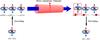
Desiging Near-Capacity Quantum Error Correction Codes
Lajos Hanzo (Investigator), Zunaira Babar
Design efficient quantum error correction codes to correct the errors encountered in a quantum transmission; thus, increasing reliability and robustness of the future quantum systems.
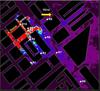
DIPLOS - Dispersion of Localised Releases in a Street Network
Trevor Thomas, Ian Castro (Investigators)
The security threat level from international terrorism, introduced by the UK Security Service, has been classified as either "severe" or "critical" for much of its six-year history, and currently remains as "substantial" (source: MI5 website). Part of the risk posed by terrorist threats involves potential releases of air-borne chemical, biological, radiological or nuclear (CBRN) material into highly populated urbanised areas. Smoke from industrial accidents within or in the vicinity of urban areas also pose risks to health and can cause widespread disruption to businesses, public services and residents. The Buncefield depot fire of 2005 resulted in the evacuation of hundreds of homes and closure of more than 200 schools and public buildings for two days; consequences would have been much more severe if prevailing meteorological conditions had promoted mixing or entrainment of the smoke plume into the urban canopy. In both these scenarios it is crucial to be able to model, quickly and reliably, dispersion from localised sources through an urban street network in the short range, where the threat to human health is greatest. However, this is precisely where current operational models are least reliable because our understanding and ability to model short-range dispersion processes is limited. The contribution that DIPLOS will make is:
1. to fill in the gaps in fundamental knowledge and understanding of key dispersion processes,
2. to enable these processes to be parametrized for use in operational models,
3. to implement them into an operational model, evaluate the improvement and apply the model to a case study in central London
Most of the existing research on urban dispersion has focused on air quality aspects, with sources being extensive and distributed in space. Scientifically, this research is novel in focusing on localized releases within urban areas, and on dispersion processes at short range. Through a combination of fundamental studies using wind tunnel experiments and high resolution supercomputer simulations, extensive data analysis and development of theoretical and numerical models, DIPLOS will contribute to addressing this difficult and important problem from both a scientific research and a practical, operational perspective.
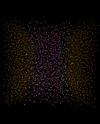
Dual resolution simulations of lipid membrane systems
Jonathan Essex (Investigator), Kieran Selvon
This project aims to shed light on cell membrane mechanisms which are difficult to probe experimentally, in particular drug permiation across the cell membrane. If one had a full understanding of this mechanism, drugs could be designed to easily cross the membrane, or target particular embedded proteins to improve their efficacy. A reliable and robust computational method to asses a molecules permeability would be invaluable in the field of drug design, we seek to perfect such a method.

Evaluation of Vortex Shedding effects on Slender Structures using Large-Eddy Simulation
Zheng-Tong Xie, Ian Castro (Investigators), Steven Daniels
Wind-induced vortex shedding on buildings is a main concern for the engineer, as this can lead to severe structural failures, or at the very least fatigue concerns. Wind tunnel testing of this effect is somewhat limited with the generation of turbulent flow, making the use of numerical techniques more appealing. Using Iridis3&4, Computational Fluid Dynamics has been employed to simulate the turbulent wind flow around tall buildings and bridge decks. The research proposes novel numerical techniques for the analysis of vortex induced effects on these structures for an effective use in industry.

Evolving Resilience to Leverage Based Crashes
Frank McGroarty, Enrico Gerding (Investigators), Ash Booth
This project analyses the maturation, initiation and evolution of crashes in the financial markets using an agent-based model.
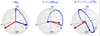
Fidelity optimisation in an atomic quantum computer
Timothy Freegarde (Investigator), Jack Saywell
Development of optimised composite pulses for atomic quantum computers with the aim of reducing systematic errors in information processing caused by variations in laser intensity and environment.
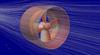
Fluid Dynamics Optimisation of Rim-Drive Thrusters and Ducted Hydrokinetic Generators
Aleksander Dubas, Suleiman Sharkh (Investigators)
This is a Knowledge Transfer Partnership project is a collaboration between the University of Southampton and TSL Technology Ltd. to develop computational fluid dynamics software design tools for modelling and optimising the design of propeller thrusters and water turbine generators.
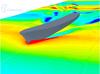
Fluid Loads and Motions of Damaged Ships
Dominic Hudson, Ming-yi Tan (Investigators), Christian Wood, James Underwood, Adam Sobey
An area of research currently of interest in the marine industry is the effect of damage on ship structures. Research into the behaviour of damaged ships began in the mid nineties as a result of Ro-Ro disasters (e.g. Estonia in 1994). Due to the way the Estonia sank early research mainly focused on transient behaviour immediately after the damage takes place, the prediction of capsize, and of large lateral motions. Further research efforts, headed by the UK MoD, began following an incident where HMS Nottingham ran aground tearing a 50m hole from bow to bridge, flooding five compartments and almost causing the ship to sink just off Lord Howe Island in 2002. This project intends to answer the following questions:
“For a given amount of underwater damage (e.g. collision or torpedo/mine hit), what will be the progressive damage spread if the ship travels at ‘x’ knots? OR for a given amount of underwater damage, what is the maximum speed at which the ship can travel without causing additional damage?”
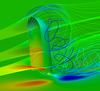
Fluid Structure Interactions of Yacht Sails
Stephen Turnock (Investigator), Daniele Trimarchi
The research is the main subject of the PhD topic. It regards the application of fluid structure interaction techniques to the domain of yacht sails simulation
Gravitational waves from neutron stars
Ian Hawke (Investigator)
Gravitational waves, once detected, will give information about the extremes of space and time. Compact objects such as neutron stars are perfect locations for generating such waves.
Hadronic structure on the computer
Jonathan Flynn (Investigator), Dirk Broemmel, Thomas Rae, Ben Samways
In experiments at the Large Hadron Collider (LHC) at CERN, Geneva, the interactions that occur between the colliding particles (protons in this case) can be factorised into a simple scattering between two constituent particles, called quarks, followed by a hadronisation process, which describes the dynamics of forming the bound proton states. Quarks are particles within the proton that bind to form composite particles (hadrons) such as a proton. The scattering process can be computed relatively easily, but hadronisation is intrinsically non-perturbative and hard to calculate. Lattice QCD (computer simulation of QCD on a discrete space-time lattice) provides our only known first-principles and systematically-improvable method to address problems like hadronisation. This project uses Iridis to extract parton distribution amplitudes which are experimentally inaccessible, but needed to describe the quark structure of hadrons.
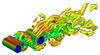
Hybrid RANS/LES methods
Richard Sandberg (Investigator), Markus Weinmann
Novel hybrid RANS/LES methods are developed for more accurate and efficient simulation of flow over complex geometries.

Kaon to two pion decays in lattice QCD
Jonathan Flynn (Investigator), Elaine Goode, Dirk Broemmel
We calculate kaon decay amplitudes on the lattice so we may compare the Standard Model to experiment.
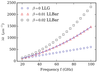
Magnetic dynamics under the Landau-Lifshitz-Baryakhtar equation
Hans Fangohr (Investigator), Weiwei Wang
Magnetic dynamics using the Landau-Lifshitz-Baryakhtar (LLBar) equation that the nonlocal damping is included as well as the scalar Gilbert damping.
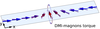
Magnon-Driven Domain-Wall Dynamics in the presence of Dzyaloshinskii-Moriya Interaction
Hans Fangohr (Investigator), Weiwei Wang
The domain wall motion induced by spin waves (magnons) in the presence of Dzyaloshinskii-Moriya Interaction is studied in this project.
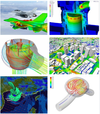
Massively-Parallel Computational Fluid Dynamics
Simon Cox, Stephen Turnock, Alexander Phillips (Investigators), James Hawkes
Computational Fluid Dynamics (CFD) is a numerical method for modelling fluid flows and heat transfer - and is used in many industries. It can be used to model dynamics around aircraft, ships and land vehicles; and also has uses in engine design, architecture, weather forecasting, medicine, computer-generated imagery (CGI) and much more. To harness the full power of CFD, it is necessary to utilise the full power of modern supercomputers. This project aims to improve the scalabilty of existing CFD codes so that more complex problems can be tackled efficiently.
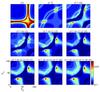
Measuring biomolecules - improvements to the spectroscopic ruler
Pavlos Lagoudakis, Tom Brown (Investigators), Jan Junis Rindermann, James Richardson
The spectroscopic ruler is a technique to measure the geometry of biomolecules on the nm scale by labeling them with pairs of fluorescent markers and measuring distance dependent non-radiative energy transfer between them. The remaining uncertainty in the application of the technique originates from the unknown orientation between the optical dipole moments of the fluorescent markers, especially when the molecule undergoes thermal fluctuations in physiological conditions. Recently we introduced a simulation based method for the interpretation of the fluorescence decay dynamics of the markers that allows us to retrieve both the average orientation and the extent of directional fluctuations of the involved dipole moments.
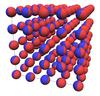
Modelling micromagnetism at elevated temperature
Hans Fangohr, Kees de Groot, Peter de_Groot (Investigators), Dmitri Chernyshenko
We aim to develop a multiscale multiphysics model of
micromagnetism at elevated temperatures with atomistic simulations for
material parameter. The tool will be used to guide the development of the next generation magnetic data storage technology: heat assisted magnetic recording.
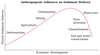
Multidecadal Sediment Fluxes to Deltas Under future Environmental Change Scenarios
Stephen Darby (Investigator), Frances Dunn
Coastal deltas, on which over half a billion people live worldwide, maintain elevation above sea level by retaining sediment on their surfaces. The aim of this research is to project future fluvial sediment delivery to 47 deltas under environmental change scenarios to assess the sustainability of deltas environments globally.
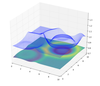
Multiscale modelling of neutron star oceans
Ian Hawke (Investigator), Alice Harpole
Type I X-ray bursts are explosions which occur on the surface of some
neutron stars. It is believed that the burning begins in a localised spot in the ocean of the
star before spreading across the entire surface. By gaining a better understanding of X-ray
bursts, it is hoped that tighter limits can be determined for other neutron star properties
such as the radius and magnetic field strength.
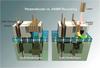
Multiscale models of magnetic materials at elevated temperatures
Denis Kramer (Investigator), Jonathon Waters
This project will develop and apply multi-scale modelling approaches to investigate thermal fluctuation effects in magnetic materials.

Multiscale Relativistic Simulations
Ian Hawke (Investigator), Alex Wright
There has been recent success in experiments, such as LIGO, in detecting the mergers of celestial objects via the gravitational waves they emit. By implementing numerical methods, we aim to speed up the numerical simulations of these events but up to two orders of magnitudes, and study binary inspirals in greater detail and over much larger timespans.

Multiscale Relativistic Simulations
There has been recent success in experiments, such as LIGO, in detecting the mergers of celestial objects via the gravitational waves they emit. I will use numerical methods to simulate the inspiral of a black hole/neutron star binary system.

MXL Project
Mark Taylor, Junfen Shi (Investigators)
‘MXL’ is short for “Enhanced patient safety by computational Modelling from clinically available X-rays to minimise the risk of overload and instability for optimised function and Longevity”. This is an international EU-funded project which the Bioengineering Sciences Research Group at Southampton is involved in. For more information, visit http://www.m-x-l.eu
NGCM-0054 - Automatic Code Generation for Computational Science
Hans Fangohr (Investigator), Gary Downing
Automatically generate code to solve partial differential equations specified symbolically.
Non-Perturbative Renormalisation on the Lattice
Jonathan Flynn (Investigator), Dirk Broemmel, Thomas Rae
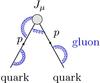
In this project we compute renormalisation factors for various physical observables in a non-perturbative lattice framework. Renormalisation hereby arises due to a fundamental scale dependence of the physical processes.
Numerical Elastic Neutron Stars
Ian Hawke, Ian Jones (Investigators), Andrew Penner
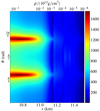
We study the astrophysical effects of the crust on a neutron star using an elasto-hydrodynamic model.
Numerical investigation of the true sources of jet noise
Anurag Agarwal (Investigator), Samuel Sinayoko
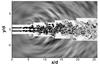
Aircraft noise severely impacts the quality of life of people living close to airports. Noise generation by aircrafts is especially large during take-off. Jet noise is the dominant noise source during take-off. It is produced by the high speed flow generated by the engine. However, the actual source of sound remains unknown. A deeper understanding of the sources of jet noise is need to be able to reduce the noise. The aim of this project is to implement a innovative method that would allow to identify the sources of jet noise.

OpenDreamKit
Hans Fangohr (Investigator), Marijan Beg
OpenDreamKit is a [Horizon 2020](https://ec.europa.eu/programmes/horizon2020/) European Research Infrastructure project (#676541) providing substantial funding to the open-source computational mathematics ecosystem, and in particular popular tools such as LinBox, MPIR, SageMath, GAP, Pari/GP, LMFDB, Singular, MathHub, and the IPython/Jupyter interactive computing environment.
Porcupine Basin Project
Louise Watremez
The Porcupine Basin is a narrow failed rift, offshore SW Ireland, featuring extreme crustal thinning. The M61/2 survey (May 2004, T. Reston and B. O'Reilly) allowed for the acquisition of seismic refraction data across and along the basin, along 5 transects. The processing of the data along these transects will give us information about the crustal structure across the basin, faulting due to the crustal extension, nature of the upper-mantle, etc. This project is funded by Petroleum Infrastructure Programme (PIP).
Precision study of critical slowing down in lattice simulations of the CP^{N-1} model
Jonathan Flynn, Andreas Juttner (Investigators), Andrew Lawson
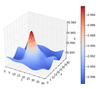
This project involves the study of critical slowing down (CSD): a property that may arise when taking measurements in Monte Carlo simulations. In order to study and quantify this phenomenon we have performed extensive simulations of the CP^{N-1} model. By studying the properties of the Monte Carlo algorithms in this model, we hope to make algorithmic improvements that can then be employed in simulations of physical quantum field theories, such as in lattice quantum chromodynamics (lattice QCD).
Pushing the Envelope of Planetary Formation and Evolution Simulations
Peter Bartram
A full understanding of the formation and the early evolution of the Solar System and extrasolar planetary systems ranks among natural science's grand challenges, and at present, even the dominant processes responsible for generating the observed planetary architecture remain elusive.
pyQCD
Matthew Spraggs
A basic Python package to perform coarse lattice QCD simulations on desktop and workstation computers.
Quantifying Collective Construction
Seth Bullock (Investigator), Nicholas Hill
This was an initial investigation into how best to develop quantifying and discriminating measures of both the processes and results of collective construction.
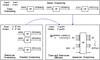
Quantum Computation for Signal Detection in Multiple-Input Multiple-Output Communication Systems
Lajos Hanzo (Investigator), Panagiotis Botsinis
Optimal, classic optimization processes in communication systems, such as signal detection, introduce an extremely high computational complexity in the system. Quantum computation offers the optimal equivalent algorithms in the quantum domain, with at least a quadratic degradation in complexity. Since quantum computers have still not been physically realized though, the quantum algorithms' simulation's complexity is higher than that of the optimal classic equivalents. Use of Iridis is essential in facilitating their simulation.
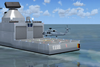
Real-time CFD for helicopter flight simulation
Kenji Takeda (Investigator), James Kenny
Project aims to show how real-time computational fluid dynamics (CFD) could be used to improve the realism of helicopter flight simulators.
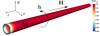
Reversal of ferromagnetic nanotubes
Hans Fangohr (Investigator), David Cortes
We are analysing the feasibility of reversing a nano scaled magnetic tube by applying weak pulses of currents through the nano-tube inner core
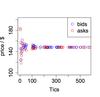
Self Interest & the Evolutionary Optimisation of Adaptive Trading Agents for Continuous Double Auctions
Frank McGroarty, Enrico Gerding (Investigators), Ash Booth
One cannot escape the recent crises in economics and the lack of understanding of financial markets that has been highlighted by them. Improvements to current market models are already being made and a realisation of the power of agent based modelling in such models is evident. In this project we seek to explore an existing model by Cliff of trader behaviour in continuous double auctions. We investigate the strategies that arise in such auctions when trader parameters are evolved with intent to maximise personal profit. Results show different trading strategies to those evolved by Cliff and explanations are given with regards to the self-interest.
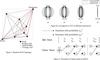
Self Organized Network Routing using Quantum Evolutionary Methods
Lajos Hanzo (Investigator), Dimitrios Alanis
Self Organized Networks (SON) may consist of a large number of nodes, which could be fully interconnected. Optimizing its performance satisfying various Quality of Service (QoS) requirements is a quite complex procedure and the optimization problem belongs to the family of the Travelling Salesman Problems (TSP) which has been proven to be NP-hard as the number of nodes increases. In this project, various suboptimal methods are used in order to tackle this multi-objective optimization problem; in particular, the Ant Colony Optimization (ACO) and its quantum inspired counterpart (QACO) are being employed in order to reduce complexity.
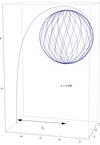
Self-Force and Black Hole Inspirals
Sam Dolan (Investigator)
We use IRIDIS to compute the self-force acting on a solar-mass black hole orbiting a supermassive black hole.
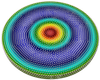
Skyrmionic states in confined nanostructures
Hans Fangohr (Investigator), Marijan Beg
An ever increasing need for data storage creates great challenges for the development of high-capacity storage devices that are cheap, fast, reliable, and robust. Because of the fundamental constraints of today's technologies, further progress requires radically different approaches. Magnetic skyrmions are very promising candidates for the development of future low-power, high-capacity, non-volatile data storage devices.
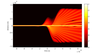
Soft x-ray science on a tabletop
Peter Horak, Jeremy Frey, Bill Brocklesby (Investigators), Patrick Anderson, Arthur Degen-Knifton
Complex numerical simulations are being performed to aid experimentalists at Southampton realize the next generation of high brightness tabletop sources of coherent soft x-rays.?
Software Sustainability Institute
Simon Hettrick (Investigator)
A national facility for cultivating world-class research through software
Software helps researchers to enhance their research, and improve the speed and accuracy of their results. The Software Sustainability Institute can help you introduce software into your research or improve the software you already use.
The Institute is based at the universities of Edinburgh, Manchester, Oxford and Southampton, and draws on a team of experts with a breadth of experience in software development, project and programme management, research facilitation, publicity and community engagement.
We help people build better software, and we work with researchers, developers, funders and infrastructure providers to identify key issues and best practice in scientific software.
Stochastic computational methods for aero-acoustics
Gwenael Gabard (Investigator), Martina Dieste
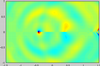
Stochastic methods are used to synthesize a turbulent flow which is then used to model the sound radiated by an airfoil interacting with this turbulence. This approach is faster than performing a complete simulation of the flow field.
Sustainable domain-specific software generation tools for extremely parallel particle-based simulations
Chris-Kriton Skylaris (Investigator)
A range of particle based methods (PBM) are currently used to simulate materials in chemistry, engineering, physics and biophysics. The 4 types of PBM considered directly in the proposed are molecular dynamics (MD), the ONETEP quantum mechanics-based program, discrete element modelling (DEM), and smoothed particle hydrodynamics (SPH).
The overall research objective is to develop a sustainable tool that will deliver, in the future, cutting edge research applicable to applications ranging from dam engineering to atomistic drug design.
The Origins of Communication Revisited
Jason Noble (Investigator), Jordi Arranz
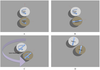
Quinn (2001) sought to demonstrate that communication be- tween simulated agents could be evolved without pre-defined communication channels. Quinn’s work was exciting because it showed the potential for ALife models to look at the real origin of communication; however, the work has never been replicated. In order to test the generality of Quinn’s result we use a similar task but a completely different agent architecture. We find that qualitatively similar behaviours emerge, but it is not clear whether they are genuinely communicative. We extend Quinn’s work by adding perceptual noise and internal state to the agents in order to promote ritualization of the nascent signal. Results were inconclusive; philosophical implications are discussed.
The Perks of Complexity Reduction
Lajos Hanzo (Investigator), Chao Xu
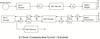
Reliable high-speed modems facilitate ubiquitous communications in our daily lives amongst people and/or machines. The communication technologies we need for the future have to have a high reliability and a low cost. My research aims for reducing the complexity of state-of-the-art communication systems, so that they can communicate in real time at an increased throughput. Naturally having access to parallel computers such as Iridis gives my research a competitive advantage over other researchers, relying on slower simulations.
Today's Computation Enabling Tomorrow's Seamless Communication
Lajos Hanzo (Investigator), Varghese Thomas
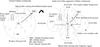
Radio Over Fibre (ROF) is a communication technique that aims to gainfully amalgamate the benefits of optical and wireless communication, while keeping the system cost low. This technique would support the next generation of wireless services.
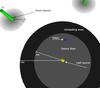
Towards design patterns for robot swarms
Richard Crowder, Seth Bullock (Investigators), Lenka Pitonakova
Swarm robotics is an inter-disciplinary field that seeks to design the behaviour of robots that can cooperate effectively on tasks like search and retrieval, reconnaissance, construction, etc. In this project, we are aiming towards a theoretical understanding of swarm intelligence and the development of design patterns for effective robot swarms.

Traveling and movement during European Late Prehistory
Patricia Murrieta Flores
This project has as main purpose to investigate through spatial analysis and computational modelling the variables and factors that influenced how humans traveled during prehistoric times.
One of the principal objectives will be to clarify the role that certain landscape elements (i.e megalithic monuments) played in terrestrial navigation and territorial definition.
This project is supported by CONACYT (Mexico) as a doctoral research by Patricia Murrieta-Flores under the supervision of Dr. David Wheatley (University of Southampton) and Dr. Leonardo Garcia Sanjuan (University of Seville, Spain). It also counts with the collaboration of Dr. Dimitrij Mlekuz (Gent University, Belgium).
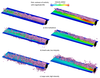
Turbulence and tidal turbines
William Batten (Investigator), Tom Blackmore, Luke Blunden
The PhD research is focused on understanding the effects of turbulence on tidal turbines. The problem has been simplified using grid generated turbulence and actuator disc representations of tidal turbines.

Uncertainty quantification and propagation through complex chains of computational models
Dave Woods (Investigator), Stephen Gow
This project will explore how predictions can be made and assessed through complex chains of computer models.

Unsteady Aerodynamics of Wings in Extreme Conditions
Charles Badoe (Investigator), Neil Sandham, Zheng-Tong Xie
Sizing of civil aircraft is dictated by extreme loads experienced at the limits of flight envelope, for example during gust, turbulence or low speed manoeuvre. The project aims to understand the unsteady aerodynamic behaviour of wings in extreme conditions involving heaving motions near stall.

Vertical turbulence structures in the benthic boundary layer as related to suspended sediments
Hachem Kassem (Investigator), Charlie Thompson
There is a genuine need for better, more robust modelling of suspended sediment transport in the coastal zone, both to understand its morphological evolution and it's impact on biogeochemical cycling, ecosystems services and to guide engineering applications such as dredging and defence schemes against erosion and flooding.
The suspension of sediment in turbulent flows is a complex case of fluid-particle interaction, governed by shear stresses (momentum exchanges) at the bed and within the benthic boundary layer (BBL). The intermittent transfer of momentum is a manifestation of coherent turbulent vortex structures within the flow. The passage of such structures (or clusters of) is often related to perturbations of bottom sediment, which may be entrained and maintained in suspension if sufficient turbulent energy is provided. The first part of my PhD investigated the temporal and scale relationships between wave–generated boundary layer turbulence and event–driven sediment transport in oscillatory flow in the nearshore. This involved complex statistical, spectral, quadrant and wavelet analysis of high frequency nearshore measurements of turbulence and suspended sediments (medium sand), collected as part of the EU-funded Barrier Dynamics Experiment II (BARDEX II). The following step aims to develop a 3D numerical model in OpenFOAM which would reproduce the fine scale turbulence structures observed over a fixed rippled bed in oscillatory flow. The 3D velocity field, turbulent components, correlations (stresses) and quadrant structures will then be linked to observed sediment resuspension events. The model will be validated against a set of laboratory experiments undertaken at the Fast Flow Facility at HR Wallingford.
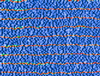
Vortex Dynamics in High-Tc superconductors
Hans Fangohr (Investigator)
The dynamics of vortices in high temperature superconductors exhibits the complex and rich physics we expect from many body systems with competing interactions. Molecular Dynamics, Langevin Dynamics and Monte Carlo Computer simulations are carried out to understand this system in more detail.
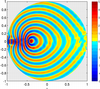
Wave-based discontinuous Galerkin methods
Gwenael Gabard (Investigator), Greg Kennedy
Wave-based computational methods are developed to model sound propagation in moving inhomogeneous media.
Whisky Code
Ian Hawke (Investigator)
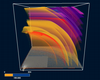
A 3D finite volume code for simulating compact relativistic hydrodynamics.
Wind Turbine Blade Flow in Abnormal Environments
Zheng-Tong Xie (Investigator), Yusik Kim
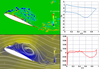
Large wind turbines are being installed throughout UK and often in regions with complex meteorology and/or topography (e.g. involving wind gusts, turbulence, icing), which affect turbine performance (energy output, noise emission etc), life expectancy and safety. It is very expensive to conduct experiments to study such problems. This proposal suggests, firstly, an LES study of low-Re flows around an oscillating airfoil, to investigate the transition, separation, vortex shedding and dynamic stall behaviour. Secondly, a combined LES-RANS approach (with, e.g., a transitional RANS model in the near wall region) will be carefully designed (using our recently developed efficient turbulence generator at the interface between LES and RANS) and validated against low-Re results.
People
 Neil Bressloff
Professor, Engineering Sciences (FEE)
 Tom Brown
Professor, Chemistry (FNES)
 Seth Bullock
Professor, Electronics and Computer Science (FPAS)
 Andrew Collins
Professor, Medicine (FM)
 Simon Cox
Professor, Engineering Sciences (FEE)
 Stephen Darby
Professor, Geography (FSHS)
 Graeme Day
Professor, Chemistry (FNES)
 Kees de Groot
Professor, Electronics and Computer Science (FPAS)
 Jonathan Essex
Professor, Chemistry (FNES)
 Hans Fangohr
Professor, Engineering Sciences (FEE)
 Jonathan Flynn
Professor, Physics & Astronomy (FPAS)
 Jeremy Frey
Professor, Chemistry (FNES)
 Lajos Hanzo
Professor, Electronics and Computer Science (FPAS)
 Pavlos Lagoudakis
Professor, Physics & Astronomy (FPAS)
Paul LewinProfessor, Electronics and Computer Science (FPAS)
 Frank McGroarty
Professor, Management (FBL)
 Richard Sandberg
Professor, Engineering Sciences (FEE)
 Neil Sandham
Professor, Engineering Sciences (FEE)
 Suleiman Sharkh
Professor, Engineering Sciences (FEE)
 Mark Taylor
Professor, Engineering Sciences (FEE)
 Stephen Turnock
Professor, Engineering Sciences (FEE)
 Dave Woods
Professor, Southampton Statistical Sciences Research Institute (FSHS)
 Zheng-Tong Xie
Professor, Engineering Sciences (FEE)
 Bill Brocklesby
Reader, Optoelectronics Research Centre
Nicolas GreenReader, Electronics and Computer Science (FPAS)
 Peter Horak
Reader, Optoelectronics Research Centre
Andreas JuttnerReader, Physics & Astronomy (FPAS)
 Richard Crowder
Senior Lecturer, Electronics and Computer Science (FPAS)
 Timothy Freegarde
Senior Lecturer, Physics & Astronomy (FPAS)
 Dominic Hudson
Senior Lecturer, Engineering Sciences (FEE)
 Edward Richardson
Senior Lecturer, Engineering Sciences (FEE)
 Gwenael Gabard
Lecturer, Institute of Sound & Vibration Research (FEE)
 Jane Gibson
Lecturer, Biological Sciences (FNES)
 Ian Hawke
Lecturer, Mathematics (FSHS)
 Ian Jones
Lecturer, Mathematics (FSHS)
 Denis Kramer
Lecturer, Engineering Sciences (FEE)
 Hugh Lewis
Lecturer, Engineering Sciences (FEE)
 Chris-Kriton Skylaris
Lecturer, Chemistry (FNES)
 Andras Sobester
Lecturer, Engineering Sciences (FEE)
 Ming-yi Tan
Lecturer, Engineering Sciences (FEE)
 Trevor Thomas
Lecturer, Engineering Sciences (FEE)
Rie SugimotoSenior Research Fellow, Institute of Sound & Vibration Research (FEE)
Charlie ThompsonSenior Research Fellow, Ocean & Earth Science (FNES)
 Philip Williamson
Senior Research Fellow, Biological Sciences (FNES)
Felipe Alves PortelaResearch Fellow, Engineering Sciences (FEE)
Charles BadoeResearch Fellow, Civil Engineering & the Environment (FEE)
 William Batten
Research Fellow, Civil Engineering & the Environment (FEE)
Luke BlundenResearch Fellow, Civil Engineering & the Environment (FEE)
Petros BogiatzisResearch Fellow, Ocean & Earth Science (FNES)
Dirk BroemmelResearch Fellow, Physics & Astronomy (FPAS)
 Sam Dolan
Research Fellow, Mathematics (FSHS)
 Aleksander Dubas
Research Fellow, Engineering Sciences (FEE)
 Jacek Dziedzic
Research Fellow, Chemistry (FNES)
Btissam Er-RahmadiResearch Fellow, Management (FBL)
Mathis HainResearch Fellow, Ocean & Earth Science (FNES)
 Steven Johnston
Research Fellow, Engineering Sciences (FEE)
 Hachem Kassem
Research Fellow, Ocean & Earth Science (FNES)
 Jason Noble
Research Fellow, Electronics and Computer Science (FPAS)
James RichardsonResearch Fellow, Chemistry (FNES)
Louise WatremezResearch Fellow, Ocean & Earth Science (FNES)
 Joseph Abram
Postgraduate Research Student, Electronics and Computer Science (FPAS)
Patrick AndersonPostgraduate Research Student, Optoelectronics Research Centre
 Jordi Arranz
Postgraduate Research Student, Electronics and Computer Science (FPAS)
Peter BartramPostgraduate Research Student, University of Southampton
 Patrick Bechlars
Postgraduate Research Student, Engineering Sciences (FEE)
 Ioannis Begleris
Postgraduate Research Student, Engineering Sciences (FEE)
 Harry Beviss
Postgraduate Research Student, Electronics and Computer Science (FPAS)
Tom BlackmorePostgraduate Research Student, Civil Engineering & the Environment (FEE)
 Ash Booth
Postgraduate Research Student, Electronics and Computer Science (FPAS)
 Panagiotis Botsinis
Postgraduate Research Student, Electronics and Computer Science (FPAS)
 ThankGod E. Boye
Postgraduate Research Student, Engineering Sciences (FEE)
 Rory Brown
Postgraduate Research Student, Civil Engineering & the Environment (FEE)
 Jamie Caldwell
Postgraduate Research Student, Engineering Sciences (FEE)
Daniel CerninPostgraduate Research Student, Mathematics (FSHS)
 Paul Chambers
Postgraduate Research Student, Engineering Sciences (FEE)
 Dmitri Chernyshenko
Postgraduate Research Student, Engineering Sciences (FEE)
 David Cortes
Postgraduate Research Student, Engineering Sciences (FEE)
 Christopher Crispin
Postgraduate Research Student, Engineering Sciences (FEE)
 Evander DaCosta
Postgraduate Research Student, Electronics and Computer Science (FPAS)
 Steven Daniels
Postgraduate Research Student, Engineering Sciences (FEE)
 Alexandra Diem
Postgraduate Research Student, Engineering Sciences (FEE)
Martina DiestePostgraduate Research Student, Institute of Sound & Vibration Research (FEE)
 Samuel Diserens
Postgraduate Research Student, Engineering Sciences (FEE)
Gary DowningPostgraduate Research Student, Engineering Sciences (FEE)
Caroline DuignanPostgraduate Research Student, Biological Sciences (FNES)
 Frances Dunn
Postgraduate Research Student, Geography (FSHS)
 Robert Entwistle
Postgraduate Research Student, Engineering Sciences (FEE)
Elaine GoodePostgraduate Research Student, Physics & Astronomy (FPAS)
 Stephen Gow
Postgraduate Research Student, Engineering Sciences (FEE)
 Joshua Greenhalgh
Postgraduate Research Student, Engineering Sciences (FEE)
 James Harrison
Postgraduate Research Student, Engineering Sciences (FEE)
 Garvin Haslett
Postgraduate Research Student, Electronics and Computer Science (FPAS)
 James Hawkes
Postgraduate Research Student, Engineering Sciences (FEE)
 Tom Hebbron
Postgraduate Research Student, Electronics and Computer Science (FPAS)
Nicholas HillPostgraduate Research Student, Electronics and Computer Science (FPAS)
Alex JamesPostgraduate Research Student, Institute of Sound & Vibration Research (FEE)
 Joshua Jeeson Daniel
Postgraduate Research Student, Engineering Sciences (FEE)
 Leo Jofeh
Postgraduate Research Student, Electronics and Computer Science (FPAS)
Greg KennedyPostgraduate Research Student, Institute of Sound & Vibration Research (FEE)
Andrew LawsonPostgraduate Research Student, Physics & Astronomy (FPAS)
 Edwin Lizarazo
Postgraduate Research Student, Physics & Astronomy (FPAS)
 David Lusher
Postgraduate Research Student, Engineering Sciences (FEE)
 Sam Mangham
Postgraduate Research Student, Electronics and Computer Science (FPAS)
Nicholas McCawPostgraduate Research Student, Engineering Sciences (FEE)
 Juraj Mihalik
Postgraduate Research Student, Engineering Sciences (FEE)
 Matthew Mostert
Postgraduate Research Student, Engineering Sciences (FEE)
 Patricia Murrieta Flores
Postgraduate Research Student, Humanities (FH)
 Walton P. Coutinho
Postgraduate Research Student, Mathematics (FSHS)
Sanjay PantPostgraduate Research Student, Engineering Sciences (FEE)
Gregory ParkesPostgraduate Research Student, Electronics and Computer Science (FPAS)
 Alvaro Perez-Diaz
Postgraduate Research Student, Engineering Sciences (FEE)
 Lyuboslav Petrov
Postgraduate Research Student, Electronics and Computer Science (FPAS)
Maximillian PhippsPostgraduate Research Student, Chemistry (FNES)
Richard PichlerPostgraduate Research Student, Civil Engineering & the Environment (FEE)
 Lenka Pitonakova
Postgraduate Research Student, University of Southampton
 Daniel Powell
Postgraduate Research Student, Engineering Sciences (FEE)
Thomas RaePostgraduate Research Student, Physics & Astronomy (FPAS)
 Craig Rafter
Postgraduate Research Student, Engineering Sciences (FEE)
 Hossam Ragheb
Postgraduate Research Student, Engineering Sciences (FEE)
 Jan Junis Rindermann
Postgraduate Research Student, Physics & Astronomy (FPAS)
Watchapon RojanaratanangkulePostgraduate Research Student, Engineering Sciences (FEE)
 Álvaro Ruiz-Serrano
Postgraduate Research Student, Chemistry (FNES)
 Ben Samways
Postgraduate Research Student, Physics & Astronomy (FPAS)
Jack SaywellPostgraduate Research Student, Engineering Sciences (FEE)
 Jacob Selmes
Postgraduate Research Student, Electronics and Computer Science (FPAS)
 Kieran Selvon
Postgraduate Research Student, Engineering Sciences (FEE)
Samuel SeniorPostgraduate Research Student, Engineering Sciences (FEE)
 Ashley Setter
Postgraduate Research Student, Engineering Sciences (FEE)
 Nathan Smith
Postgraduate Research Student, Electronics and Computer Science (FPAS)
Adam SobeyPostgraduate Research Student, Engineering Sciences (FEE)
 Matthew Spraggs
Postgraduate Research Student, Electronics and Computer Science (FPAS)
 Massimo Stella
Postgraduate Research Student, Electronics and Computer Science (FPAS)
 Nick Synes
Postgraduate Research Student, Electronics and Computer Science (FPAS)
 Daniele Trimarchi
Postgraduate Research Student, Engineering Sciences (FEE)
 James Underwood
Postgraduate Research Student, Engineering Sciences (FEE)
 Jonathon Waters
Postgraduate Research Student, Engineering Sciences (FEE)
 Iain Weaver
Postgraduate Research Student, Electronics and Computer Science (FPAS)
 Thorsten Wittemeier
Postgraduate Research Student, Engineering Sciences (FEE)
 Alex Wright
Postgraduate Research Student, Civil Engineering & the Environment (FEE)
Chao XuPostgraduate Research Student, Electronics and Computer Science (FPAS)
 Emanuele Zappia
Postgraduate Research Student, Engineering Sciences (FEE)
 Davide Zilli
Postgraduate Research Student, Electronics and Computer Science (FPAS)
Jess JonesTechnical Staff, iSolutions
 Elena Vataga
Technical Staff, iSolutions
 Petrina Butler
Administrative Staff, Research and Innovation Services
 Susanne Ufermann Fangohr
Administrative Staff, Civil Engineering & the Environment (FEE)
 Erika Quaranta
Enterprise staff, Engineering Sciences (FEE)
 Alexander Wright
Enterprise staff, Engineering Sciences (FEE)
Anurag AgarwalAlumnus, Institute of Sound & Vibration Research (FEE)
 Peter de_Groot
Alumnus, Physics & Astronomy (FPAS)
 Manuel Diaz Brito
Alumnus, Pall Corporation
basel hajiAlumnus, University of lattakia
 Jan Kamenik
Alumnus, University of Southampton
Kondwani KanjereAlumnus, Engineering Sciences (FEE)
 James Kenny
Alumnus, Engineering Sciences (FEE)
Simon LewisAlumnus, Engineering Sciences (FEE)
 Arthur Lugtigheid
Alumnus, Psychology (FSHS)
 Gunnar Mallon
Alumnus, Geography (FSHS)
 Mohsen Mesgarpour
Alumnus, University of Southampton
John MuddleAlumnus, Mathematics (FSHS)
Alkin NasufAlumnus, Engineering Sciences (FEE)
Nicolas PalopoliAlumnus, Biological Sciences (FNES)
Andrew PennerAlumnus, Mathematics (FSHS)
 Samuel Sinayoko
Alumnus, BMLL
 Kenji Takeda
Alumnus, Engineering Sciences (FEE)
Ahsan Thaivalappil Abdul HameedAlumnus, University of Southampton
 Weiwei Wang
Alumnus, Ningbo University
 Moresh Wankhede
Alumnus, Dacolt International B.V.
 Christian Wood
Alumnus, Engineering Sciences (FEE)
 Marijan Beg
External Member, Imperial College London
 Shanthi Nagarajan
External Member, Korea Institute of Science and Technology
 Mark Vousden
External Member, University of Southampton
Dimitrios AlanisNone, None
Zunaira BabarNone, None
Ian CastroNone, None
Arthur Degen-KniftonNone, None
Enrico GerdingNone, None
Simon HettrickNone, None
Yusik KimNone, None
Alexander PhillipsNone, None
Ioannis PolitopoulosNone, None
Daisuke SasakiNone, None
Junfen ShiNone, None
Andrea SilvaNone, None
Varghese ThomasNone, None
Markus WeinmannNone, None
Sheng YangNone, None