Human environment interaction
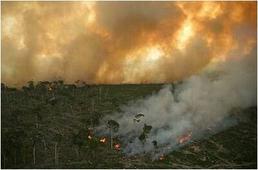
Throughout history, the establishment, development, interaction and migration of civilizations have been significantly shaped by availability of appropriate climate and natural resources. However, since the industrial revolution human societies increasingly impact and – in many cases – effectively dominate (and often diminish) capacities of the Earth System to regulate climate, biogeochemical cycles and biodiversity in ways that are essential to human life itself. This has recently raised considerable concerns relating to sustainable use and conservation of natural resources. These can be attributed to: (i) insufficient understanding of essential ecological processes acting across multiple time- and spatial scales – which can result in a disparity between those scales of ecological processes and scales of human resource use; and (ii) the fact that human behaviour is traditionally based on narrow and conflicting short-term interests and goals, resulting (inter alia) in high discount rates for future environmental costs and temporal mismatches and disruptions between ecological, social and economic processes. Human societies and their constitutive economic, legal and political institutions drive (both directly and indirectly) changes in our environment and the crucial ecological services that we depend upon. However, the linkages and feedback mechanisms are not always well defined.
For queries about this topic, contact Terence Dawson.
View the calendar of events relating to this topic.
Projects

An Investigation into the Cascade Effect of Mergers on the Global Financial Markets
Seth Bullock, Antonella Ianni (Investigators), Camillia Zedan
An investigation into the external effects that horizontal mergers have on the interconnected global markets.
BRECcIA - Building REsearch Capacity for sustainable water and food security In sub-saharan Africa
The BRECcIA project is aimed at developing research and researchers to understand water and food security challenges in sub-Saharan Africa
DIPLOS - Dispersion of Localised Releases in a Street Network
Trevor Thomas, Ian Castro (Investigators)
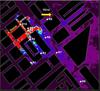
The security threat level from international terrorism, introduced by the UK Security Service, has been classified as either "severe" or "critical" for much of its six-year history, and currently remains as "substantial" (source: MI5 website). Part of the risk posed by terrorist threats involves potential releases of air-borne chemical, biological, radiological or nuclear (CBRN) material into highly populated urbanised areas. Smoke from industrial accidents within or in the vicinity of urban areas also pose risks to health and can cause widespread disruption to businesses, public services and residents. The Buncefield depot fire of 2005 resulted in the evacuation of hundreds of homes and closure of more than 200 schools and public buildings for two days; consequences would have been much more severe if prevailing meteorological conditions had promoted mixing or entrainment of the smoke plume into the urban canopy. In both these scenarios it is crucial to be able to model, quickly and reliably, dispersion from localised sources through an urban street network in the short range, where the threat to human health is greatest. However, this is precisely where current operational models are least reliable because our understanding and ability to model short-range dispersion processes is limited. The contribution that DIPLOS will make is:
1. to fill in the gaps in fundamental knowledge and understanding of key dispersion processes,
2. to enable these processes to be parametrized for use in operational models,
3. to implement them into an operational model, evaluate the improvement and apply the model to a case study in central London
Most of the existing research on urban dispersion has focused on air quality aspects, with sources being extensive and distributed in space. Scientifically, this research is novel in focusing on localized releases within urban areas, and on dispersion processes at short range. Through a combination of fundamental studies using wind tunnel experiments and high resolution supercomputer simulations, extensive data analysis and development of theoretical and numerical models, DIPLOS will contribute to addressing this difficult and important problem from both a scientific research and a practical, operational perspective.
FUE: Foragers in Unpredictable Environments
Iza Romanowska
An Agent-based model developed to investigate human dependencies on orally transmitted knowledge under constantly changing environmental conditions.
Modelling the morphodynamic evolution of the Ganges-Brahmaputra-Meghna (GBM) Delta over centennial time scales
Stephen Darby (Investigator), Balaji Angamuthu
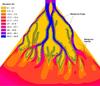
Around 0.5 Billion people live in deltaic environments where they are threatened by flooding and land loss frequently. Yet, our understanding of the threats posed by land dynamic process remains limited. In this work, we try to address this issue through a land dynamic simulation of the largest and most populated of all the deltas, the GBM Delta, using the CFD software Delft3D for a range of climate change and management scenarios. The results provide new insight into the factors controlling past morphodynamics that, in turn, are helpful when assessing the possible trajectories of future evolution.
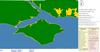
Operational Simulation of the Solent Search-and-Rescue environment
James Scanlan, Kenji Takeda, Hans Fangohr (Investigators), Ben Schumann
This project aims to identify useful metrics for a proposed Search-and-Rescue UAV and test it virtually in a realistic environment.
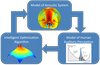
Optimisation of Acoustic Systems for Perceived Sound Quality
Jordan Cheer (Investigator), Daniel Wallace
Acoustic systems have traditionally been optimised on the basis of minimising an objective acoustic measure, such as sound pressure level. The project investigates the use of subjective measures of sound quality, such as "loudness", "harshness" etc. in optimisation algorithms.
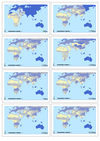
Simulating Human Expansion in the Early Pleistocene
Seth Bullock, Fraser Sturt (Investigators), Iza Romanowska
Using Agent-based modelling to investigate the first human dispersal almost 2 million years ago.

Simulating Hydro-geomorphic Changes in European Climate Hotspots
John Dearing (Investigator), Ying Wang
This project will simulate the behaviour of hydro-geomorphological processes in a fluvial system over decadal timescales is an important basis for research on catchment environmental management, especially with regards climate changes and human impacts on fluvial system.

Simulating Sleeping Sickness: a two-host agent-based model
Jason Noble, Peter Atkinson (Investigators), Simon Alderton
Sleeping sickness is a vector-borne, parastic disease which affects millions of people across 36 sub-Saharan African countries. Using agent-based models, we aim to gain a greater understanding of the interactions between the tsetse fly vector and both animal and human hosts.
Building an accurate representation will allow the testing of local interventation scenarios including the closing of watering holes, and the selective spraying of cattle with insecticides.

Spatial Mobility in the Formation of Agent-Based Economic Networks
Antonella Ianni, Seth Bullock (Investigators), Camillia Zedan
An investigation into the effect of spatial mobility on endogenous economic network formation.

TEDx: Closing the Loop: Entropy Accounting for a Sustainable World
Stuart Bartlett (Investigator)
This is a TEDx talk that I gave on some ideas I've had about the large-scale thermodynamic organisation of life on Earth. While these ideas probably aren't new, I believe they can teach us something about the way in which we think about energy and the 'consumption' of goods and energy.
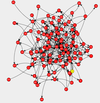
The Endogenous Formation of Economic Networks
Antonella Ianni, Seth Bullock (Investigators), Camillia Zedan
An investigation into endogenous network formation using a simple agent-based approach.
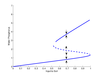
The Role of the Biota in the Carpenter Model on Lake Eutrophication
James Dyke (Investigator), Alexandra Diem
The Carpenter model is a useful and simple model to predict the eutrophication of shallow lakes via phosphorus input. This project aimed at resolving the function of the biota, which play a major role in the phosphorus dynamics, but are so far only implicitly modelled, and extending the model to explicitly represent them.
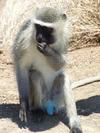
The Social-cognitive Niche: An Exploration of the Co-evolutionary Relationship between Human Mind and language, with a Particular Focus of the Self-organisational properties of the Emergence of Symbolic Representation.
Jason Noble, Glyn Hicks (Investigators), Lewys Brace
This work explored the relationship between the origin and subsequent evolution of the human mind and language; a relationship that is believed to be symbiotic in nature. This piece aimed to achieve two objectives. Firstly, it set out a theoretical framework, using the principles of complexity theory and self-organisation, which attempts to explain this relationship from a holistic perspective.
Secondly, it presented an agent-based model of a vervet monkey social group, which sought to investigate the variables that were perceived to underpin the emergence of symbolic representation within a population of language users.
The belief here was that, by understanding the influence of these variables, one would be able to better understand the genesis of the aforementioned relationship.
People
 Peter Atkinson
Professor, Geography (FSHS)
 Seth Bullock
Professor, Electronics and Computer Science (FPAS)
 Stephen Darby
Professor, Geography (FSHS)
 John Dearing
Professor, Geography (FSHS)
 Hans Fangohr
Professor, Engineering Sciences (FEE)
 James Scanlan
Professor, Engineering Sciences (FEE)
 Antonella Ianni
Senior Lecturer, Social Sciences (FSHS)
 Julian Leyland
Senior Lecturer, Geography (FSHS)
 Edward Richardson
Senior Lecturer, Engineering Sciences (FEE)
Nicholas SheronSenior Lecturer, Medicine (FM)
 Fraser Sturt
Senior Lecturer, Humanities (FH)
Jordan CheerLecturer, Institute of Sound & Vibration Research (FEE)
 James Dyke
Lecturer, Electronics and Computer Science (FPAS)
 Glyn Hicks
Lecturer, Humanities (FH)
 Trevor Thomas
Lecturer, Engineering Sciences (FEE)
 Jason Noble
Research Fellow, Electronics and Computer Science (FPAS)
- -Postgraduate Research Student, Electronics and Computer Science (FPAS)
 Joseph Abram
Postgraduate Research Student, Electronics and Computer Science (FPAS)
 Simon Alderton
Postgraduate Research Student, Geography (FSHS)
Balaji AngamuthuPostgraduate Research Student, Geography (FSHS)
 Alice Ball
Postgraduate Research Student, Electronics and Computer Science (FPAS)
 Stuart Bartlett
Postgraduate Research Student, Electronics and Computer Science (FPAS)
Leonidas BourikasPostgraduate Research Student, Civil Engineering & the Environment (FEE)
 Lewys Brace
Postgraduate Research Student, Electronics and Computer Science (FPAS)
 Alexandra Diem
Postgraduate Research Student, Engineering Sciences (FEE)
Caroline DuignanPostgraduate Research Student, Biological Sciences (FNES)
 Greg Fisher
Postgraduate Research Student, Electronics and Computer Science (FPAS)
 Patricia Murrieta Flores
Postgraduate Research Student, Humanities (FH)
 Sabin Roman
Postgraduate Research Student, University of Southampton
 Iza Romanowska
Postgraduate Research Student, Humanities (FH)
 Ben Schumann
Postgraduate Research Student, Engineering Sciences (FEE)
 Nathan Smith
Postgraduate Research Student, Electronics and Computer Science (FPAS)
 James Snowdon
Postgraduate Research Student, Civil Engineering & the Environment (FEE)
 Nick Synes
Postgraduate Research Student, Electronics and Computer Science (FPAS)
 Daniel Wallace
Postgraduate Research Student, Engineering Sciences (FEE)
Ying WangPostgraduate Research Student, Geography (FSHS)
 Angela Watkins
Postgraduate Research Student, Biological Sciences (FNES)
 Camillia Zedan
Postgraduate Research Student, Electronics and Computer Science (FPAS)
 Elena Vataga
Technical Staff, iSolutions
 Petrina Butler
Administrative Staff, Research and Innovation Services
Ella Marley-ZagarEnterprise staff, Medicine (FM)
 Gunnar Mallon
Alumnus, Geography (FSHS)
 Kenji Takeda
Alumnus, Engineering Sciences (FEE)
Ian CastroNone, None