Human population
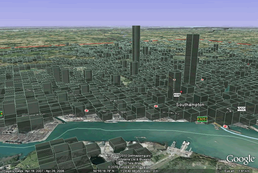
The understanding of human population characteristics and behaviour lies at the heart of many of the biggest challenges facing society. Important aspects of human populations are not directly measurable at every point in time and space, hence typical sources are a mix of census-type data, administrative records and incomplete observational data. These measurements may often be sufficient to describe some aspects of population (for example the geographical distribution of residential population on census day) but do not provide sufficient insight into other essential dimensions (for example daytime population distributions, travel behaviour, patterns of wealth or wellbeing). Better representation of the population underlies many research and policy challenges such as resource allocation, service delivery, transportation planning and the calculation of prevalance rates. Computational modellign work in this field ranges across data collection, representation and modelling of population, particularly simulation and computation of those characteristics which cannot be directly measured. It includes computational methods for the design of optimal zoning systems and the creation of time-specific probabilistic geographical population distributions, microsimulation of individual-level characteristics and future projections.
For queries about this topic, contact David Martin.
View the calendar of events relating to this topic.
Projects
An Evolutionary Economic Approach to the Household?
Jason Hilton
The household is a fundamental societal unit. In a huge array of contexts, our understanding of social behaviour relies on an interpretation of how decision are taken at the household level.This work aims to model individual decision-making and interactions between individuals explicitly within the framework of agent-based modelling, following the work of Potts (2000). Potts describes how economic problems can better be dealt with by considering how agents with incomplete, evolving preferences in the form of decision rules interact on a network, and how they cooperate and form ties to produce combinatorial technologies. Following the work of Gary Becker, he then considers how this ostensibly economic framework might hypothetically describe partnership search and household formation and dissolution.

An Investigation into the Cascade Effect of Mergers on the Global Financial Markets
Seth Bullock, Antonella Ianni (Investigators), Camillia Zedan
An investigation into the external effects that horizontal mergers have on the interconnected global markets.
Bayesian Agent-Based Population Studies: Transforming Simulation Models of Human Migration
This is a cutting-edge project in demographic methodology, funded by the European Research Council (ERC), through the Consolidator Grant ERC-CoG-2016-725232. Its aim is to develop a ground-breaking simulation model of international migration, based on a population of intelligent, cognitive agents, their social networks and institutions, all interacting with one another. The project also aims to transform the study of migration – one of the most uncertain population processes and a top-priority policy area – by offering a step change in the way it can be understood, predicted, and managed.
FUE: Foragers in Unpredictable Environments
Iza Romanowska
An Agent-based model developed to investigate human dependencies on orally transmitted knowledge under constantly changing environmental conditions.
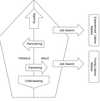
Modelling the Easterlin Effect
Jason Hilton
This project is an attempt to formalise the Easterlin hypothesis in a simulation model and test its plausibility.
The Easterlin Hypothesis, developed by economist Richard Easterlin, purports to describe a mechanism whereby the fertility decisions of a particular cohort of individuals are linked to population level conditions that held sway when they were born The empirical support for the theory is quite strong for the certain periods in the history of the United States, but elsewhere it is circumstantial and patchy. A simulation model may allows us to test under what conditions it may hold and not hold, and also might help inform more general theory building.
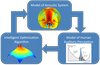
Optimisation of Acoustic Systems for Perceived Sound Quality
Jordan Cheer (Investigator), Daniel Wallace
Acoustic systems have traditionally been optimised on the basis of minimising an objective acoustic measure, such as sound pressure level. The project investigates the use of subjective measures of sound quality, such as "loudness", "harshness" etc. in optimisation algorithms.
Population24/7: space-time specific population surface modelling
Samantha Cockings, David Martin, Samuel Leung (Investigators)
Project funded by Economic and Social Research Council to compute time-specific geographical representations of population distribution.
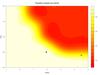
Reforging the Wedding Ring: Exploring a Semi-Artificial Model of Population for the United Kingdom with Gaussian process emulators
Jason Hilton
Note: Jakub Bijak from Social Science is the lead author on this project, which is forthcoming in Demographic Research (http://www.demographic-research.org/)
Co-Authors: Eric Silverman, Viet Dung Cao
We extend the „Wedding Ring? agent-based model of marriage formation to include some empirical information on the natural population change for the United Kingdom together with behavioural explanations that drive the observed nuptiality trends.
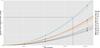
Sample tracking in whole-exome sequencing projects
Andrew Collins, Sarah Ennis (Investigators), Reuben Pengelly
Whole-exome sequencing is entering clinical use for genetic investigations, and it is therefore essential that robust quality control is utilised. As such we designed and validated a tool to allow for unambiguous tying of patient data to a patient, to identify, and thus prevent errors such as the switching of samples during processing.
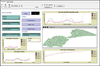
Simulating Household Decision Making in Rural Malawi
James Dyke, Kate Schreckenberg (Investigators), Samantha Dobbie
A scoping exercise to determine whether data collection tools of the social sciences can be used effectively in the construction of empirical ABM. Focus fell upon simulating drought coping strategies of Malawian smallholders. Model implementation enabled inferences to be made concerning the impact of drought and input subsidies upon smallholder food security.
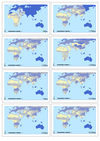
Simulating Human Expansion in the Early Pleistocene
Seth Bullock, Fraser Sturt (Investigators), Iza Romanowska
Using Agent-based modelling to investigate the first human dispersal almost 2 million years ago.

Spatial Mobility in the Formation of Agent-Based Economic Networks
Antonella Ianni, Seth Bullock (Investigators), Camillia Zedan
An investigation into the effect of spatial mobility on endogenous economic network formation.

The Social-cognitive Niche: An Exploration of the Co-evolutionary Relationship between Human Mind and language, with a Particular Focus of the Self-organisational properties of the Emergence of Symbolic Representation.
Jason Noble, Glyn Hicks (Investigators), Lewys Brace
This work explored the relationship between the origin and subsequent evolution of the human mind and language; a relationship that is believed to be symbiotic in nature. This piece aimed to achieve two objectives. Firstly, it set out a theoretical framework, using the principles of complexity theory and self-organisation, which attempts to explain this relationship from a holistic perspective.
Secondly, it presented an agent-based model of a vervet monkey social group, which sought to investigate the variables that were perceived to underpin the emergence of symbolic representation within a population of language users.
The belief here was that, by understanding the influence of these variables, one would be able to better understand the genesis of the aforementioned relationship.
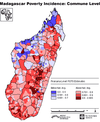
Using computer intensive methods to produce small area estimates of poverty
Nikolaos Tzavidis (Investigator), Steve Donbavand
By using computer intensive methods this work compares, and suggests improvements, to existing methods for estimating poverty levels. These poverty estimates are used to produce maps which in turn help to target government policies.
People
 Seth Bullock
Professor, Electronics and Computer Science (FPAS)
 Andrew Collins
Professor, Medicine (FM)
 Sarah Ennis
Professor, Medicine (FM)
 David Martin
Professor, Geography (FSHS)
 Nikolaos Tzavidis
Professor, Social Sciences (FSHS)
 Stuart Clarke
Senior Lecturer, Medicine (FM)
 Antonella Ianni
Senior Lecturer, Social Sciences (FSHS)
Reuben PengellySenior Lecturer, Medicine (FM)
 Fraser Sturt
Senior Lecturer, Humanities (FH)
Jordan CheerLecturer, Institute of Sound & Vibration Research (FEE)
 Samantha Cockings
Lecturer, Geography (FSHS)
 James Dyke
Lecturer, Electronics and Computer Science (FPAS)
 Glyn Hicks
Lecturer, Humanities (FH)
Kate SchreckenbergLecturer, Civil Engineering & the Environment (FEE)
 Jason Hilton
Research Fellow, Social Sciences (FSHS)
 Samuel Leung
Research Fellow, Geography (FSHS)
 Jason Noble
Research Fellow, Electronics and Computer Science (FPAS)
 Joseph Abram
Postgraduate Research Student, Electronics and Computer Science (FPAS)
 Grant Aitken
Postgraduate Research Student, Geography (FSHS)
 Alice Ball
Postgraduate Research Student, Electronics and Computer Science (FPAS)
 Lewys Brace
Postgraduate Research Student, Electronics and Computer Science (FPAS)
 Samantha Dobbie
Postgraduate Research Student, Electronics and Computer Science (FPAS)
 Anastasia Eleftheriou
Postgraduate Research Student, Electronics and Computer Science (FPAS)
 Greg Fisher
Postgraduate Research Student, Electronics and Computer Science (FPAS)
 Jonathan Gray
Postgraduate Research Student, Social Sciences (FSHS)
 Jason Hilton
Postgraduate Research Student, Social Sciences (FSHS)
 William Hurndall
Postgraduate Research Student, Electronics and Computer Science (FPAS)
 Sabin Roman
Postgraduate Research Student, University of Southampton
 Iza Romanowska
Postgraduate Research Student, Humanities (FH)
 Nathan Smith
Postgraduate Research Student, Electronics and Computer Science (FPAS)
 Daniel Wallace
Postgraduate Research Student, Engineering Sciences (FEE)
 Camillia Zedan
Postgraduate Research Student, Electronics and Computer Science (FPAS)
 Petrina Butler
Administrative Staff, Research and Innovation Services
Ella Marley-ZagarEnterprise staff, Medicine (FM)
Steve DonbavandNone, None