Social Networks
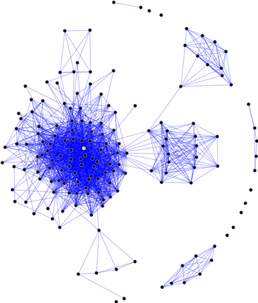
People are linked by relationships - friendships, animosities, commercial agreements, social contracts, partnerships, familial ties, shared interests, etc. Social scientists of many kinds are interested in understanding the nature of these relationships, how they form, change, dissolve and influence social activity. The importance of these questions is increasing in a world where social behaviour is mediated by an increasing number of technologies and has an impact on an increasing number of
By treating a set of people and the relationships between them as a social network, we are able to approach these research questions using mathematics and simulation modelling in addition to empirical and analytic tools more typical of the social sciences. Combining these methods allows us to explore not only the structure and make-up of the social networks around us, but to understand how those networks arise and evolve over time.
For queries about this topic, contact Seth Bullock.
View the calendar of events relating to this topic.
Projects

A Connected Island: how the Iron Curtain affected Archaeologists in Central Europe
Iza Romanowska
Using citation network analysis this project aims to investigate the effects that the Cold War had on researchers on both sides of the Iron Curtain.
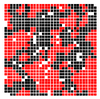
Adding social ties to the Schelling model
Seth Bullock, Sally Brailsford (Investigators), Elisabeth zu-Erbach-Schoenberg
The Schelling model is an abstract model for segregation in
a spatially arranged population. We extended the traditional model by the addition of a dynamic social network. The social network influences the spatial dynamics of agents moving on the grid by changing the agents’ evaluation of their neighbourhood. In turn, the spatial arrangement influences the change of the social network.
Amorphous Computation, Random Graphs and Complex Biological Networks
Seth Bullock (Investigator)
This interdisciplinary research collaboration arose within the Simple Models of Complex Networks research cluster funded by the EPSRC www.epsrca.ac.uk through the Novel Computation Initiative. Here, leading groups from the Universities of Leeds, Sheffield, Nottingham, Southampton, Royal Holloway and King’s College and industrial partners BT are brought together for the first time to develop novel amorphous computation methods based on the theory of random graphs.
An Evolutionary Economic Approach to the Household?
Jason Hilton
The household is a fundamental societal unit. In a huge array of contexts, our understanding of social behaviour relies on an interpretation of how decision are taken at the household level.This work aims to model individual decision-making and interactions between individuals explicitly within the framework of agent-based modelling, following the work of Potts (2000). Potts describes how economic problems can better be dealt with by considering how agents with incomplete, evolving preferences in the form of decision rules interact on a network, and how they cooperate and form ties to produce combinatorial technologies. Following the work of Gary Becker, he then considers how this ostensibly economic framework might hypothetically describe partnership search and household formation and dissolution.

An investigation in to the effects of information provision on driver learning
Ben Waterson, Hans Fangohr (Investigators), James Snowdon
This work aims to better understand and model the role of individual learning and experience on driver route choice. We intend to demonstrate that vehicle-driver agent based models stand alone in being able to capture the complex reciprocal interactions between drivers and their environment, and allow us to incorporate the effects of prior knowledge from previous trips and advice from official information sources and social networks.

An Investigation into the Cascade Effect of Mergers on the Global Financial Markets
Seth Bullock, Antonella Ianni (Investigators), Camillia Zedan
An investigation into the external effects that horizontal mergers have on the interconnected global markets.
Bayesian Agent-Based Population Studies: Transforming Simulation Models of Human Migration
This is a cutting-edge project in demographic methodology, funded by the European Research Council (ERC), through the Consolidator Grant ERC-CoG-2016-725232. Its aim is to develop a ground-breaking simulation model of international migration, based on a population of intelligent, cognitive agents, their social networks and institutions, all interacting with one another. The project also aims to transform the study of migration – one of the most uncertain population processes and a top-priority policy area – by offering a step change in the way it can be understood, predicted, and managed.

Care Life Cycle
Seth Bullock, Sally Brailsford, Jason Noble, Jakub Bijak (Investigators), Elisabeth zu-Erbach-Schoenberg, Jason Hilton, Jonathan Gray
This research programme brings together teams of researchers from social sciences, management science and complexity science to develop a suite of models representing the socio-economic and demographic processes and organisations implicated in the UK’s health and social care provision. Integral to the project is working with our partners in the public sector and communicating the results of these models to policymakers allowing them to effectively plan for the future.
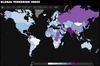
Excitable Boys: An Exploration of the Role of Social Groups in the Self-radicalisation Process Using Agent-based Modelling.
Jason Noble (Investigator), Lewys Brace
This work built upon the seminal work of Sageman (2008), and his hypothesis that the self-radicalisation phenomenon that we are currently witnessing across Europe and the United States stems from self-organising ‘bunches of guys’. More specifically, there was a focus on how individuals can influence one another through social links; and how this can lead to behaviour, similar to deindividuation, arising through their interactions. Complexity theory and agent-based modelling were used in order to explore the interactions that are believed to lie at the heart of this psycho-social phenomenon, and justification is given for this approach. The model presented demonstrated that social bonds can lead to a greater number of individuals ‘rebelling’ against the status quo.
Fracturing of small social networks
Seth Bullock, Sally Brailsford (Investigators), Elisabeth zu-Erbach-Schoenberg
A connected social network is a very important factor for the success of groups and organisations. We investigate which factors make a group more resistant to the effects of disagreements which commonly happen in small social networks.
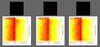
FUE: Foragers in Unpredictable Environments
Iza Romanowska
An Agent-based model developed to investigate human dependencies on orally transmitted knowledge under constantly changing environmental conditions.
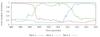
Origins of Evolvability
Richard Watson, Markus Brede (Investigators), William Hurndall
This project examined the putative evolvability of a Lipid World model of fissioning micelles. It was demonstrated that the model lacked evlovability due to poor heritability. Explicit structure for micelles was introduced along with a spatially localised form of catalysis which increased the strength of selection as coupling between potential chemical units of heredity were reduced.
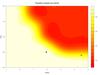
Reforging the Wedding Ring: Exploring a Semi-Artificial Model of Population for the United Kingdom with Gaussian process emulators
Jason Hilton
Note: Jakub Bijak from Social Science is the lead author on this project, which is forthcoming in Demographic Research (http://www.demographic-research.org/)
Co-Authors: Eric Silverman, Viet Dung Cao
We extend the „Wedding Ring? agent-based model of marriage formation to include some empirical information on the natural population change for the United Kingdom together with behavioural explanations that drive the observed nuptiality trends.
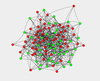
Separation of timescales in models of complex networks
Seth Bullock (Investigator), Elisabeth zu-Erbach-Schoenberg, Connor McCabe
In many real-world systems several processes act on the system state. The way these processes interact can have implications for the resulting system state. We investigate how separation of the timescales of two processes influences the system's equilibrium state.
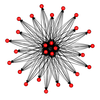
Spatial Mobility in the Formation of Agent-Based Economic Networks
Antonella Ianni, Seth Bullock (Investigators), Camillia Zedan
An investigation into the effect of spatial mobility on endogenous economic network formation.
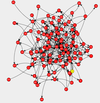
The Endogenous Formation of Economic Networks
Antonella Ianni, Seth Bullock (Investigators), Camillia Zedan
An investigation into endogenous network formation using a simple agent-based approach.
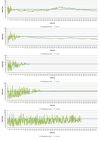
The Role of Information in Price Discovery
Antonella Ianni, Seth Bullock (Investigators), Camillia Zedan
The recent economic crisis has highlighted a continued vulnerability and lack of understanding in the financial markets. In order to overcome this, many believe that current market models must be improved. Recently, a trend towards agent-based modelling has emerged. Viewing the economy as a complex system is beginning to be seen as key to explaining certain market characteristics that were originally considered anomalies.
One of the fundamental assumptions in economics is that of information efficiency: that the price of a stock reflects its worth, that all possible information about a security is publicly known, and that any changes to price take place instantaneously. In reality, however, this is not the case.
This project considers the use of agents in modelling economic systems and demonstrates the effect of information levels on price discovery using a simple market simulation.

The Social-cognitive Niche: An Exploration of the Co-evolutionary Relationship between Human Mind and language, with a Particular Focus of the Self-organisational properties of the Emergence of Symbolic Representation.
Jason Noble, Glyn Hicks (Investigators), Lewys Brace
This work explored the relationship between the origin and subsequent evolution of the human mind and language; a relationship that is believed to be symbiotic in nature. This piece aimed to achieve two objectives. Firstly, it set out a theoretical framework, using the principles of complexity theory and self-organisation, which attempts to explain this relationship from a holistic perspective.
Secondly, it presented an agent-based model of a vervet monkey social group, which sought to investigate the variables that were perceived to underpin the emergence of symbolic representation within a population of language users.
The belief here was that, by understanding the influence of these variables, one would be able to better understand the genesis of the aforementioned relationship.
People
 Jakub Bijak
Professor, Social Sciences (FSHS)
 Sally Brailsford
Professor, Management (FBL)
 Seth Bullock
Professor, Electronics and Computer Science (FPAS)
 Hans Fangohr
Professor, Engineering Sciences (FEE)
 Markus Brede
Senior Lecturer, Electronics and Computer Science (FPAS)
 Antonella Ianni
Senior Lecturer, Social Sciences (FSHS)
 Richard Watson
Senior Lecturer, Electronics and Computer Science (FPAS)
Mohamed BakoushLecturer, Management (FBL)
 Glyn Hicks
Lecturer, Humanities (FH)
 Ben Waterson
Lecturer, Civil Engineering & the Environment (FEE)
Btissam Er-RahmadiResearch Fellow, Management (FBL)
 Jason Noble
Research Fellow, Electronics and Computer Science (FPAS)
- -Postgraduate Research Student, Electronics and Computer Science (FPAS)
 Joseph Abram
Postgraduate Research Student, Electronics and Computer Science (FPAS)
 Alice Ball
Postgraduate Research Student, Electronics and Computer Science (FPAS)
 Lewys Brace
Postgraduate Research Student, Electronics and Computer Science (FPAS)
 Anastasia Eleftheriou
Postgraduate Research Student, Electronics and Computer Science (FPAS)
 Greg Fisher
Postgraduate Research Student, Electronics and Computer Science (FPAS)
 Jonathan Gray
Postgraduate Research Student, Social Sciences (FSHS)
 Tom Hebbron
Postgraduate Research Student, Electronics and Computer Science (FPAS)
 Jason Hilton
Postgraduate Research Student, Social Sciences (FSHS)
 William Hurndall
Postgraduate Research Student, Electronics and Computer Science (FPAS)
 Adam Jackson
Postgraduate Research Student, Electronics and Computer Science (FPAS)
 Guy Jacobs
Postgraduate Research Student, Electronics and Computer Science (FPAS)
Konstantinos KouvarisPostgraduate Research Student, Electronics and Computer Science (FPAS)
 Connor McCabe
Postgraduate Research Student, Electronics and Computer Science (FPAS)
 Patricia Murrieta Flores
Postgraduate Research Student, Humanities (FH)
 David Potts
Postgraduate Research Student, Humanities (FH)
 Sabin Roman
Postgraduate Research Student, University of Southampton
 Iza Romanowska
Postgraduate Research Student, Humanities (FH)
 Nathan Smith
Postgraduate Research Student, Electronics and Computer Science (FPAS)
 James Snowdon
Postgraduate Research Student, Civil Engineering & the Environment (FEE)
 Massimo Stella
Postgraduate Research Student, Electronics and Computer Science (FPAS)
Johannes Van Der HorstPostgraduate Research Student, Electronics and Computer Science (FPAS)
 Camillia Zedan
Postgraduate Research Student, Electronics and Computer Science (FPAS)
 Elisabeth zu-Erbach-Schoenberg
Postgraduate Research Student, Management (FBL)
 Elena Vataga
Technical Staff, iSolutions
 Petrina Butler
Administrative Staff, Research and Innovation Services