Social and Socio-economic Systems

Social and socio-economic systems are those in which people interact with each other, often within cultural and economic institutions and structures. As individuals, developing an implicit understanding of the systems that we are embedded within is key to our ability to operate as human beings. As academics, developing an explicit understanding of these systems presents a major challenge. How do languages, markets, families, and firms, and systems of care, education and governance come about, interact, change and evolve? What keeps these systems stable? Why do they sometimes fail? By exploring how social and socio-economic systems such as these work, we aim to improve our ability to manage our social world.
For queries about this topic, contact Seth Bullock.
View the calendar of events relating to this topic.
Projects

A Connected Island: how the Iron Curtain affected Archaeologists in Central Europe
Iza Romanowska
Using citation network analysis this project aims to investigate the effects that the Cold War had on researchers on both sides of the Iron Curtain.
Amorphous Computation, Random Graphs and Complex Biological Networks
Seth Bullock (Investigator)
This interdisciplinary research collaboration arose within the Simple Models of Complex Networks research cluster funded by the EPSRC www.epsrca.ac.uk through the Novel Computation Initiative. Here, leading groups from the Universities of Leeds, Sheffield, Nottingham, Southampton, Royal Holloway and King’s College and industrial partners BT are brought together for the first time to develop novel amorphous computation methods based on the theory of random graphs.

An Investigation into the Cascade Effect of Mergers on the Global Financial Markets
Seth Bullock, Antonella Ianni (Investigators), Camillia Zedan
An investigation into the external effects that horizontal mergers have on the interconnected global markets.
Bayesian Agent-Based Population Studies: Transforming Simulation Models of Human Migration
This is a cutting-edge project in demographic methodology, funded by the European Research Council (ERC), through the Consolidator Grant ERC-CoG-2016-725232. Its aim is to develop a ground-breaking simulation model of international migration, based on a population of intelligent, cognitive agents, their social networks and institutions, all interacting with one another. The project also aims to transform the study of migration – one of the most uncertain population processes and a top-priority policy area – by offering a step change in the way it can be understood, predicted, and managed.
BRECcIA - Building REsearch Capacity for sustainable water and food security In sub-saharan Africa
The BRECcIA project is aimed at developing research and researchers to understand water and food security challenges in sub-Saharan Africa

Care Life Cycle
Seth Bullock, Sally Brailsford, Jason Noble, Jakub Bijak (Investigators), Elisabeth zu-Erbach-Schoenberg, Jason Hilton, Jonathan Gray
This research programme brings together teams of researchers from social sciences, management science and complexity science to develop a suite of models representing the socio-economic and demographic processes and organisations implicated in the UK’s health and social care provision. Integral to the project is working with our partners in the public sector and communicating the results of these models to policymakers allowing them to effectively plan for the future.

Evolving Resilience to Leverage Based Crashes
Frank McGroarty, Enrico Gerding (Investigators), Ash Booth
This project analyses the maturation, initiation and evolution of crashes in the financial markets using an agent-based model.
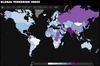
Excitable Boys: An Exploration of the Role of Social Groups in the Self-radicalisation Process Using Agent-based Modelling.
Jason Noble (Investigator), Lewys Brace
This work built upon the seminal work of Sageman (2008), and his hypothesis that the self-radicalisation phenomenon that we are currently witnessing across Europe and the United States stems from self-organising ‘bunches of guys’. More specifically, there was a focus on how individuals can influence one another through social links; and how this can lead to behaviour, similar to deindividuation, arising through their interactions. Complexity theory and agent-based modelling were used in order to explore the interactions that are believed to lie at the heart of this psycho-social phenomenon, and justification is given for this approach. The model presented demonstrated that social bonds can lead to a greater number of individuals ‘rebelling’ against the status quo.
Fracturing of small social networks
Seth Bullock, Sally Brailsford (Investigators), Elisabeth zu-Erbach-Schoenberg
A connected social network is a very important factor for the success of groups and organisations. We investigate which factors make a group more resistant to the effects of disagreements which commonly happen in small social networks.
FUE: Foragers in Unpredictable Environments
Iza Romanowska
An Agent-based model developed to investigate human dependencies on orally transmitted knowledge under constantly changing environmental conditions.
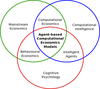
It takes all sorts: the mathematics of people’s behaviour in financial markets
Valerio Restocchi (Investigator), Frank McGroarty, Enrico Gerding
Agent-based models provide a deeper understanding of financial markets than classic models. We model people's behaviour and use agent-based simulations to study financial markets. By analysing the emerging complex dynamics, we achieve a deeper understanding of market participants' behaviours, which are necessary for a deeper comprehension of financial markets themselves.
Population24/7: space-time specific population surface modelling
Samantha Cockings, David Martin, Samuel Leung (Investigators)
Project funded by Economic and Social Research Council to compute time-specific geographical representations of population distribution.
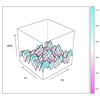
Replication of Sayama Group Decision Model
Jason Noble (Investigator), Jonathan Gray
Replication of a model of group decision making from Sayama et al. (2011), with a revised methodology that alters a conclusion from the original paper.
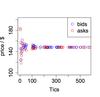
Self Interest & the Evolutionary Optimisation of Adaptive Trading Agents for Continuous Double Auctions
Frank McGroarty, Enrico Gerding (Investigators), Ash Booth
One cannot escape the recent crises in economics and the lack of understanding of financial markets that has been highlighted by them. Improvements to current market models are already being made and a realisation of the power of agent based modelling in such models is evident. In this project we seek to explore an existing model by Cliff of trader behaviour in continuous double auctions. We investigate the strategies that arise in such auctions when trader parameters are evolved with intent to maximise personal profit. Results show different trading strategies to those evolved by Cliff and explanations are given with regards to the self-interest.
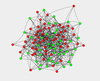
Separation of timescales in models of complex networks
Seth Bullock (Investigator), Elisabeth zu-Erbach-Schoenberg, Connor McCabe
In many real-world systems several processes act on the system state. The way these processes interact can have implications for the resulting system state. We investigate how separation of the timescales of two processes influences the system's equilibrium state.
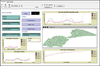
Simulating Household Decision Making in Rural Malawi
James Dyke, Kate Schreckenberg (Investigators), Samantha Dobbie
A scoping exercise to determine whether data collection tools of the social sciences can be used effectively in the construction of empirical ABM. Focus fell upon simulating drought coping strategies of Malawian smallholders. Model implementation enabled inferences to be made concerning the impact of drought and input subsidies upon smallholder food security.

Simulating Sleeping Sickness: a two-host agent-based model
Jason Noble, Peter Atkinson (Investigators), Simon Alderton
Sleeping sickness is a vector-borne, parastic disease which affects millions of people across 36 sub-Saharan African countries. Using agent-based models, we aim to gain a greater understanding of the interactions between the tsetse fly vector and both animal and human hosts.
Building an accurate representation will allow the testing of local interventation scenarios including the closing of watering holes, and the selective spraying of cattle with insecticides.

Spatial Mobility in the Formation of Agent-Based Economic Networks
Antonella Ianni, Seth Bullock (Investigators), Camillia Zedan
An investigation into the effect of spatial mobility on endogenous economic network formation.
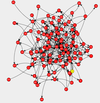
The Endogenous Formation of Economic Networks
Antonella Ianni, Seth Bullock (Investigators), Camillia Zedan
An investigation into endogenous network formation using a simple agent-based approach.
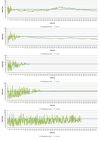
The Role of Information in Price Discovery
Antonella Ianni, Seth Bullock (Investigators), Camillia Zedan
The recent economic crisis has highlighted a continued vulnerability and lack of understanding in the financial markets. In order to overcome this, many believe that current market models must be improved. Recently, a trend towards agent-based modelling has emerged. Viewing the economy as a complex system is beginning to be seen as key to explaining certain market characteristics that were originally considered anomalies.
One of the fundamental assumptions in economics is that of information efficiency: that the price of a stock reflects its worth, that all possible information about a security is publicly known, and that any changes to price take place instantaneously. In reality, however, this is not the case.
This project considers the use of agents in modelling economic systems and demonstrates the effect of information levels on price discovery using a simple market simulation.
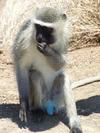
The Social-cognitive Niche: An Exploration of the Co-evolutionary Relationship between Human Mind and language, with a Particular Focus of the Self-organisational properties of the Emergence of Symbolic Representation.
Jason Noble, Glyn Hicks (Investigators), Lewys Brace
This work explored the relationship between the origin and subsequent evolution of the human mind and language; a relationship that is believed to be symbiotic in nature. This piece aimed to achieve two objectives. Firstly, it set out a theoretical framework, using the principles of complexity theory and self-organisation, which attempts to explain this relationship from a holistic perspective.
Secondly, it presented an agent-based model of a vervet monkey social group, which sought to investigate the variables that were perceived to underpin the emergence of symbolic representation within a population of language users.
The belief here was that, by understanding the influence of these variables, one would be able to better understand the genesis of the aforementioned relationship.
People
 Peter Atkinson
Professor, Geography (FSHS)
 Jakub Bijak
Professor, Social Sciences (FSHS)
 Sally Brailsford
Professor, Management (FBL)
 Seth Bullock
Professor, Electronics and Computer Science (FPAS)
 David Martin
Professor, Geography (FSHS)
 Frank McGroarty
Professor, Management (FBL)
 Antonella Ianni
Senior Lecturer, Social Sciences (FSHS)
 Mohamed Bakoush
Lecturer, Management (FBL)
 Samantha Cockings
Lecturer, Geography (FSHS)
 James Dyke
Lecturer, Electronics and Computer Science (FPAS)
 Glyn Hicks
Lecturer, Humanities (FH)
Kate SchreckenbergLecturer, Civil Engineering & the Environment (FEE)
 Samuel Leung
Research Fellow, Geography (FSHS)
 Jason Noble
Research Fellow, Electronics and Computer Science (FPAS)
- -Postgraduate Research Student, Electronics and Computer Science (FPAS)
 Joseph Abram
Postgraduate Research Student, Electronics and Computer Science (FPAS)
 Simon Alderton
Postgraduate Research Student, Geography (FSHS)
 Ash Booth
Postgraduate Research Student, Electronics and Computer Science (FPAS)
 Lewys Brace
Postgraduate Research Student, Electronics and Computer Science (FPAS)
 Samantha Dobbie
Postgraduate Research Student, Electronics and Computer Science (FPAS)
 Greg Fisher
Postgraduate Research Student, Electronics and Computer Science (FPAS)
 Jonathan Gray
Postgraduate Research Student, Social Sciences (FSHS)
 Garvin Haslett
Postgraduate Research Student, Electronics and Computer Science (FPAS)
 Jason Hilton
Postgraduate Research Student, Social Sciences (FSHS)
 Guy Jacobs
Postgraduate Research Student, Electronics and Computer Science (FPAS)
 Vincent Marmion
Postgraduate Research Student, Psychology (FSHS)
 Connor McCabe
Postgraduate Research Student, Electronics and Computer Science (FPAS)
 Sabin Roman
Postgraduate Research Student, University of Southampton
 Iza Romanowska
Postgraduate Research Student, Humanities (FH)
 James Snowdon
Postgraduate Research Student, Civil Engineering & the Environment (FEE)
 Massimo Stella
Postgraduate Research Student, Electronics and Computer Science (FPAS)
Johannes Van Der HorstPostgraduate Research Student, Electronics and Computer Science (FPAS)
 Camillia Zedan
Postgraduate Research Student, Electronics and Computer Science (FPAS)
 Elisabeth zu-Erbach-Schoenberg
Postgraduate Research Student, Management (FBL)
 Elena Vataga
Technical Staff, iSolutions
 Petrina Butler
Administrative Staff, Research and Innovation Services
Ella Marley-ZagarEnterprise staff, Medicine (FM)
Enrico GerdingNone, None
Valerio RestocchiNone, None