Software Engineering
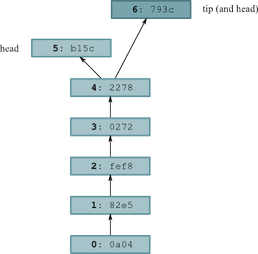
Software Engineering is concerned with the process of designing, implementing and maintaining software efficiently. There is overlap with the Computer Science, Project Management and Systems Engineering. As the field is relatively young, it is still in considerable flux. Good software engineering skills are undoubtedly crucial in developing computational modelling simulation tools.
See also Software Engineering Tools
Image taken from Mercurial Book
For queries about this topic, contact Hans Fangohr.
View the calendar of events relating to this topic.
Projects

A novel method for monitoring air pollution from satellites at very high resolution
Joanna Nield, Jason Noble, Edward Milton (Investigators), Robin Wilson
Developing methods to monitor the clarity of the atmosphere from satellites at 100,000 times the resolution of previous methods. This can then be used to monitor air pollution, correct satellite images and provide data for climate studies. Simulation is used to model the effects of atmospheric pollution on light passing through the atmosphere, and to test the method under 'synthetic atmospheres'.

An investigation in to the effects of information provision on driver learning
Ben Waterson, Hans Fangohr (Investigators), James Snowdon
This work aims to better understand and model the role of individual learning and experience on driver route choice. We intend to demonstrate that vehicle-driver agent based models stand alone in being able to capture the complex reciprocal interactions between drivers and their environment, and allow us to incorporate the effects of prior knowledge from previous trips and advice from official information sources and social networks.
Application of RNA-Seq for gene fusion identification in blood cancers
William Tapper (Investigator), Marcin Knut
Gene fusions are often the cause of different blood cancers. As such, accurate identification of them provides information on the underlying cause of a cancer, ensuring appropriate choice of treatment. However, due to shortcomings of the currently applied methods for gene fusion identification, some of them escape undetected. We are employing RNA-Seq, a cutting-edge method for sequencing RNA, the messenger of genetic information, to investigate gene fusions.
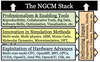
Centre for Doctoral Training in Next Generation Computational Modelling
Hans Fangohr, Ian Hawke, Peter Horak (Investigators), Susanne Ufermann Fangohr, Thorsten Wittemeier, Kieran Selvon, Alvaro Perez-Diaz, David Lusher, Ashley Setter, Emanuele Zappia, Hossam Ragheb, Ryan Pepper, Stephen Gow, Jan Kamenik, Paul Chambers, Robert Entwistle, Rory Brown, Joshua Greenhalgh, James Harrison, Jonathon Waters, Ioannis Begleris, Craig Rafter
The £10million Centre for Doctoral Training was launched in November 2013 and is jointly funded by EPSRC, the University of Southampton, and its partners.
The NGCM brings together world-class simulation modelling research activities from across the University of Southampton and hosts a 4-year doctoral training programme that is the first of its kind in the UK.
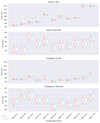
Colonising Polynesia; Uncertain sailing craft route modelling
Thomas Dickson (Investigator), David Sear
Through developing a novel methodology of modelling sailing craft routing it is possible to investigate archaeological problems as well as applications to modern yacht racing and autonomous sailing technology. This research uses iridis to provide accurate and fast analysis of shortest path routes for sailing craft in order to provide insight and improve safety of operation.

Controlling Ant-Based Construction
Seth Bullock (Investigator), Lenka Pitonakova
This paper investigates dynamics of ant nest building and shows that algorithms capable of generating ant-like structures can also be used to create nests, shapes of which are imposed from outside of the system.
Development of a novel Navier-Stokes solver (HiPSTAR)
Richard Sandberg (Investigator)
Development of a highly efficient Navier-Stokes solver for HPC.
Development of wide-ranging functionality in ONETEP
Chris-Kriton Skylaris (Investigator), Jacek Dziedzic
ONETEP is at the cutting edge of developments in first principles calculations. However, while the fundamental difficulties of performing accurate first-principles calculations with linear-scaling cost have been solved, only a small core of functionality is currently available in ONETEP which prevents its wide application. In this collaborative project between three Universities, the original developers of ONETEP will lead an ambitious workplan whereby the functionality of the code will be rapidly and significantly enriched.
Dynamics of interacting magnetic nanoparticles
Thomas Fischbacher (Investigator), Maximilian Albert
The project aims at extending the micromagnetic simulation framework 'nmag' developed at the University of Southampton to enable it to handle dynamic geometries. The extended framework will then be used to study systems such as interacting magnetic nanoparticles.

Fluid Dynamics Optimisation of Rim-Drive Thrusters and Ducted Hydrokinetic Generators
Aleksander Dubas, Suleiman Sharkh (Investigators)
This is a Knowledge Transfer Partnership project is a collaboration between the University of Southampton and TSL Technology Ltd. to develop computational fluid dynamics software design tools for modelling and optimising the design of propeller thrusters and water turbine generators.
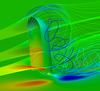
Fluid Structure Interactions of Yacht Sails
Stephen Turnock (Investigator), Daniele Trimarchi
The research is the main subject of the PhD topic. It regards the application of fluid structure interaction techniques to the domain of yacht sails simulation
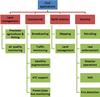
Generic Operational Simulation of Civil Unmanned Air Vehicle Operations
Hans Fangohr, James Scanlan (Investigators)
This project creates a generic operational simulation of Unmanned Air Vehicle Operations. UAVs can be valued for their mission-suitability and compared against various configurations.

Integrating Automated Vehicles into the Transport Network
Bani Anvari, Ben Waterson (Investigators), Craig Rafter
Innovative new designs to transportation infrastructure - with a strong evidence base - that will support automated vehicles to maximize sustainability in the transport network.
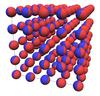
Modelling micromagnetism at elevated temperature
Hans Fangohr, Kees de Groot, Peter de_Groot (Investigators), Dmitri Chernyshenko
We aim to develop a multiscale multiphysics model of
micromagnetism at elevated temperatures with atomistic simulations for
material parameter. The tool will be used to guide the development of the next generation magnetic data storage technology: heat assisted magnetic recording.
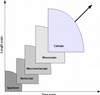
Multiscale Modelling of Cellular Calcium Signalling
Hans Fangohr, Jonathan Essex (Investigators), Dan Mason
Calcium ions play a vitally important role in signal transduction and are key to many cellular processes including muscle contraction and cell apoptosis (cell death). This importance has made calcium an active area in biomedical science and mathematical modelling.
Network Analysis of Roman Transport Routes in the Imperial Roman Mediterranean
David Potts
This research is designed to explore the nature of the relationships between Portus, Rome, and other selected ports in the Mediterranean and to establish patterns and the changing nature of trading networks derived from the distribution of known Roman artefacts.

OpenDreamKit
Hans Fangohr (Investigator), Marijan Beg
OpenDreamKit is a [Horizon 2020](https://ec.europa.eu/programmes/horizon2020/) European Research Infrastructure project (#676541) providing substantial funding to the open-source computational mathematics ecosystem, and in particular popular tools such as LinBox, MPIR, SageMath, GAP, Pari/GP, LMFDB, Singular, MathHub, and the IPython/Jupyter interactive computing environment.
pyQCD
Matthew Spraggs
A basic Python package to perform coarse lattice QCD simulations on desktop and workstation computers.

Simulation of Parking Choice Behaviour
Ben Waterson, Hans Fangohr (Investigators), James Snowdon
Exploring how psychological models of individual parking search behaviours can be combined into an accurate simulation of vehicle flows, allowing for assessment of the impact on searching traffic of different demand/ supply ratios, different driver population characteristics and different charging regimes.
Software Sustainability Institute
Simon Hettrick (Investigator)
A national facility for cultivating world-class research through software
Software helps researchers to enhance their research, and improve the speed and accuracy of their results. The Software Sustainability Institute can help you introduce software into your research or improve the software you already use.
The Institute is based at the universities of Edinburgh, Manchester, Oxford and Southampton, and draws on a team of experts with a breadth of experience in software development, project and programme management, research facilitation, publicity and community engagement.
We help people build better software, and we work with researchers, developers, funders and infrastructure providers to identify key issues and best practice in scientific software.
Sustainable domain-specific software generation tools for extremely parallel particle-based simulations
Chris-Kriton Skylaris (Investigator)
A range of particle based methods (PBM) are currently used to simulate materials in chemistry, engineering, physics and biophysics. The 4 types of PBM considered directly in the proposed are molecular dynamics (MD), the ONETEP quantum mechanics-based program, discrete element modelling (DEM), and smoothed particle hydrodynamics (SPH).
The overall research objective is to develop a sustainable tool that will deliver, in the future, cutting edge research applicable to applications ranging from dam engineering to atomistic drug design.

Test and Rest
Hans Fangohr (Investigator), Evander DaCosta, James Graham, Oliver Laslett
Regression and system testing, automatic execution of testing - establishing best practice.

Testing an interaction game on relationships.
Seth Bullock (Investigator), Anastasia Eleftheriou
The aim of this project is to examine how attractiveness is related to hypothetical risky sexual behaviour. The term `risky sexual behaviour' refers to having multiple sexual partners without the use of a condom. Data will be collected using questionnaires in order to investigate the influence of attractiveness on intentions towards engaging in unprotected sexual intercourse. A primary research question is whether perceived attractiveness of a potential partner affects the reported likelihood of having sex and/or using a condom.
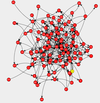
The Endogenous Formation of Economic Networks
Antonella Ianni, Seth Bullock (Investigators), Camillia Zedan
An investigation into endogenous network formation using a simple agent-based approach.
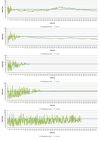
The Role of Information in Price Discovery
Antonella Ianni, Seth Bullock (Investigators), Camillia Zedan
The recent economic crisis has highlighted a continued vulnerability and lack of understanding in the financial markets. In order to overcome this, many believe that current market models must be improved. Recently, a trend towards agent-based modelling has emerged. Viewing the economy as a complex system is beginning to be seen as key to explaining certain market characteristics that were originally considered anomalies.
One of the fundamental assumptions in economics is that of information efficiency: that the price of a stock reflects its worth, that all possible information about a security is publicly known, and that any changes to price take place instantaneously. In reality, however, this is not the case.
This project considers the use of agents in modelling economic systems and demonstrates the effect of information levels on price discovery using a simple market simulation.

Understanding the Role of Recruitment in Robot Foraging
Seth Bullock, Richard Crowder (Investigators), Lenka Pitonakova
It is shown that recruitment among foraging robots is useful when resources are hard to find, but that the extra cost associated with such robots is not returned when there are many locations to gather from or simply when the relative gain from using communication is low.
People
 Seth Bullock
Professor, Electronics and Computer Science (FPAS)
 Graeme Day
Professor, Chemistry (FNES)
 Kees de Groot
Professor, Electronics and Computer Science (FPAS)
 Jonathan Essex
Professor, Chemistry (FNES)
 Hans Fangohr
Professor, Engineering Sciences (FEE)
 Edward Milton
Professor, Geography (FSHS)
 Richard Sandberg
Professor, Engineering Sciences (FEE)
 James Scanlan
Professor, Engineering Sciences (FEE)
 Suleiman Sharkh
Professor, Engineering Sciences (FEE)
 Stephen Turnock
Professor, Engineering Sciences (FEE)
 Peter Horak
Reader, Optoelectronics Research Centre
 Richard Crowder
Senior Lecturer, Electronics and Computer Science (FPAS)
 Antonella Ianni
Senior Lecturer, Social Sciences (FSHS)
 Joanna Nield
Senior Lecturer, Geography (FSHS)
 Bani Anvari
Lecturer, Engineering Sciences (FEE)
 Ian Hawke
Lecturer, Mathematics (FSHS)
 Chris-Kriton Skylaris
Lecturer, Chemistry (FNES)
 Ben Waterson
Lecturer, Civil Engineering & the Environment (FEE)
 Richard Boardman
Senior Research Fellow, Engineering Sciences (FEE)
 Reno Choi
Senior Research Fellow, Geography (FSHS)
Petros BogiatzisResearch Fellow, Ocean & Earth Science (FNES)
Nicola De TullioResearch Fellow, Engineering Sciences (FEE)
 Aleksander Dubas
Research Fellow, Engineering Sciences (FEE)
 Jacek Dziedzic
Research Fellow, Chemistry (FNES)
Btissam Er-RahmadiResearch Fellow, Management (FBL)
 Thomas Kluyver
Research Fellow, Engineering Sciences (FEE)
 Jason Noble
Research Fellow, Electronics and Computer Science (FPAS)
 Robin Wilson
Research Fellow, Geography (FSHS)
 Maximilian Albert
Postgraduate Research Student, Engineering Sciences (FEE)
 Ioannis Begleris
Postgraduate Research Student, Engineering Sciences (FEE)
 ThankGod E. Boye
Postgraduate Research Student, Engineering Sciences (FEE)
 Rory Brown
Postgraduate Research Student, Civil Engineering & the Environment (FEE)
 Jamie Caldwell
Postgraduate Research Student, Engineering Sciences (FEE)
 Paul Chambers
Postgraduate Research Student, Engineering Sciences (FEE)
 Dmitri Chernyshenko
Postgraduate Research Student, Engineering Sciences (FEE)
 Evander DaCosta
Postgraduate Research Student, Electronics and Computer Science (FPAS)
 Samuel Diserens
Postgraduate Research Student, Engineering Sciences (FEE)
 Anastasia Eleftheriou
Postgraduate Research Student, Electronics and Computer Science (FPAS)
 Robert Entwistle
Postgraduate Research Student, Engineering Sciences (FEE)
 Stephen Gow
Postgraduate Research Student, Engineering Sciences (FEE)
James GrahamPostgraduate Research Student, Electronics and Computer Science (FPAS)
 Joshua Greenhalgh
Postgraduate Research Student, Engineering Sciences (FEE)
 James Harrison
Postgraduate Research Student, Engineering Sciences (FEE)
 Garvin Haslett
Postgraduate Research Student, Electronics and Computer Science (FPAS)
Nicholas HillPostgraduate Research Student, Electronics and Computer Science (FPAS)
Marcin KnutPostgraduate Research Student, Medicine (FM)
 Oliver Laslett
Postgraduate Research Student, Civil Engineering & the Environment (FEE)
 David Lusher
Postgraduate Research Student, Engineering Sciences (FEE)
 Sarah Neenan
Postgraduate Research Student, Institute of Sound & Vibration Research (FEE)
 Alvaro Perez-Diaz
Postgraduate Research Student, Engineering Sciences (FEE)
Richard PichlerPostgraduate Research Student, Civil Engineering & the Environment (FEE)
 Lenka Pitonakova
Postgraduate Research Student, University of Southampton
 David Potts
Postgraduate Research Student, Humanities (FH)
 Daniel Powell
Postgraduate Research Student, Engineering Sciences (FEE)
 Craig Rafter
Postgraduate Research Student, Engineering Sciences (FEE)
 Hossam Ragheb
Postgraduate Research Student, Engineering Sciences (FEE)
 Kieran Selvon
Postgraduate Research Student, Engineering Sciences (FEE)
 Ashley Setter
Postgraduate Research Student, Engineering Sciences (FEE)
 James Snowdon
Postgraduate Research Student, Civil Engineering & the Environment (FEE)
 Matthew Spraggs
Postgraduate Research Student, Electronics and Computer Science (FPAS)
 Daniele Trimarchi
Postgraduate Research Student, Engineering Sciences (FEE)
 Jonathon Waters
Postgraduate Research Student, Engineering Sciences (FEE)
 Thorsten Wittemeier
Postgraduate Research Student, Engineering Sciences (FEE)
 Emanuele Zappia
Postgraduate Research Student, Engineering Sciences (FEE)
 Camillia Zedan
Postgraduate Research Student, Electronics and Computer Science (FPAS)
 Davide Zilli
Postgraduate Research Student, Electronics and Computer Science (FPAS)
Jess JonesTechnical Staff, iSolutions
 Elena Vataga
Technical Staff, iSolutions
 Petrina Butler
Administrative Staff, Research and Innovation Services
 Susanne Ufermann Fangohr
Administrative Staff, Civil Engineering & the Environment (FEE)
 Peter de_Groot
Alumnus, Physics & Astronomy (FPAS)
 Thomas Fischbacher
Alumnus, Engineering Sciences (FEE)
 Jan Kamenik
Alumnus, University of Southampton
 Arthur Lugtigheid
Alumnus, Psychology (FSHS)
 Dan Mason
Alumnus, University of Southampton
 Mohsen Mesgarpour
Alumnus, University of Southampton
 Marijan Beg
External Member, Imperial College London
 Daniel Pope
External Member, Mauve Internet Ltd.
 Mark Vousden
External Member, University of Southampton
Thomas DicksonNone, None
Simon HettrickNone, None
Daisuke SasakiNone, None
David SearNone, None
William TapperNone, None