HDF5

HDF5 is a technology suite that makes possible the management of extremely large and complex data collections through:
-
A versatile data model that can represent very complex data objects and a wide variety of metadata.
-
A completely portable file format with no limit on the number or size of data objects in the collection.
-
A software library that runs on a range of computational platforms, from laptops to massively parallel systems, and implements a high-level API with C, C++, Fortran 90, and Java interfaces.
-
A rich set of integrated performance features that allow for access time and storage space optimizations. Tools and applications for managing, manipulating, viewing, and analyzing the data in the collection.
For queries about this topic, contact Hans Fangohr.
View the calendar of events relating to this topic.
Projects
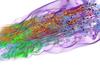
Advanced modelling for two-phase reacting flow
Edward Richardson (Investigator)
Engine designers want computer programs to help them invent ways to use less fuel and produce less pollution. This research aims to provide an accurate and practical model for the injection and combustion of liquid fuel blends.
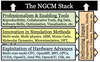
Centre for Doctoral Training in Next Generation Computational Modelling
Hans Fangohr, Ian Hawke, Peter Horak (Investigators), Susanne Ufermann Fangohr, Thorsten Wittemeier, Kieran Selvon, Alvaro Perez-Diaz, David Lusher, Ashley Setter, Emanuele Zappia, Hossam Ragheb, Ryan Pepper, Stephen Gow, Jan Kamenik, Paul Chambers, Robert Entwistle, Rory Brown, Joshua Greenhalgh, James Harrison, Jonathon Waters, Ioannis Begleris, Craig Rafter
The £10million Centre for Doctoral Training was launched in November 2013 and is jointly funded by EPSRC, the University of Southampton, and its partners.
The NGCM brings together world-class simulation modelling research activities from across the University of Southampton and hosts a 4-year doctoral training programme that is the first of its kind in the UK.
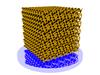
Computational electromagnetic modelling of 3D photonic structures
Marc Molinari, Darren Bagnall, Simon Cox (Investigators), Asa Asadollahbaik, Elizabeth Hart
Nano-structured materials can provide very specific and often very special optical effects which can be exploited for a large range of optical applications including wavelength filters, LEDs, micro-lasers, HDTV, solar-cell coatings, optical high-Q fibres, diffraction gratings, polarisation devices, optical switches, etc. This research in “Computational Electromagnetic Modelling of 3D Photonic Structures” aims to address the need for accurate and fast three-dimensional modelling, simulation and analysis processes in the photonics industry. A FEM/FDTD software suite will be developed to simulate Maxwell’s field equations and thin-film quantum effects (plasmons) in the visible and near-infrared EM frequency spectrum. The results obtained from running the software on suitable compute clusters will then be compared to the analysis results of experimentally manufactured materials. We will investigate structures occurring in nature such as iridescent butterfly wings, white/black reflecting beetle shells, etc., and aim to optimise artificially designed structures with periodic, quasi-periodic and random configurations.
Designer 3D Magnetic Mesostructures
Hans Fangohr (Investigator), Matteo Franchin, Andreas Knittel
A new electrodeposition self-assembly method allows for the growth of well defined mesostructures. This project's aim is to use this method in order to fabricate supraconducting and ferromagnetic mesostructures. Numerical methods based on well-established models are used in order to characterise the grown structures.

Dynamag: computational magnonics
Hans Fangohr, Atul Bhaskar (Investigators), Matteo Franchin, Andreas Knittel
Analytical treatment of long range magneto-dipole interactions is a bottle-neck of magnonics and more generally of the theory of spin waves in non-uniform media. This project develops a theoretical framework for analysis of magnonic phenomena in magnetic nano-structures, including isolated nano-elements, arrays of those, and extended magnonic crystals. The DYNAMAG project is funded by the EU FP7 and the DST of India.
Gravitational waves from neutron stars
Ian Hawke (Investigator)
Gravitational waves, once detected, will give information about the extremes of space and time. Compact objects such as neutron stars are perfect locations for generating such waves.

How sensitive is ocean model utility to resolution?
Kevin Oliver (Investigator), Maike Sonnewald
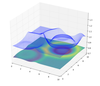
One of the most intriguing problems in recent ocean modeling research is the impact of varying model resolution on model accuracy. Increasing model resolution one includes more of the important processes. However, the increase in accuracy with resolution is unlikely to be linear. Thus, as computational cost increases with resolution, a critical assessment of achieved benefits is prudent. Here we analyse a suite of realistic and compatible global ocean model runs from coarse (1o, ORCA1), eddy-permitting (1/4o, ORCA025) and eddy resolving (1/12o, ORCA12) resolutions. Comparisons of steric height variability (varSH) highlight changes in ocean density structure, revealing impacts on mechanisms such as downwelling and eddy energy dissipation. We assess vertical variability using the covariace of the deep and shallow varSH. Together with assessing isopycnal movements, we demonstrate the influence of deep baroclinic modes and regions where the barotropic flow sheds eddies. Significant changes in the deepwater formation and dispersion both in the Arctic and Antarctic are found between resolutions. The varSH increased from ORCA1 to ORCA025 and ORCA12, particularily in the Southern Ocean and Western Boundary Currents. However, there is no significant covariance between the surface and deep in ORCA1, while ORCA025 and ORCA12 show significant covariance, implying an important missing energy pathway in ORCA1. Comparing ORCA025 and ORCA12 we see significant differences in eddy energy dissipation. We assess the impact of varying model resolution on the mean flow, discussing implications to dissipation pathways on model accuracy, with reference to stochastic parameterisation schemes.
Multiscale modelling of neutron star oceans
Ian Hawke (Investigator), Alice Harpole
Type I X-ray bursts are explosions which occur on the surface of some
neutron stars. It is believed that the burning begins in a localised spot in the ocean of the
star before spreading across the entire surface. By gaining a better understanding of X-ray
bursts, it is hoped that tighter limits can be determined for other neutron star properties
such as the radius and magnetic field strength.

Nmag - computational micromagnetics
Hans Fangohr, Thomas Fischbacher (Investigators), Matteo Franchin, Andreas Knittel, Maximilian Albert, Dmitri Chernyshenko, Massoud Najafi, Richard Boardman
Nmag is a micromagnetic simulation package based on the general purpose multi-physics library nsim. It is developed by the group of Hans Fangohr and Thomas Fischbacher in the School of Engineering Sciences at the University of Southampton and released under the GNU GPL.

OpenDreamKit
Hans Fangohr (Investigator), Marijan Beg
OpenDreamKit is a [Horizon 2020](https://ec.europa.eu/programmes/horizon2020/) European Research Infrastructure project (#676541) providing substantial funding to the open-source computational mathematics ecosystem, and in particular popular tools such as LinBox, MPIR, SageMath, GAP, Pari/GP, LMFDB, Singular, MathHub, and the IPython/Jupyter interactive computing environment.

Skyrmionic states in confined nanostructures
Hans Fangohr (Investigator), Marijan Beg
An ever increasing need for data storage creates great challenges for the development of high-capacity storage devices that are cheap, fast, reliable, and robust. Because of the fundamental constraints of today's technologies, further progress requires radically different approaches. Magnetic skyrmions are very promising candidates for the development of future low-power, high-capacity, non-volatile data storage devices.
Spatial variability of the atmosphere in southern England
Joanna Nield, Jason Noble, Edward Milton (Investigators), Robin Wilson
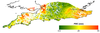
No-one really knows how variable key atmospheric parameters such as Aerosol Optical Thickness and Water Vapour content are over relatively small areas. This study aims to find out!

Towards biologically-inspired active-compliant-wing micro-air-vehicles
Richard Sandberg (Investigator), Sonia Serrano-Galiano
Despite a good knowledge of the physiology of bats and birds, engineering applications with active dynamic wing compliance capability are currently few and far between. Recent advances in development of electroactive materials together with high-fidelity numerical/experimental methods provide a foundation to develop biologically-inspired dynamically-active wings that can achieve "on-demand" aerodynamic performance. However this requires first to develop a thorough understanding of the dynamic coupling between the electro-mechanical structure of the membrane wing and its unsteady aerodynamics. In this collaborative initiative between the University of Southampton and Imperial College London, we are developing an integrated research programme that carries out high-fidelity experiments and computations to achieve a fundamental understanding of the dynamics of aero-electro-mechanical coupling in dynamically-actuated compliant wings. The goal is to utilise our understanding and devise control strategies that use integral actuation schemes to improve aerodynamic performance of membrane wings. The long-term goal of this project is to enable the use of soft robotics technology to build integrally-actuated wings for Micro Air Vehicles (MAV) that mimic the dynamic shape control capabilities of natural flyers.
Whisky Code
Ian Hawke (Investigator)
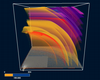
A 3D finite volume code for simulating compact relativistic hydrodynamics.
People
 Darren Bagnall
Professor, Electronics and Computer Science (FPAS)
 Simon Cox
Professor, Engineering Sciences (FEE)
 Hans Fangohr
Professor, Engineering Sciences (FEE)
 Edward Milton
Professor, Geography (FSHS)
 Richard Sandberg
Professor, Engineering Sciences (FEE)
 Peter Horak
Reader, Optoelectronics Research Centre
 Atul Bhaskar
Senior Lecturer, Engineering Sciences (FEE)
 Joanna Nield
Senior Lecturer, Geography (FSHS)
 Edward Richardson
Senior Lecturer, Engineering Sciences (FEE)
 Ian Hawke
Lecturer, Mathematics (FSHS)
 Kevin Oliver
Lecturer, National Oceanography Centre (FNES)
 Richard Boardman
Senior Research Fellow, Engineering Sciences (FEE)
 Reno Choi
Senior Research Fellow, Geography (FSHS)
Felipe Alves PortelaResearch Fellow, Engineering Sciences (FEE)
Elizabeth HartResearch Fellow, Engineering Sciences (FEE)
 Jason Noble
Research Fellow, Electronics and Computer Science (FPAS)
 Robin Wilson
Research Fellow, Geography (FSHS)
 Maximilian Albert
Postgraduate Research Student, Engineering Sciences (FEE)
 Asa Asadollahbaik
Postgraduate Research Student, Engineering Sciences (FEE)
 Patrick Bechlars
Postgraduate Research Student, Engineering Sciences (FEE)
 Ioannis Begleris
Postgraduate Research Student, Engineering Sciences (FEE)
 Rory Brown
Postgraduate Research Student, Civil Engineering & the Environment (FEE)
 Paul Chambers
Postgraduate Research Student, Engineering Sciences (FEE)
 Robert Entwistle
Postgraduate Research Student, Engineering Sciences (FEE)
 Stephen Gow
Postgraduate Research Student, Engineering Sciences (FEE)
 Joshua Greenhalgh
Postgraduate Research Student, Engineering Sciences (FEE)
 James Harrison
Postgraduate Research Student, Engineering Sciences (FEE)
 David Lusher
Postgraduate Research Student, Engineering Sciences (FEE)
 Alvaro Perez-Diaz
Postgraduate Research Student, Engineering Sciences (FEE)
 Craig Rafter
Postgraduate Research Student, Engineering Sciences (FEE)
 Hossam Ragheb
Postgraduate Research Student, Engineering Sciences (FEE)
 Kieran Selvon
Postgraduate Research Student, Engineering Sciences (FEE)
 Ashley Setter
Postgraduate Research Student, Engineering Sciences (FEE)
 Maike Sonnewald
Postgraduate Research Student, National Oceanography Centre (FNES)
 Jonathon Waters
Postgraduate Research Student, Engineering Sciences (FEE)
 Thorsten Wittemeier
Postgraduate Research Student, Engineering Sciences (FEE)
 Emanuele Zappia
Postgraduate Research Student, Engineering Sciences (FEE)
Jess JonesTechnical Staff, iSolutions
 Petrina Butler
Administrative Staff, Research and Innovation Services
 Susanne Ufermann Fangohr
Administrative Staff, Civil Engineering & the Environment (FEE)
Stuart CurtisAlumnus, University of Southampton
 Thomas Fischbacher
Alumnus, Engineering Sciences (FEE)
 Matteo Franchin
Alumnus, Engineering Sciences (FEE)
 Jan Kamenik
Alumnus, University of Southampton
 Andreas Knittel
Alumnus, Industry
 Arthur Lugtigheid
Alumnus, Psychology (FSHS)
 Marc Molinari
Alumnus, Engineering Sciences (FEE)
 Massoud Najafi
Alumnus, Arbeitsbereich Technische Informatik Systeme, University of Hamburg, Germany
 Marijan Beg
External Member, Imperial College London
Daisuke SasakiNone, None