Pylab
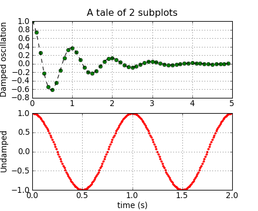
Matplotlib (also known as Pylab) is a python 2D plotting library which produces publication quality figures in a variety of hardcopy formats and interactive environments across platforms. matplotlib can be used in python scripts, the python and ipython shell (not too dissimilar from matlab or mathematica), web application servers, and six graphical user interface toolkits.
Matplotlib tries to make easy things easy and hard things possible. It can generate plots, histograms, power spectra, bar charts, errorcharts, scatterplots, etc, with just a few lines of code. For a sampling, see the screenshots, thumbnail gallery with source code, and examples directory. (More from Matplotlib home page.)
The image has been produced using this code
For queries about this topic, contact Hans Fangohr.
View the calendar of events relating to this topic.
Projects
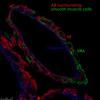
A Mathematical Analysis of the Driving Force of Perivascular Drainage in the Brain
Giles Richardson, Roxana-Octavia Carare (Investigators), Alexandra Diem
The observation that solute drainage in the brain occurs in the reverse direction of the blood flow has for a long time been puzzling for researchers. We developed a simple analytical model that can explain this reverse drainage of solutes and has potential implications for the development of treatment for Alzheimer's Disease.

A novel method for monitoring air pollution from satellites at very high resolution
Joanna Nield, Jason Noble, Edward Milton (Investigators), Robin Wilson
Developing methods to monitor the clarity of the atmosphere from satellites at 100,000 times the resolution of previous methods. This can then be used to monitor air pollution, correct satellite images and provide data for climate studies. Simulation is used to model the effects of atmospheric pollution on light passing through the atmosphere, and to test the method under 'synthetic atmospheres'.
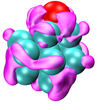
Ab initio simulations of chemical reactions on platinum nanoparticles
Chris-Kriton Skylaris (Investigator), Álvaro Ruiz-Serrano, Peter Cherry
•Use first principles calculations to study the relationship between shape and size of nanoparticle and the oxygen adsorption energy.
• Investigate the effect of high oxygen coverage on the catalytic activity of the nanoparticles.
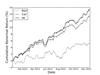
Automated Algorithmic Trading with Intelligent Execution
Frank McGroarty, Enrico Gerding (Investigators), Ash Booth
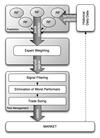
In this project, we introduce the first fully automated trading system for real-world stock trading that uses time-adaptive execution algorithm to minimise market impact while increasing profitability com- pared to benchmark strategies.
Automated Trading with Performance Weighted Random Forests and Seasonality
Frank McGroarty, Enrico Gerding (Investigators), Ash Booth
This project proposes an expert system that uses novel machine learning techniques to predict the price return over these seasonal events, and then uses these predictions to develop a profitable trading strategy.
Centre for Doctoral Training in Next Generation Computational Modelling
Hans Fangohr, Ian Hawke, Peter Horak (Investigators), Susanne Ufermann Fangohr, Thorsten Wittemeier, Kieran Selvon, Alvaro Perez-Diaz, David Lusher, Ashley Setter, Emanuele Zappia, Hossam Ragheb, Ryan Pepper, Stephen Gow, Jan Kamenik, Paul Chambers, Robert Entwistle, Rory Brown, Joshua Greenhalgh, James Harrison, Jonathon Waters, Ioannis Begleris, Craig Rafter
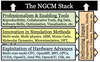
The £10million Centre for Doctoral Training was launched in November 2013 and is jointly funded by EPSRC, the University of Southampton, and its partners.
The NGCM brings together world-class simulation modelling research activities from across the University of Southampton and hosts a 4-year doctoral training programme that is the first of its kind in the UK.
Complexity in Modelling Electric Marine Propulsive Devices
Suleiman Sharkh, Neil Bressloff, Hans Fangohr (Investigators), Aleksander Dubas
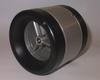
This project involves the simulation of turbulent flow around a marine rim-driven thruster and the complex interaction of flow features involved through computational fluid dynamics. Following this, the optimisation of design parameters using computational fluid dynamics to calculate the objective function is performed and surrogate modelling utilised to estimate optimum design configuration.
Fluid Dynamics Optimisation of Rim-Drive Thrusters and Ducted Hydrokinetic Generators
Aleksander Dubas, Suleiman Sharkh (Investigators)
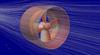
This is a Knowledge Transfer Partnership project is a collaboration between the University of Southampton and TSL Technology Ltd. to develop computational fluid dynamics software design tools for modelling and optimising the design of propeller thrusters and water turbine generators.
Fracturing of small social networks
Seth Bullock, Sally Brailsford (Investigators), Elisabeth zu-Erbach-Schoenberg
A connected social network is a very important factor for the success of groups and organisations. We investigate which factors make a group more resistant to the effects of disagreements which commonly happen in small social networks.
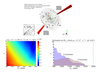
Hunting for Walking Technicolor at the LHC
Alexander Belyaev (Investigator), Azaria Coupe
Now that the LHC experiment at CERN has observed the Higgs boson, the final piece of the particle physics theory called the Standard Model, the focus of theoretical and experimental physicists shifts to what could possibly be discovered next. Phenomenologists, such as myself, straddle this line between theory and experiment, comparing the many theories of physics Beyond the Standard Model to whatever the LHC discovers, even drawing conclusions from what it doesn’t discover. I focus on a theory called Walking Technicolor (WTC), what the LHC would see if it were correct, and what the lack of discovery so far means for the fate of WTC.
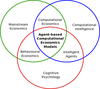
It takes all sorts: the mathematics of people’s behaviour in financial markets
Valerio Restocchi (Investigator), Frank McGroarty, Enrico Gerding
Agent-based models provide a deeper understanding of financial markets than classic models. We model people's behaviour and use agent-based simulations to study financial markets. By analysing the emerging complex dynamics, we achieve a deeper understanding of market participants' behaviours, which are necessary for a deeper comprehension of financial markets themselves.
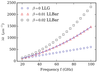
Magnetic dynamics under the Landau-Lifshitz-Baryakhtar equation
Hans Fangohr (Investigator), Weiwei Wang
Magnetic dynamics using the Landau-Lifshitz-Baryakhtar (LLBar) equation that the nonlocal damping is included as well as the scalar Gilbert damping.
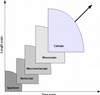
Multiscale Modelling of Cellular Calcium Signalling
Hans Fangohr, Jonathan Essex (Investigators), Dan Mason
Calcium ions play a vitally important role in signal transduction and are key to many cellular processes including muscle contraction and cell apoptosis (cell death). This importance has made calcium an active area in biomedical science and mathematical modelling.

OpenDreamKit
Hans Fangohr (Investigator), Marijan Beg
OpenDreamKit is a [Horizon 2020](https://ec.europa.eu/programmes/horizon2020/) European Research Infrastructure project (#676541) providing substantial funding to the open-source computational mathematics ecosystem, and in particular popular tools such as LinBox, MPIR, SageMath, GAP, Pari/GP, LMFDB, Singular, MathHub, and the IPython/Jupyter interactive computing environment.
Origins of Evolvability
Richard Watson, Markus Brede (Investigators), William Hurndall
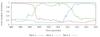
This project examined the putative evolvability of a Lipid World model of fissioning micelles. It was demonstrated that the model lacked evlovability due to poor heritability. Explicit structure for micelles was introduced along with a spatially localised form of catalysis which increased the strength of selection as coupling between potential chemical units of heredity were reduced.
Porous Media and Hydrothermal Circulation in Weakened Ocean Crust
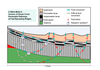
Formation of oceanic crust is an interplay between magma and the cooling hydrothermal system above that its own heat drives. To understand this system we must understand where and how water circulates through the crust.
Ocean crust is riddled with faults and other permeable pathways along which water preferentially flows. We seek to use basic numerical models of circulation in porous media to understand how much of an influence on crust formation these anomalous features have, compared to the bulk, unfractured crust.
Precision study of critical slowing down in lattice simulations of the CP^{N-1} model
Jonathan Flynn, Andreas Juttner (Investigators), Andrew Lawson
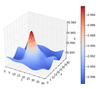
This project involves the study of critical slowing down (CSD): a property that may arise when taking measurements in Monte Carlo simulations. In order to study and quantify this phenomenon we have performed extensive simulations of the CP^{N-1} model. By studying the properties of the Monte Carlo algorithms in this model, we hope to make algorithmic improvements that can then be employed in simulations of physical quantum field theories, such as in lattice quantum chromodynamics (lattice QCD).
Predicting Available Energy in Energy Harvesting Wireless Sensor Networks
Geoff Merrett (Investigator), Davide Zilli
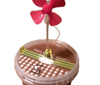
Is it possible to predict how much energy a sun-light or wind powered wireless sensor node can harvest and tune its sensing pattern accordingly?
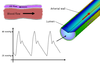
Preventing Alzheimer's Disease: A Multiphysics Simulation Approach
Neil Bressloff, Giles Richardson, Roxana-Octavia Carare (Investigators), Alexandra Diem
Experimental research has identified the causes of many diseases, such as Alzheimer's Disease. However, finding an effective treatment is very cost- and time-intensive and sacrifices many animals and does not guarantee success. In this PhD project, we investigate the driving force of solute drainage in the brain using multiphysics simulations in order to identify possible ways of preventing dementia.
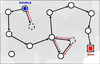
Scalability of Energy Efficient Routing Algorithms in Wireless Sensor Networks
Geoff Merrett (Investigator), Davide Zilli
This project compares two broad classes of routing algorithms for Wireless Sensor Networks, message flooding and single path, by means of a simulation model. In particular, we want to understand how the two scale in terms of energy efficiency on large networks of sensors.

Simulating Sleeping Sickness: a two-host agent-based model
Jason Noble, Peter Atkinson (Investigators), Simon Alderton
Sleeping sickness is a vector-borne, parastic disease which affects millions of people across 36 sub-Saharan African countries. Using agent-based models, we aim to gain a greater understanding of the interactions between the tsetse fly vector and both animal and human hosts.
Building an accurate representation will allow the testing of local interventation scenarios including the closing of watering holes, and the selective spraying of cattle with insecticides.
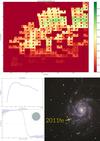
Supernova Rates in the Local Universe
Mark Sullivan (Investigator), Christopher Frohmaier
This project will calculate the frequency of exploding stars -- or supernovae -- in the nearby universe. We simulate a 'toy universe' by exploding billions of stars in a computer, and then artificially 'observing' these explosions by replicating a real astronomical sky survey, the Palomar Transient Factory (PTF). The results of this simulation allows us to discover the rate at which supernovae occur in the local universe each year.
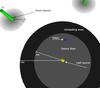
Towards design patterns for robot swarms
Richard Crowder, Seth Bullock (Investigators), Lenka Pitonakova
Swarm robotics is an inter-disciplinary field that seeks to design the behaviour of robots that can cooperate effectively on tasks like search and retrieval, reconnaissance, construction, etc. In this project, we are aiming towards a theoretical understanding of swarm intelligence and the development of design patterns for effective robot swarms.
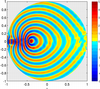
Wave-based discontinuous Galerkin methods
Gwenael Gabard (Investigator), Greg Kennedy
Wave-based computational methods are developed to model sound propagation in moving inhomogeneous media.
People
 Peter Atkinson
Professor, Geography (FSHS)
 Sally Brailsford
Professor, Management (FBL)
 Neil Bressloff
Professor, Engineering Sciences (FEE)
 Seth Bullock
Professor, Electronics and Computer Science (FPAS)
 Jonathan Essex
Professor, Chemistry (FNES)
 Hans Fangohr
Professor, Engineering Sciences (FEE)
 Jonathan Flynn
Professor, Physics & Astronomy (FPAS)
 Frank McGroarty
Professor, Management (FBL)
 Edward Milton
Professor, Geography (FSHS)
 Suleiman Sharkh
Professor, Engineering Sciences (FEE)
 Peter Horak
Reader, Optoelectronics Research Centre
Andreas JuttnerReader, Physics & Astronomy (FPAS)
 Giles Richardson
Reader, Mathematics (FSHS)
Markus BredeSenior Lecturer, Electronics and Computer Science (FPAS)
 Roxana-Octavia Carare
Senior Lecturer, Medicine (FM)
 Richard Crowder
Senior Lecturer, Electronics and Computer Science (FPAS)
 Joanna Nield
Senior Lecturer, Geography (FSHS)
 Richard Watson
Senior Lecturer, Electronics and Computer Science (FPAS)
 Alexander Belyaev
Lecturer, Physics & Astronomy (FPAS)
 Gwenael Gabard
Lecturer, Institute of Sound & Vibration Research (FEE)
 Ian Hawke
Lecturer, Mathematics (FSHS)
 Ivan Markovsky
Lecturer, Electronics and Computer Science (FPAS)
 Geoff Merrett
Lecturer, Electronics and Computer Science (FPAS)
 Chris-Kriton Skylaris
Lecturer, Chemistry (FNES)
Mark SullivanPrincipal Research Fellow, Physics & Astronomy (FPAS)
Felipe Alves PortelaResearch Fellow, Engineering Sciences (FEE)
 Aleksander Dubas
Research Fellow, Engineering Sciences (FEE)
 Thomas Kluyver
Research Fellow, Engineering Sciences (FEE)
 Jason Noble
Research Fellow, Electronics and Computer Science (FPAS)
 Robin Wilson
Research Fellow, Geography (FSHS)
- -Postgraduate Research Student, Electronics and Computer Science (FPAS)
 Simon Alderton
Postgraduate Research Student, Geography (FSHS)
 David Arden
Postgraduate Research Student, Electronics and Computer Science (FPAS)
 Jordi Arranz
Postgraduate Research Student, Electronics and Computer Science (FPAS)
 Patrick Bechlars
Postgraduate Research Student, Engineering Sciences (FEE)
 Ioannis Begleris
Postgraduate Research Student, Engineering Sciences (FEE)
 Harry Beviss
Postgraduate Research Student, Electronics and Computer Science (FPAS)
 Ash Booth
Postgraduate Research Student, Electronics and Computer Science (FPAS)
 Lewys Brace
Postgraduate Research Student, Electronics and Computer Science (FPAS)
 Rory Brown
Postgraduate Research Student, Civil Engineering & the Environment (FEE)
 Paul Chambers
Postgraduate Research Student, Engineering Sciences (FEE)
 Peter Cherry
Postgraduate Research Student, Chemistry (FNES)
 Azaria Coupe
Postgraduate Research Student, Physics & Astronomy (FPAS)
 Christopher Crispin
Postgraduate Research Student, Engineering Sciences (FEE)
 Alexandra Diem
Postgraduate Research Student, Engineering Sciences (FEE)
 Robert Entwistle
Postgraduate Research Student, Engineering Sciences (FEE)
 Christopher Frohmaier
Postgraduate Research Student, Physics & Astronomy (FPAS)
 Stephen Gow
Postgraduate Research Student, Engineering Sciences (FEE)
 Joshua Greenhalgh
Postgraduate Research Student, Engineering Sciences (FEE)
 James Harrison
Postgraduate Research Student, Engineering Sciences (FEE)
 William Hurndall
Postgraduate Research Student, Electronics and Computer Science (FPAS)
 Joshua Jeeson Daniel
Postgraduate Research Student, Engineering Sciences (FEE)
 Leo Jofeh
Postgraduate Research Student, Electronics and Computer Science (FPAS)
Greg KennedyPostgraduate Research Student, Institute of Sound & Vibration Research (FEE)
Andrew LawsonPostgraduate Research Student, Physics & Astronomy (FPAS)
 David Lusher
Postgraduate Research Student, Engineering Sciences (FEE)
 Alvaro Perez-Diaz
Postgraduate Research Student, Engineering Sciences (FEE)
Richard PichlerPostgraduate Research Student, Civil Engineering & the Environment (FEE)
 Lenka Pitonakova
Postgraduate Research Student, University of Southampton
 Craig Rafter
Postgraduate Research Student, Engineering Sciences (FEE)
 Hossam Ragheb
Postgraduate Research Student, Engineering Sciences (FEE)
 Sabin Roman
Postgraduate Research Student, University of Southampton
 Álvaro Ruiz-Serrano
Postgraduate Research Student, Chemistry (FNES)
 Kieran Selvon
Postgraduate Research Student, Engineering Sciences (FEE)
 Ashley Setter
Postgraduate Research Student, Engineering Sciences (FEE)
 Nathan Smith
Postgraduate Research Student, Electronics and Computer Science (FPAS)
 Matthew Spraggs
Postgraduate Research Student, Electronics and Computer Science (FPAS)
Johannes Van Der HorstPostgraduate Research Student, Electronics and Computer Science (FPAS)
 Jonathon Waters
Postgraduate Research Student, Engineering Sciences (FEE)
 Thorsten Wittemeier
Postgraduate Research Student, Engineering Sciences (FEE)
 Alex Wright
Postgraduate Research Student, Civil Engineering & the Environment (FEE)
 Emanuele Zappia
Postgraduate Research Student, Engineering Sciences (FEE)
 Davide Zilli
Postgraduate Research Student, Electronics and Computer Science (FPAS)
 Elisabeth zu-Erbach-Schoenberg
Postgraduate Research Student, Management (FBL)
 Petrina Butler
Administrative Staff, Research and Innovation Services
 Susanne Ufermann Fangohr
Administrative Staff, Civil Engineering & the Environment (FEE)
 Richard Edwards
Alumnus, University of New South Wales, Australia
 Jan Kamenik
Alumnus, University of Southampton
Kondwani KanjereAlumnus, Engineering Sciences (FEE)
 Arthur Lugtigheid
Alumnus, Psychology (FSHS)
 Dan Mason
Alumnus, University of Southampton
Alkin NasufAlumnus, Engineering Sciences (FEE)
Nicolas PalopoliAlumnus, Biological Sciences (FNES)
 Weiwei Wang
Alumnus, Ningbo University
 Marijan Beg
External Member, Imperial College London
 Mark Vousden
External Member, University of Southampton
Enrico GerdingNone, None
Valerio RestocchiNone, None