Visual Python
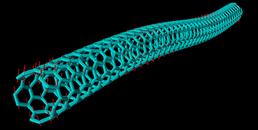
Visual Python (VPython) a 3D graphics module for the Python programming language called "Visual" originated by David Scherer in 2000. VPython makes it easy to create navigable 3D displays and animations, even for those with limited programming experience. Because it is based on Python, it also has much to offer for experienced programmers and researchers.
For queries about this topic, contact Hans Fangohr.
View the calendar of events relating to this topic.
Projects
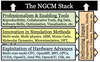
Centre for Doctoral Training in Next Generation Computational Modelling
Hans Fangohr, Ian Hawke, Peter Horak (Investigators), Susanne Ufermann Fangohr, Thorsten Wittemeier, Kieran Selvon, Alvaro Perez-Diaz, David Lusher, Ashley Setter, Emanuele Zappia, Hossam Ragheb, Ryan Pepper, Stephen Gow, Jan Kamenik, Paul Chambers, Robert Entwistle, Rory Brown, Joshua Greenhalgh, James Harrison, Jonathon Waters, Ioannis Begleris, Craig Rafter
The £10million Centre for Doctoral Training was launched in November 2013 and is jointly funded by EPSRC, the University of Southampton, and its partners.
The NGCM brings together world-class simulation modelling research activities from across the University of Southampton and hosts a 4-year doctoral training programme that is the first of its kind in the UK.
Dynamics of interacting magnetic nanoparticles
Thomas Fischbacher (Investigator), Maximilian Albert
The project aims at extending the micromagnetic simulation framework 'nmag' developed at the University of Southampton to enable it to handle dynamic geometries. The extended framework will then be used to study systems such as interacting magnetic nanoparticles.
Fluid Loads and Motions of Damaged Ships
Dominic Hudson, Ming-yi Tan (Investigators), Christian Wood, James Underwood, Adam Sobey
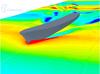
An area of research currently of interest in the marine industry is the effect of damage on ship structures. Research into the behaviour of damaged ships began in the mid nineties as a result of Ro-Ro disasters (e.g. Estonia in 1994). Due to the way the Estonia sank early research mainly focused on transient behaviour immediately after the damage takes place, the prediction of capsize, and of large lateral motions. Further research efforts, headed by the UK MoD, began following an incident where HMS Nottingham ran aground tearing a 50m hole from bow to bridge, flooding five compartments and almost causing the ship to sink just off Lord Howe Island in 2002. This project intends to answer the following questions:
“For a given amount of underwater damage (e.g. collision or torpedo/mine hit), what will be the progressive damage spread if the ship travels at ‘x’ knots? OR for a given amount of underwater damage, what is the maximum speed at which the ship can travel without causing additional damage?”

OpenDreamKit
Hans Fangohr (Investigator), Marijan Beg
OpenDreamKit is a [Horizon 2020](https://ec.europa.eu/programmes/horizon2020/) European Research Infrastructure project (#676541) providing substantial funding to the open-source computational mathematics ecosystem, and in particular popular tools such as LinBox, MPIR, SageMath, GAP, Pari/GP, LMFDB, Singular, MathHub, and the IPython/Jupyter interactive computing environment.
Scalability of Energy Efficient Routing Algorithms in Wireless Sensor Networks
Geoff Merrett (Investigator), Davide Zilli
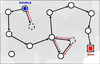
This project compares two broad classes of routing algorithms for Wireless Sensor Networks, message flooding and single path, by means of a simulation model. In particular, we want to understand how the two scale in terms of energy efficiency on large networks of sensors.
People
 Hans Fangohr
Professor, Engineering Sciences (FEE)
 Peter Horak
Reader, Optoelectronics Research Centre
 Dominic Hudson
Senior Lecturer, Engineering Sciences (FEE)
 Mohamed Bakoush
Lecturer, Management (FBL)
 Ian Hawke
Lecturer, Mathematics (FSHS)
 Geoff Merrett
Lecturer, Electronics and Computer Science (FPAS)
 Ming-yi Tan
Lecturer, Engineering Sciences (FEE)
 Philip Williamson
Senior Research Fellow, Biological Sciences (FNES)
Felipe Alves PortelaResearch Fellow, Engineering Sciences (FEE)
 Maximilian Albert
Postgraduate Research Student, Engineering Sciences (FEE)
 Ioannis Begleris
Postgraduate Research Student, Engineering Sciences (FEE)
 Ash Booth
Postgraduate Research Student, Electronics and Computer Science (FPAS)
 Lewys Brace
Postgraduate Research Student, Electronics and Computer Science (FPAS)
 Rory Brown
Postgraduate Research Student, Civil Engineering & the Environment (FEE)
 Paul Chambers
Postgraduate Research Student, Engineering Sciences (FEE)
 Robert Entwistle
Postgraduate Research Student, Engineering Sciences (FEE)
 Stephen Gow
Postgraduate Research Student, Engineering Sciences (FEE)
 Joshua Greenhalgh
Postgraduate Research Student, Engineering Sciences (FEE)
 James Harrison
Postgraduate Research Student, Engineering Sciences (FEE)
 Joshua Jeeson Daniel
Postgraduate Research Student, Engineering Sciences (FEE)
 David Lusher
Postgraduate Research Student, Engineering Sciences (FEE)
 Alvaro Perez-Diaz
Postgraduate Research Student, Engineering Sciences (FEE)
 Craig Rafter
Postgraduate Research Student, Engineering Sciences (FEE)
 Hossam Ragheb
Postgraduate Research Student, Engineering Sciences (FEE)
 Kieran Selvon
Postgraduate Research Student, Engineering Sciences (FEE)
 Ashley Setter
Postgraduate Research Student, Engineering Sciences (FEE)
Adam SobeyPostgraduate Research Student, Engineering Sciences (FEE)
 Daniele Trimarchi
Postgraduate Research Student, Engineering Sciences (FEE)
 James Underwood
Postgraduate Research Student, Engineering Sciences (FEE)
 Jonathon Waters
Postgraduate Research Student, Engineering Sciences (FEE)
 Thorsten Wittemeier
Postgraduate Research Student, Engineering Sciences (FEE)
 Emanuele Zappia
Postgraduate Research Student, Engineering Sciences (FEE)
 Davide Zilli
Postgraduate Research Student, Electronics and Computer Science (FPAS)
 Petrina Butler
Administrative Staff, Research and Innovation Services
 Susanne Ufermann Fangohr
Administrative Staff, Civil Engineering & the Environment (FEE)
 Thomas Fischbacher
Alumnus, Engineering Sciences (FEE)
 Jan Kamenik
Alumnus, University of Southampton
Kondwani KanjereAlumnus, Engineering Sciences (FEE)
 Arthur Lugtigheid
Alumnus, Psychology (FSHS)
 Christian Wood
Alumnus, Engineering Sciences (FEE)
 Marijan Beg
External Member, Imperial College London
 Mark Vousden
External Member, University of Southampton
Daisuke SasakiNone, None