Computational Engineering and Design Group (CED)
Engineering Sciences (FEE)
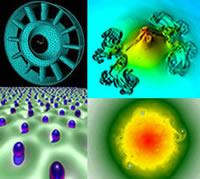
The CED Group carries out multi-disciplinary research using a range of analytical, computational, and experimental techniques and its strength lies in this sophisticated mix of engineering methods coupled to industrial applications.
The group hosts the Southampton Regional e-Science Centre, the Rolls Royce University Technology Centre for Computational Engineering and the Microsoft Institute for High Performance Computing. It is housed in a recently refurbished and dedicated building that is equipped with numerous workstations, video conferencing facilities and high speed parallel and clustered processor systems. Activities include the use of computational methods for studying design and related problems in fluids, structures, control systems and biomechanics, evolutionary optimisation, construction of advanced cost prediction systems, optimisation of meta-modelled, approximate or noisy systems and analysis of robustness.
Head of group

Selected members with computational interest


Selected computational projects
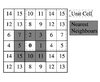
A Fast Multipole Method for the Bessel potential
Marc Molinari, Simon Cox (Investigators), Neil O'Brien
The fast multipole method (FMM) proposed by Greengard and Rokhlin provides a method by which the O(N-squared) many-body problem can be reduced to O(N) complexity. In this project, a multipole method is developed to calculate the energy of a system of vortices in a high temperature superconductor, where the many-body interactions give rise to rich and complex physics. The method developed here is suitable for systems where the interactions are governed by a Bessel potential rather than the usual logarithmic potentials occurring in gravitational and electrostatic problems. We derive and apply vectorised forms of the Gegenbauer addition formulae in order to achieve the O(N) scaling associated with fast multipole methods.

An investigation in to the effects of information provision on driver learning
Ben Waterson, Hans Fangohr (Investigators), James Snowdon
This work aims to better understand and model the role of individual learning and experience on driver route choice. We intend to demonstrate that vehicle-driver agent based models stand alone in being able to capture the complex reciprocal interactions between drivers and their environment, and allow us to incorporate the effects of prior knowledge from previous trips and advice from official information sources and social networks.

ASTRA Avionics Testbed
Andras Sobester, James Scanlan (Investigators), Christopher Crispin
This project aims to create a platform for testing programs built to enhance the autopilots decision making. To make this possible a payload bay was built into an existing airframe using additive manufacture. For the purpose of this particular project the Odroid on board will be used to pass waypoints or control decisions to the autopilot so a space-filling trajectory, determined via Genetic Programing, can be flown.
BioSimGrid
Jonathan Essex, Hans Fangohr (Investigators), Richard Boardman, Syma Khalid, Steven Johnston
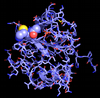
The aim of the BioSimGrid project is to make the results of large-scale computer simulations of biomolecules more accessible to the biological community. Such simulations of the motions of proteins are a key component in understanding how the structure of a protein is related to its dynamic function.
Centre for Doctoral Training in Next Generation Computational Modelling
Hans Fangohr, Ian Hawke, Peter Horak (Investigators), Susanne Ufermann Fangohr, Thorsten Wittemeier, Kieran Selvon, Alvaro Perez-Diaz, David Lusher, Ashley Setter, Emanuele Zappia, Hossam Ragheb, Ryan Pepper, Stephen Gow, Jan Kamenik, Paul Chambers, Robert Entwistle, Rory Brown, Joshua Greenhalgh, James Harrison, Jonathon Waters, Ioannis Begleris, Craig Rafter
The £10million Centre for Doctoral Training was launched in November 2013 and is jointly funded by EPSRC, the University of Southampton, and its partners.
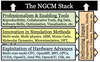
The NGCM brings together world-class simulation modelling research activities from across the University of Southampton and hosts a 4-year doctoral training programme that is the first of its kind in the UK.
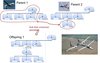
Challenging Topological Prejudice - Automated Airframe Layout Design
Andras Sobester (Investigator), Paul Chambers
Aircraft preliminary design scopes are drastically narrowed by topological prejudice. Modern aircraft have settled on the same 'tube plus wing and cruciform tail' type topology that has been adopted through their ancestry, with no scientific evidence that this layout is optimal. This research project poses the question:
“Given a topologically flexible aircraft geometry that is free of prejudice or bias, would a sophisticated multi-disciplinary optimization process yield a conventional layout?”

Complex Systems Simulations Centre for Doctoral Training
Jonathan Essex, Seth Bullock, Hans Fangohr (Investigators)
The centre for doctoral training brings together students from a variety of backgrounds, ranging from mathematics, physics and chemistry to oceanography, geography, biology, computer science, and engineering. Students carry out a four-year programme combining taught courses with a PhD project.

Complexity in Modelling Electric Marine Propulsive Devices
Suleiman Sharkh, Neil Bressloff, Hans Fangohr (Investigators), Aleksander Dubas
This project involves the simulation of turbulent flow around a marine rim-driven thruster and the complex interaction of flow features involved through computational fluid dynamics. Following this, the optimisation of design parameters using computational fluid dynamics to calculate the objective function is performed and surrogate modelling utilised to estimate optimum design configuration.
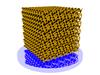
Computational electromagnetic modelling of 3D photonic structures
Marc Molinari, Darren Bagnall, Simon Cox (Investigators), Asa Asadollahbaik, Elizabeth Hart
Nano-structured materials can provide very specific and often very special optical effects which can be exploited for a large range of optical applications including wavelength filters, LEDs, micro-lasers, HDTV, solar-cell coatings, optical high-Q fibres, diffraction gratings, polarisation devices, optical switches, etc. This research in “Computational Electromagnetic Modelling of 3D Photonic Structures” aims to address the need for accurate and fast three-dimensional modelling, simulation and analysis processes in the photonics industry. A FEM/FDTD software suite will be developed to simulate Maxwell’s field equations and thin-film quantum effects (plasmons) in the visible and near-infrared EM frequency spectrum. The results obtained from running the software on suitable compute clusters will then be compared to the analysis results of experimentally manufactured materials. We will investigate structures occurring in nature such as iridescent butterfly wings, white/black reflecting beetle shells, etc., and aim to optimise artificially designed structures with periodic, quasi-periodic and random configurations.

Control and Prediction of the Organic Solid State
Richard Boardman
This project aims to produce a computer technology for the prediction of the crystal structure(s) of an organic molecule, that could be used even prior to the synthesis of the compound.
Such a computational study could be done relatively quickly to predict the dangers and opportunities of the solid phases of a molecule under development. Our project will develop the methods of experimental screening for polymorphs and their characterisation, and hence the combination will provide a major new technology for aiding industrial formulation.
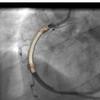
Coronary Artery Stent Design for Challenging Disease
Neil Bressloff (Investigator), Georgios Ragkousis
In this work, a method has been setup to (i) reconstruct diseased patient specific coronary artery segments; (ii) use the new supercomputer to run many simulations of this complex problem and (iii) assess the degree of stent malapposition. The aim now is to devise a stent delivery system that can mitigate this problem

Design of Unmanned Air Vehicles
James Scanlan (Investigator), Robert Entwistle
Using computational modelling of a 3D airspace simulation environment to meet the safety and collision-avoidance requirements of the certification authorities.
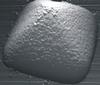
Designer 3D Magnetic Mesostructures
Hans Fangohr (Investigator), Matteo Franchin, Andreas Knittel
A new electrodeposition self-assembly method allows for the growth of well defined mesostructures. This project's aim is to use this method in order to fabricate supraconducting and ferromagnetic mesostructures. Numerical methods based on well-established models are used in order to characterise the grown structures.

Developing programming skills with Minecraft and Python
Hans Fangohr (Investigator), Alvaro Perez-Diaz
PythonTool is a Minecraft mod created for this project which allows interactive execution of Python scripts which interact with the game in real time. It intends to make teaching programming to children or non-expert users easier and more appealing.

Directing magnetic skyrmion traffic flow with nanoscale patterning.
Hans Fangohr (Investigator), Mark Vousden
Skyrmions in magnetic nanostructures may lead to new data storage technologies. Appropriate simulation methodologies are developed and applied.
Dynamag: computational magnonics
Hans Fangohr, Atul Bhaskar (Investigators), Matteo Franchin, Andreas Knittel
Analytical treatment of long range magneto-dipole interactions is a bottle-neck of magnonics and more generally of the theory of spin waves in non-uniform media. This project develops a theoretical framework for analysis of magnonic phenomena in magnetic nano-structures, including isolated nano-elements, arrays of those, and extended magnonic crystals. The DYNAMAG project is funded by the EU FP7 and the DST of India.
Dynamics of interacting magnetic nanoparticles
Thomas Fischbacher (Investigator), Maximilian Albert
The project aims at extending the micromagnetic simulation framework 'nmag' developed at the University of Southampton to enable it to handle dynamic geometries. The extended framework will then be used to study systems such as interacting magnetic nanoparticles.
Dynamics of interacting magnetic nanostructures
Hans Fangohr (Investigator), Maximilian Albert
Individual ferromagnetic objects of dimensions of order of 100nm provide a wealth of complex phenomena, both in static and dynamic behaviour. This project focuses on the dynamics of interacting ferromagnetic nano structures.
Generating Optimal Ensembles of Earth System Models
Simon Cox (Investigator), Elizabeth Hart, Andras Sobester
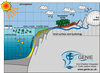
GENIE is an Earth system model of intermediate complexity. As with other climate models, the tuning of its parameters is essential for providing reliable long-term forecasts of Earth system behaviour. We apply a multi-objective optimization algorithm to the problem. The aim of the tuning exercise is to find the optimal values for the free parameters that produce and euqilibrium model end state with the closest fit to equivalent observational data.
Generic Operational Simulation of Civil Unmanned Air Vehicle Operations
Hans Fangohr, James Scanlan (Investigators)
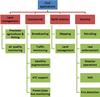
This project creates a generic operational simulation of Unmanned Air Vehicle Operations. UAVs can be valued for their mission-suitability and compared against various configurations.
Magnetic dynamics under the Landau-Lifshitz-Baryakhtar equation
Hans Fangohr (Investigator), Weiwei Wang
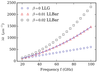
Magnetic dynamics using the Landau-Lifshitz-Baryakhtar (LLBar) equation that the nonlocal damping is included as well as the scalar Gilbert damping.
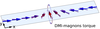
Magnon-Driven Domain-Wall Dynamics in the presence of Dzyaloshinskii-Moriya Interaction
Hans Fangohr (Investigator), Weiwei Wang
The domain wall motion induced by spin waves (magnons) in the presence of Dzyaloshinskii-Moriya Interaction is studied in this project.
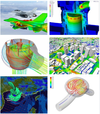
Massively-Parallel Computational Fluid Dynamics
Simon Cox, Stephen Turnock, Alexander Phillips (Investigators), James Hawkes
Computational Fluid Dynamics (CFD) is a numerical method for modelling fluid flows and heat transfer - and is used in many industries. It can be used to model dynamics around aircraft, ships and land vehicles; and also has uses in engine design, architecture, weather forecasting, medicine, computer-generated imagery (CGI) and much more. To harness the full power of CFD, it is necessary to utilise the full power of modern supercomputers. This project aims to improve the scalabilty of existing CFD codes so that more complex problems can be tackled efficiently.

Meshless Methods for Photonic Crystal Modelling
Kamal Djidjeli, Marc Molinari, Simon Cox (Investigators), Neil O'Brien, Elizabeth Hart
We apply meshless methods to the problems of simulating photonic crystals. The meshless methods utilise compactly-supported radial basis functions (CSRBFs) and offer a promising alternative to the conventional plane-wave expansion method for calculating the band structure of photonic crystals.
Micromagnetic simulation of Magnetoelectric Multiferroics
Hans Fangohr (Investigator), Rebecca Carey
The focus of this project is towards the understanding of the magnetic and electric couplings in multiferroic materials, in order to create a magnetoelectric micromagnetic model.
Mixed FEM-particle method for nonlinear fluid-structure interaction problems, with applications to maritime engineering
Kamal Djidjeli (Investigator)
Simulating fluid-structure interaction problems involving large flow motions and deformations using particle methods.
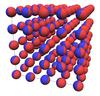
Modelling micromagnetism at elevated temperature
Hans Fangohr, Kees de Groot, Peter de_Groot (Investigators), Dmitri Chernyshenko
We aim to develop a multiscale multiphysics model of
micromagnetism at elevated temperatures with atomistic simulations for
material parameter. The tool will be used to guide the development of the next generation magnetic data storage technology: heat assisted magnetic recording.
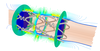
Multi-objective design optimisation of coronary stents
Neil Bressloff, Georges Limbert (Investigators), Sanjay Pant
Stents are tubular type scaffolds that are deployed (using an inflatable balloon on a catheter), most commonly to recover the shape of narrowed (diseased) arterial segments. Despite the widespread clinical use of stents in cardiovascular intervention, the presence of such devices can cause adverse responses leading to fatality or to the need for further treatment. The most common unwanted responses of inflammation are in-stent restenosis and thrombosis. Such adverse biological responses in a stented artery are influenced by many factors, including the design of the stent. This project aims at using multi-objective optimisation techniques to find an optimum family of coronary stents which are more resistant to the processes of in-stent restenosis (IR) and stent thrombosis (ST).
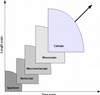
Multiscale Modelling of Cellular Calcium Signalling
Hans Fangohr, Jonathan Essex (Investigators), Dan Mason
Calcium ions play a vitally important role in signal transduction and are key to many cellular processes including muscle contraction and cell apoptosis (cell death). This importance has made calcium an active area in biomedical science and mathematical modelling.
NGCM-0054 - Automatic Code Generation for Computational Science
Hans Fangohr (Investigator), Gary Downing
Automatically generate code to solve partial differential equations specified symbolically.

Nmag - computational micromagnetics
Hans Fangohr, Thomas Fischbacher (Investigators), Matteo Franchin, Andreas Knittel, Maximilian Albert, Dmitri Chernyshenko, Massoud Najafi, Richard Boardman
Nmag is a micromagnetic simulation package based on the general purpose multi-physics library nsim. It is developed by the group of Hans Fangohr and Thomas Fischbacher in the School of Engineering Sciences at the University of Southampton and released under the GNU GPL.
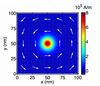
Nmag finite difference
Hans Fangohr (Investigator), Dmitri Chernyshenko, Matteo Franchin, Massoud Najafi
The goal of this project is to extends the finite element based micromagnetic simulation tool Nmag by the finite difference based extension Nmagfd and so to get an simulation tool where the user can easily switch between the used discretization method.

OpenDreamKit
Hans Fangohr (Investigator), Marijan Beg
OpenDreamKit is a [Horizon 2020](https://ec.europa.eu/programmes/horizon2020/) European Research Infrastructure project (#676541) providing substantial funding to the open-source computational mathematics ecosystem, and in particular popular tools such as LinBox, MPIR, SageMath, GAP, Pari/GP, LMFDB, Singular, MathHub, and the IPython/Jupyter interactive computing environment.
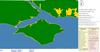
Operational Simulation of the Solent Search-and-Rescue environment
James Scanlan, Kenji Takeda, Hans Fangohr (Investigators), Ben Schumann
This project aims to identify useful metrics for a proposed Search-and-Rescue UAV and test it virtually in a realistic environment.
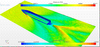
Prediction of Hydrodynamic Characteristics of Planing Hulls using CFD
Kamal Djidjeli (Investigator)
Performance prediction is an important part of vessel design. Common methods used for predicting planing hull performance include empirical equations and model tests. Model tests are usually expensive, while empirical equations are often applicable to similar hull types. In this work, CFD is used as an alternative prediction tool for high speed planing vessels.
Preventing Alzheimer's Disease: A Multiphysics Simulation Approach
Neil Bressloff, Giles Richardson, Roxana-Octavia Carare (Investigators), Alexandra Diem
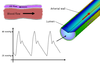
Experimental research has identified the causes of many diseases, such as Alzheimer's Disease. However, finding an effective treatment is very cost- and time-intensive and sacrifices many animals and does not guarantee success. In this PhD project, we investigate the driving force of solute drainage in the brain using multiphysics simulations in order to identify possible ways of preventing dementia.
Reversal of ferromagnetic nanotubes
Hans Fangohr (Investigator), David Cortes
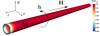
We are analysing the feasibility of reversing a nano scaled magnetic tube by applying weak pulses of currents through the nano-tube inner core
Simulating the Write Process in Perpendicular Magnetic Media
Hans Fangohr (Investigator), Stuart Curtis
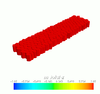
The project aims to use Nmag, a micromagnetics software package developed by the CMG to model the writing process in perpendicular magnetic recording.

Simulation of Parking Choice Behaviour
Ben Waterson, Hans Fangohr (Investigators), James Snowdon
Exploring how psychological models of individual parking search behaviours can be combined into an accurate simulation of vehicle flows, allowing for assessment of the impact on searching traffic of different demand/ supply ratios, different driver population characteristics and different charging regimes.
Simulations of Magnetic Skyrmions
Hans Fangohr (Investigator), Ryan Pepper
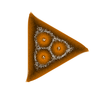
The manipulation of magnetic skyrmions could prove to be a useful technique for storing data on an unprecedented density scale. In this project we seek to better understand their properties and ways to control them.

Skyrmionic states in confined nanostructures
Hans Fangohr (Investigator), Marijan Beg
An ever increasing need for data storage creates great challenges for the development of high-capacity storage devices that are cheap, fast, reliable, and robust. Because of the fundamental constraints of today's technologies, further progress requires radically different approaches. Magnetic skyrmions are very promising candidates for the development of future low-power, high-capacity, non-volatile data storage devices.
Stability of chiral structures in magnetic nanodisks
Hans Fangohr, Weiwei Wang (Investigators), David Cortes
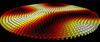
This project is aimed to study the stability of skyrmionic and helical equilibrium states in magnetic nanodisks, using computational simulations.
Test and Rest
Hans Fangohr (Investigator), Evander DaCosta, James Graham, Oliver Laslett
Regression and system testing, automatic execution of testing - establishing best practice.
The Skyrmion Project
Hans Fangohr (Investigator), Marijan Beg
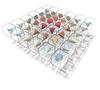
Skyrmions are excitations of matter whose occurrence and collective properties are mysterious, but which hold promise for advancing our basic understanding of matter and also for technological deployment as highly efficient memory elements.

The use of channel wings for slow speed UAV flight
Andy Keane (Investigator), Juraj Mihalik
In this project, advanced computational modeling and robust design optimization tools are used to observe the possibility of use of the Custer channel wings for slow speed UAV flights.

Variability in high pressure blade trailing edge geometry and its impact on stage capacity and blade temperature
Andy Keane (Investigator), Jan Kamenik
My project involves the trailing edge (TE) geometry of gas turbine high pressure turbine blades, which is subject to inevitable variability due to the manufacturing processes involved.
Vibrational spectroscopy from ab initio molecular dynamics
Hans Fangohr, Chris-Kriton Skylaris (Investigators), Valerio Vitale
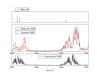
In this project I used the Fourier transform of the time correlation function (FTTCF) formalism, that allows to compute the vibrational spectra of molecules both in gas and condensed phase, at finite temperature, in a single ab initio molecular dynamics simulation.
Vortex Dynamics in High-Tc superconductors
Hans Fangohr (Investigator)
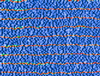
The dynamics of vortices in high temperature superconductors exhibits the complex and rich physics we expect from many body systems with competing interactions. Molecular Dynamics, Langevin Dynamics and Monte Carlo Computer simulations are carried out to understand this system in more detail.
µ-VIS Computed Tomography Centre
Ian Sinclair, Richard Boardman, Dmitry Grinev, Philipp Thurner, Simon Cox, Jeremy Frey, Mark Spearing, Kenji Takeda (Investigators)
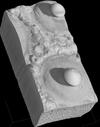
A dedicated centre for computed tomography (CT) at Southampton, providing complete support for 3D imaging science, serving Engineering, Biomedical, Environmental and Archaeological Sciences. The centre encompasses five complementary scanning systems supporting resolutions down to 200nm and imaging volumes in excess of one metre: from a matchstick to a tree trunk, from an ant's wing to a gas turbine blade.