Artificial Neural Networks
For queries about this topic, contact Richard Watson.
View the calendar of events relating to this topic.
Projects
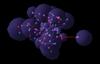
Amorphous Computation, Random Graphs and Complex Biological Networks
Seth Bullock (Investigator)
This interdisciplinary research collaboration arose within the Simple Models of Complex Networks research cluster funded by the EPSRC www.epsrca.ac.uk through the Novel Computation Initiative. Here, leading groups from the Universities of Leeds, Sheffield, Nottingham, Southampton, Royal Holloway and King’s College and industrial partners BT are brought together for the first time to develop novel amorphous computation methods based on the theory of random graphs.
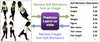
Automatic Image Retrieval with Soft Biometrics for Surveillance
Mark Nixon, John Carter (Investigators), Daniel Martinho-Corbishley
We're investigating ways to automatically describe and identify pedestrians from surveillance footage using human understandable, soft biometric labels. Our goal is to enable surveillance operators to search for pedestrians in a video network using soft biometric descriptions, and to automatically retrieve these descriptions from CCTV images.
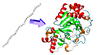
Deep Optimisation
Jamie Caldwell
The project will develop the implementation and application of a new optimisation technique. 'Deep optimisation' combines deep learning techniques in neural networks with distributed optimisation methods to create a dynamically re-scalable optimisation process. This project will develop this technique to better-understand its capabilities and limitations and develop GPU implementations. The protein structure prediction problem will be used as the main test application.
Network Analysis of Roman Transport Routes in the Imperial Roman Mediterranean
David Potts
This research is designed to explore the nature of the relationships between Portus, Rome, and other selected ports in the Mediterranean and to establish patterns and the changing nature of trading networks derived from the distribution of known Roman artefacts.
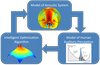
Optimisation of Acoustic Systems for Perceived Sound Quality
Jordan Cheer (Investigator), Daniel Wallace
Acoustic systems have traditionally been optimised on the basis of minimising an objective acoustic measure, such as sound pressure level. The project investigates the use of subjective measures of sound quality, such as "loudness", "harshness" etc. in optimisation algorithms.
Origins of Evolvability
Richard Watson, Markus Brede (Investigators), William Hurndall
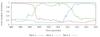
This project examined the putative evolvability of a Lipid World model of fissioning micelles. It was demonstrated that the model lacked evlovability due to poor heritability. Explicit structure for micelles was introduced along with a spatially localised form of catalysis which increased the strength of selection as coupling between potential chemical units of heredity were reduced.
Prediction of orifice flow flooding rates through generic orifices
Dominic Hudson, Ming-yi Tan (Investigators), Christian Wood, Adam Sobey
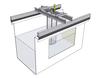
This presearch concentrates on the modelling of compartment flooding rates following the occurrence of damage in a ship's side shell. Typical state of the art flooding models use Torricelli’s formula to calculate flooding rates using a constant co-efficient of discharge (Cd). Based on Bernoulli’s theorem, turbulence and viscosity effects are not included using a Cd independent of damage shape or size. Previous work indicates that this assumption over-simplifies the problem to an extent where the flooding rates used for calculation are in error. This project will use CFD validated by experiment to calculate flooding rates for a large number of cases from which a 'krigged' response surface will be generated. Validity of the subsequent response surface will be interrogated.
Simulating Household Decision Making in Rural Malawi
James Dyke, Kate Schreckenberg (Investigators), Samantha Dobbie
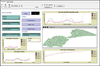
A scoping exercise to determine whether data collection tools of the social sciences can be used effectively in the construction of empirical ABM. Focus fell upon simulating drought coping strategies of Malawian smallholders. Model implementation enabled inferences to be made concerning the impact of drought and input subsidies upon smallholder food security.
Spatially Embedded Complex Systems Engineering
Seth Bullock (Investigator)
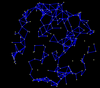
SECSE brought together an interdisciplinary team of scientists working on an ambitious three-and-a-half year project titled. The research cluster spanned neuroscience, artificial intelligence, geography, and complex systems in an attempt to understand the role of spatial organization and spatial processes in complex networks within the domains of neural control, geo-information systems and distributed IT systems such as those implicated in air-traffic control.
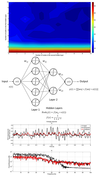
The tarsal intersegmental reflex control system in the locust hind leg
David Simpson, Philip Newland (Investigators), Alicia Costalago Meruelo
Locomotion is vital for vertebrates and invertebrates to survive. Despite that feet are responsible for stability and agility in most animals, research on feet movements and their reflexes is scarce.
In this thesis, the tarsal reflex responses of locust will be studied and modelled with ANNs to achieve a deeper comprehension of how stability and agility is accomplished.
The choice of ANNs is linked to the applicability of the method into other fields, such as technological designs or medical treatment.
People
 Seth Bullock
Professor, Electronics and Computer Science (FPAS)
 Andrew Collins
Professor, Medicine (FM)
 Philip Newland
Professor, Biological Sciences (FNES)
Mark NixonProfessor, Electronics and Computer Science (FPAS)
 Paul Skipp
Reader, Biological Sciences (FNES)
 Thomas Blumensath
Senior Lecturer, Institute of Sound & Vibration Research (FEE)
Markus BredeSenior Lecturer, Electronics and Computer Science (FPAS)
John CarterSenior Lecturer, Electronics and Computer Science (FPAS)
 Dominic Hudson
Senior Lecturer, Engineering Sciences (FEE)
 David Simpson
Senior Lecturer, Institute of Sound & Vibration Research (FEE)
 Richard Watson
Senior Lecturer, Electronics and Computer Science (FPAS)
Jordan CheerLecturer, Institute of Sound & Vibration Research (FEE)
 James Dyke
Lecturer, Electronics and Computer Science (FPAS)
 Denis Kramer
Lecturer, Engineering Sciences (FEE)
Kate SchreckenbergLecturer, Civil Engineering & the Environment (FEE)
 Ming-yi Tan
Lecturer, Engineering Sciences (FEE)
Petros BogiatzisResearch Fellow, Ocean & Earth Science (FNES)
Btissam Er-RahmadiResearch Fellow, Management (FBL)
 Jordi Arranz
Postgraduate Research Student, Electronics and Computer Science (FPAS)
 Harry Beviss
Postgraduate Research Student, Electronics and Computer Science (FPAS)
 Ash Booth
Postgraduate Research Student, Electronics and Computer Science (FPAS)
Leonidas BourikasPostgraduate Research Student, Civil Engineering & the Environment (FEE)
 Lewys Brace
Postgraduate Research Student, Electronics and Computer Science (FPAS)
 Jamie Caldwell
Postgraduate Research Student, Engineering Sciences (FEE)
 Alicia Costalago Meruelo
Postgraduate Research Student, University of Southampton
 Evander DaCosta
Postgraduate Research Student, Electronics and Computer Science (FPAS)
 Samantha Dobbie
Postgraduate Research Student, Electronics and Computer Science (FPAS)
 Jonathan Gray
Postgraduate Research Student, Social Sciences (FSHS)
 Tom Hebbron
Postgraduate Research Student, Electronics and Computer Science (FPAS)
 William Hurndall
Postgraduate Research Student, Electronics and Computer Science (FPAS)
 Joshua Jeeson Daniel
Postgraduate Research Student, Engineering Sciences (FEE)
Konstantinos KouvarisPostgraduate Research Student, Electronics and Computer Science (FPAS)
 Lyuboslav Petrov
Postgraduate Research Student, Electronics and Computer Science (FPAS)
 Lenka Pitonakova
Postgraduate Research Student, University of Southampton
 David Potts
Postgraduate Research Student, Humanities (FH)
 Daniel Powell
Postgraduate Research Student, Engineering Sciences (FEE)
 Álvaro Ruiz-Serrano
Postgraduate Research Student, Chemistry (FNES)
 Nathan Smith
Postgraduate Research Student, Electronics and Computer Science (FPAS)
Adam SobeyPostgraduate Research Student, Engineering Sciences (FEE)
 Massimo Stella
Postgraduate Research Student, Electronics and Computer Science (FPAS)
 Pegah Tayaranian Hosseini
Postgraduate Research Student, Institute of Sound & Vibration Research (FEE)
 Daniel Wallace
Postgraduate Research Student, Engineering Sciences (FEE)
George WinstonePostgraduate Research Student, Physics & Astronomy (FPAS)
Jess JonesTechnical Staff, iSolutions
 Petrina Butler
Administrative Staff, Research and Innovation Services
 Arthur Lugtigheid
Alumnus, Psychology (FSHS)
Alkin NasufAlumnus, Engineering Sciences (FEE)
 Christian Wood
Alumnus, Engineering Sciences (FEE)
 Marijan Beg
External Member, Imperial College London
 Daniel Pope
External Member, Mauve Internet Ltd.
 Mark Vousden
External Member, University of Southampton
Daniel Martinho-CorbishleyNone, None
Daisuke SasakiNone, None
Doroteya StaykovaNone, None