Gnuplot
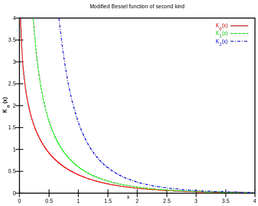
Gnuplot is a command line plotting program to generate 2-D and 3-D plots of mathematical functions and data. Gnuplot can be used to visualise results directly on the screen or to create figures in a wide variety of output formats (from vectorial formats such as EPS, PDF, SVG to raster formats such as PNG and JPG). When launched, Gnuplot offers a prompt where commands can be entered interactively. Commands can be abbreviated, making Gnuplot a valuable tool for quick-plotting. Example. "p x" can be used as an abbreviation for "plot x" to plot the function f(x) = x. Example. "plot 'data.dat' using 1:2 with lines" can be abbreviated as "p 'data.dat' u 1:2 w l".
For queries about this topic, contact Hans Fangohr.
View the calendar of events relating to this topic.
Projects
A Fast Multipole Method for the Bessel potential
Marc Molinari, Simon Cox (Investigators), Neil O'Brien
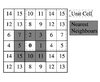
The fast multipole method (FMM) proposed by Greengard and Rokhlin provides a method by which the O(N-squared) many-body problem can be reduced to O(N) complexity. In this project, a multipole method is developed to calculate the energy of a system of vortices in a high temperature superconductor, where the many-body interactions give rise to rich and complex physics. The method developed here is suitable for systems where the interactions are governed by a Bessel potential rather than the usual logarithmic potentials occurring in gravitational and electrostatic problems. We derive and apply vectorised forms of the Gegenbauer addition formulae in order to achieve the O(N) scaling associated with fast multipole methods.
Adding social ties to the Schelling model
Seth Bullock, Sally Brailsford (Investigators), Elisabeth zu-Erbach-Schoenberg
The Schelling model is an abstract model for segregation in
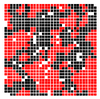
a spatially arranged population. We extended the traditional model by the addition of a dynamic social network. The social network influences the spatial dynamics of agents moving on the grid by changing the agents’ evaluation of their neighbourhood. In turn, the spatial arrangement influences the change of the social network.
Advanced modelling for two-phase reacting flow
Edward Richardson (Investigator)
Engine designers want computer programs to help them invent ways to use less fuel and produce less pollution. This research aims to provide an accurate and practical model for the injection and combustion of liquid fuel blends.
Assessment of the performance of novel RANS and hybrid turbulence models on the flow around a cylinder
Manuel Diaz Brito
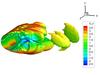
The turbulent flow around a circular cylinder is a widely studied problem in fluid dynamics. At a certain characteristic Reynolds numbers the development of a turbulent wake occurs simultaneously with separation of the laminar boundary layer. The mechanisms defining this critical flow state are very complex to predict computationally. In this project the suitability of novel non-linear eddy viscosity closures and a hybrid Flow Simulation Methodology formulation to face these massively separated flows is studied. The flow predicting capabilities of the baseline EASM, ?-?-EASM and FSM-?-?-EASM tested are contrasted with the industrial renowned k-?-SST turbulence model. In the visualisation of the results it is evident that the ?-?-EASM has greater flexibility estimating the components of the Reynolds stresses with respect to the baseline EASM and the k-?-SST. Although dome differences are observed, the prediction of the critical flow around a cylinder is not accurately achieved by any of these RANS models, but the FSM-?-?-EASM shows great resemblance with the validation data, demonstrating capabilities of resolving very complex flow phenomena with minimum user input if the computational grid is fine enough. In order to demonstrate even greater advantages of non-linear models it was postulated that the addition of a streamwise impinging vortex hitting the leading edge of the cylinder would make the flow field fully three-dimensional. First attempts were tried in this route but time constraints limited the ultimate scope of the present work.

B-meson coupling with relativistic heavy quarks
Jonathan Flynn (Investigator), Ben Samways, Dirk Broemmel, Patrick Fritzsch
We non-perturbatively compute the coupling between B* and B pi meson states relying on relativistic heavy quarks and domain wall light fermions. The coupling is of importance for an effective description of hadronic heavy meson decays.

Control and Prediction of the Organic Solid State
Richard Boardman
This project aims to produce a computer technology for the prediction of the crystal structure(s) of an organic molecule, that could be used even prior to the synthesis of the compound.
Such a computational study could be done relatively quickly to predict the dangers and opportunities of the solid phases of a molecule under development. Our project will develop the methods of experimental screening for polymorphs and their characterisation, and hence the combination will provide a major new technology for aiding industrial formulation.
Designer 3D Magnetic Mesostructures
Hans Fangohr (Investigator), Matteo Franchin, Andreas Knittel
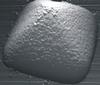
A new electrodeposition self-assembly method allows for the growth of well defined mesostructures. This project's aim is to use this method in order to fabricate supraconducting and ferromagnetic mesostructures. Numerical methods based on well-established models are used in order to characterise the grown structures.
DIPLOS - Dispersion of Localised Releases in a Street Network
Trevor Thomas, Ian Castro (Investigators)
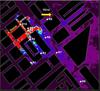
The security threat level from international terrorism, introduced by the UK Security Service, has been classified as either "severe" or "critical" for much of its six-year history, and currently remains as "substantial" (source: MI5 website). Part of the risk posed by terrorist threats involves potential releases of air-borne chemical, biological, radiological or nuclear (CBRN) material into highly populated urbanised areas. Smoke from industrial accidents within or in the vicinity of urban areas also pose risks to health and can cause widespread disruption to businesses, public services and residents. The Buncefield depot fire of 2005 resulted in the evacuation of hundreds of homes and closure of more than 200 schools and public buildings for two days; consequences would have been much more severe if prevailing meteorological conditions had promoted mixing or entrainment of the smoke plume into the urban canopy. In both these scenarios it is crucial to be able to model, quickly and reliably, dispersion from localised sources through an urban street network in the short range, where the threat to human health is greatest. However, this is precisely where current operational models are least reliable because our understanding and ability to model short-range dispersion processes is limited. The contribution that DIPLOS will make is:
1. to fill in the gaps in fundamental knowledge and understanding of key dispersion processes,
2. to enable these processes to be parametrized for use in operational models,
3. to implement them into an operational model, evaluate the improvement and apply the model to a case study in central London
Most of the existing research on urban dispersion has focused on air quality aspects, with sources being extensive and distributed in space. Scientifically, this research is novel in focusing on localized releases within urban areas, and on dispersion processes at short range. Through a combination of fundamental studies using wind tunnel experiments and high resolution supercomputer simulations, extensive data analysis and development of theoretical and numerical models, DIPLOS will contribute to addressing this difficult and important problem from both a scientific research and a practical, operational perspective.

Eddy-resol?ving Simulation?s for Turbomachi?nery Applicatio?ns
Richard Sandberg (Investigator), Li-Wei Chen
Traditionally, the design of turbomachinery components has been exclusively accomplished with steady CFD, with Reynolds Averaged Navier-Stokes (RANS) models being the predominant choice. With computing power continuously increasing, high-fidelity numerical simulations of turbomachinery components are now becoming a valuable research tool for validating the design process and continued development of design tool.
In the current project, Direct Numerical Simulations (DNS) and other eddy-resolving approaches will be performed of turbomachinery components to establish benchmark data for design tools, and to investigate physical mechanisms that cannot be captured by traditional CFD approaches.
Fluid Dynamics Optimisation of Rim-Drive Thrusters and Ducted Hydrokinetic Generators
Aleksander Dubas, Suleiman Sharkh (Investigators)
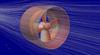
This is a Knowledge Transfer Partnership project is a collaboration between the University of Southampton and TSL Technology Ltd. to develop computational fluid dynamics software design tools for modelling and optimising the design of propeller thrusters and water turbine generators.
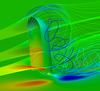
Fluid Structure Interactions of Yacht Sails
Stephen Turnock (Investigator), Daniele Trimarchi
The research is the main subject of the PhD topic. It regards the application of fluid structure interaction techniques to the domain of yacht sails simulation
Fracturing of small social networks
Seth Bullock, Sally Brailsford (Investigators), Elisabeth zu-Erbach-Schoenberg
A connected social network is a very important factor for the success of groups and organisations. We investigate which factors make a group more resistant to the effects of disagreements which commonly happen in small social networks.
Gravitational waves from neutron stars
Ian Hawke (Investigator)
Gravitational waves, once detected, will give information about the extremes of space and time. Compact objects such as neutron stars are perfect locations for generating such waves.
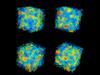
Hadronic structure on the computer
Jonathan Flynn (Investigator), Dirk Broemmel, Thomas Rae, Ben Samways
In experiments at the Large Hadron Collider (LHC) at CERN, Geneva, the interactions that occur between the colliding particles (protons in this case) can be factorised into a simple scattering between two constituent particles, called quarks, followed by a hadronisation process, which describes the dynamics of forming the bound proton states. Quarks are particles within the proton that bind to form composite particles (hadrons) such as a proton. The scattering process can be computed relatively easily, but hadronisation is intrinsically non-perturbative and hard to calculate. Lattice QCD (computer simulation of QCD on a discrete space-time lattice) provides our only known first-principles and systematically-improvable method to address problems like hadronisation. This project uses Iridis to extract parton distribution amplitudes which are experimentally inaccessible, but needed to describe the quark structure of hadrons.
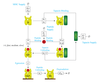
Immunotherapy Research: Modelling MHC Class I Complex Assembly
Timothy Elliott, Jorn Werner (Investigators), Alistair Bailey
This project uses mathematical modelling and simulation to investigate mechanisms by which our cells process and present biological information that is used by our immune system to distinguish between healthy and diseased cells.

Kaon to two pion decays in lattice QCD
Jonathan Flynn (Investigator), Elaine Goode, Dirk Broemmel
We calculate kaon decay amplitudes on the lattice so we may compare the Standard Model to experiment.
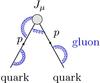
Non-Perturbative Renormalisation on the Lattice
Jonathan Flynn (Investigator), Dirk Broemmel, Thomas Rae
In this project we compute renormalisation factors for various physical observables in a non-perturbative lattice framework. Renormalisation hereby arises due to a fundamental scale dependence of the physical processes.
Origins of Evolvability
Richard Watson, Markus Brede (Investigators), William Hurndall
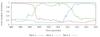
This project examined the putative evolvability of a Lipid World model of fissioning micelles. It was demonstrated that the model lacked evlovability due to poor heritability. Explicit structure for micelles was introduced along with a spatially localised form of catalysis which increased the strength of selection as coupling between potential chemical units of heredity were reduced.
Self-Force and Black Hole Inspirals
Sam Dolan (Investigator)
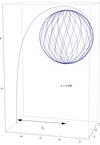
We use IRIDIS to compute the self-force acting on a solar-mass black hole orbiting a supermassive black hole.
Separation of timescales in models of complex networks
Seth Bullock (Investigator), Elisabeth zu-Erbach-Schoenberg, Connor McCabe
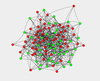
In many real-world systems several processes act on the system state. The way these processes interact can have implications for the resulting system state. We investigate how separation of the timescales of two processes influences the system's equilibrium state.
The Higgs Boson at Future Colliders - an Explorative Journey Beyond the Standard Model
Alexander Belyaev (Investigator), Patrick Schaefers
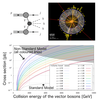
It has been three years since the discovery of a Higgs boson at the CERN LHC and many new insights in Higgs physics were gathered since then. However, its true nature remains unknown to this day. This project aims at exploring the Higgs properties at Future High Energy Colliders beyond the Standard Model to help unveiling its secret.
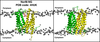
THE NORM MATE TRANSPORTER FROM N. GONORRHEAE: INSIGHTS INTO DRUG & ION BINDING FROM ATOMISTIC MOLECULAR DYNAMICS SIMULATIONS
Syma Khalid (Investigator), Daniel Holdbrook, Thomas Piggot, Yuk Leung
The multidrug and toxic compound extrusion (MATE) transporters extrude a wide variety of substrates out of both mammalian and bacterial cells via the electrochemical gradient of protons and cations across the membrane. Multiple atomistic simulation are performed on a MATE transporter, NorM from Neisseria gonorrheae (NorM_NG) and NorM from Vibrio cholera (NorM_VC). These simulations have allowed us to identify the nature of the drug-protein/ion-protein interactions, and secondly determine how these interactions contribute to the conformational rearrangements of the protein.

Unsteady Aerodynamics of Wings in Extreme Conditions
Charles Badoe (Investigator), Neil Sandham, Zheng-Tong Xie
Sizing of civil aircraft is dictated by extreme loads experienced at the limits of flight envelope, for example during gust, turbulence or low speed manoeuvre. The project aims to understand the unsteady aerodynamic behaviour of wings in extreme conditions involving heaving motions near stall.
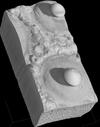
µ-VIS Computed Tomography Centre
Ian Sinclair, Richard Boardman, Dmitry Grinev, Philipp Thurner, Simon Cox, Jeremy Frey, Mark Spearing, Kenji Takeda (Investigators)
A dedicated centre for computed tomography (CT) at Southampton, providing complete support for 3D imaging science, serving Engineering, Biomedical, Environmental and Archaeological Sciences. The centre encompasses five complementary scanning systems supporting resolutions down to 200nm and imaging volumes in excess of one metre: from a matchstick to a tree trunk, from an ant's wing to a gas turbine blade.
People
 Sally Brailsford
Professor, Management (FBL)
 Seth Bullock
Professor, Electronics and Computer Science (FPAS)
 Andrew Collins
Professor, Medicine (FM)
 Simon Cox
Professor, Engineering Sciences (FEE)
 Timothy Elliott
Professor, Medicine (FM)
 Hans Fangohr
Professor, Engineering Sciences (FEE)
 Jonathan Flynn
Professor, Physics & Astronomy (FPAS)
 Jeremy Frey
Professor, Chemistry (FNES)
 Richard Sandberg
Professor, Engineering Sciences (FEE)
 Neil Sandham
Professor, Engineering Sciences (FEE)
 Suleiman Sharkh
Professor, Engineering Sciences (FEE)
 Ian Sinclair
Professor, Engineering Sciences (FEE)
 Mark Spearing
Professor, Engineering Sciences (FEE)
 Stephen Turnock
Professor, Engineering Sciences (FEE)
 Zheng-Tong Xie
Professor, Engineering Sciences (FEE)
 Jorn Werner
Reader, Biological Sciences (FNES)
Markus BredeSenior Lecturer, Electronics and Computer Science (FPAS)
 Edward Richardson
Senior Lecturer, Engineering Sciences (FEE)
 Richard Watson
Senior Lecturer, Electronics and Computer Science (FPAS)
 Alexander Belyaev
Lecturer, Physics & Astronomy (FPAS)
 Ian Hawke
Lecturer, Mathematics (FSHS)
 Dina Shona Laila
Lecturer, Engineering Sciences (FEE)
 Trevor Thomas
Lecturer, Engineering Sciences (FEE)
 Philipp Thurner
Lecturer, Engineering Sciences (FEE)
 Syma Khalid
Principal Research Fellow, Chemistry (FNES)
 Richard Boardman
Senior Research Fellow, Engineering Sciences (FEE)
 Reno Choi
Senior Research Fellow, Geography (FSHS)
Rie SugimotoSenior Research Fellow, Institute of Sound & Vibration Research (FEE)
 Philip Williamson
Senior Research Fellow, Biological Sciences (FNES)
Felipe Alves PortelaResearch Fellow, Engineering Sciences (FEE)
Charles BadoeResearch Fellow, Civil Engineering & the Environment (FEE)
 Alistair Bailey
Research Fellow, Medicine (FM)
Petros BogiatzisResearch Fellow, Ocean & Earth Science (FNES)
Dirk BroemmelResearch Fellow, Physics & Astronomy (FPAS)
 Sam Dolan
Research Fellow, Mathematics (FSHS)
 Aleksander Dubas
Research Fellow, Engineering Sciences (FEE)
 Jacek Dziedzic
Research Fellow, Chemistry (FNES)
Dmitry GrinevResearch Fellow, Engineering Sciences (FEE)
Otello RoscioniResearch Fellow, Chemistry (FNES)
 ThankGod E. Boye
Postgraduate Research Student, Engineering Sciences (FEE)
 Jean Claus
Postgraduate Research Student, Engineering Sciences (FEE)
Elaine GoodePostgraduate Research Student, Physics & Astronomy (FPAS)
 William Hurndall
Postgraduate Research Student, Electronics and Computer Science (FPAS)
Aditya KarnikPostgraduate Research Student, Engineering Sciences (FEE)
Yuk LeungPostgraduate Research Student, Chemistry (FNES)
 Sam Mangham
Postgraduate Research Student, Electronics and Computer Science (FPAS)
 Connor McCabe
Postgraduate Research Student, Electronics and Computer Science (FPAS)
 Neil O'Brien
Postgraduate Research Student, Engineering Sciences (FEE)
 Walton P. Coutinho
Postgraduate Research Student, Mathematics (FSHS)
Sanjay PantPostgraduate Research Student, Engineering Sciences (FEE)
Richard PichlerPostgraduate Research Student, Civil Engineering & the Environment (FEE)
Thomas RaePostgraduate Research Student, Physics & Astronomy (FPAS)
 Álvaro Ruiz-Serrano
Postgraduate Research Student, Chemistry (FNES)
 Ben Samways
Postgraduate Research Student, Physics & Astronomy (FPAS)
 Patrick Schaefers
Postgraduate Research Student, Physics & Astronomy (FPAS)
 Ashley Setter
Postgraduate Research Student, Engineering Sciences (FEE)
 Daniele Trimarchi
Postgraduate Research Student, Engineering Sciences (FEE)
 Valerio Vitale
Postgraduate Research Student, Electronics and Computer Science (FPAS)
 Elisabeth zu-Erbach-Schoenberg
Postgraduate Research Student, Management (FBL)
Jess JonesTechnical Staff, iSolutions
 Elena Vataga
Technical Staff, iSolutions
 Petrina Butler
Administrative Staff, Research and Innovation Services
 Li-Wei Chen
Alumnus, Osney Thermo-Fluids Laboratory, Oxford University
Stuart CurtisAlumnus, University of Southampton
 Manuel Diaz Brito
Alumnus, Pall Corporation
 Matteo Franchin
Alumnus, Engineering Sciences (FEE)
Kondwani KanjereAlumnus, Engineering Sciences (FEE)
 Andreas Knittel
Alumnus, Industry
 Gunnar Mallon
Alumnus, Geography (FSHS)
 Marc Molinari
Alumnus, Engineering Sciences (FEE)
Alkin NasufAlumnus, Engineering Sciences (FEE)
Nicolas PalopoliAlumnus, Biological Sciences (FNES)
 Kenji Takeda
Alumnus, Engineering Sciences (FEE)
 Mark Vousden
External Member, University of Southampton
Ian CastroNone, None
Daniel HoldbrookNone, None
Thomas PiggotNone, None
Daisuke SasakiNone, None
Andrea SilvaNone, None