Visualisation and data handling methods
Categories within this topic include colour perception (1), Data Aggregation (6), Data Management (20), Database (12), Surface imaging (9), Voxel imaging (6)
All Projects
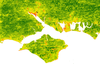
A novel method for monitoring air pollution from satellites at very high resolution
Joanna Nield, Jason Noble, Edward Milton (Investigators), Robin Wilson
Developing methods to monitor the clarity of the atmosphere from satellites at 100,000 times the resolution of previous methods. This can then be used to monitor air pollution, correct satellite images and provide data for climate studies. Simulation is used to model the effects of atmospheric pollution on light passing through the atmosphere, and to test the method under 'synthetic atmospheres'.
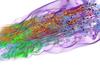
Advanced modelling for two-phase reacting flow
Edward Richardson (Investigator)
Engine designers want computer programs to help them invent ways to use less fuel and produce less pollution. This research aims to provide an accurate and practical model for the injection and combustion of liquid fuel blends.
Application of RNA-Seq for gene fusion identification in blood cancers
William Tapper (Investigator), Marcin Knut
Gene fusions are often the cause of different blood cancers. As such, accurate identification of them provides information on the underlying cause of a cancer, ensuring appropriate choice of treatment. However, due to shortcomings of the currently applied methods for gene fusion identification, some of them escape undetected. We are employing RNA-Seq, a cutting-edge method for sequencing RNA, the messenger of genetic information, to investigate gene fusions.
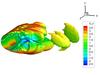
Assessment of the performance of novel RANS and hybrid turbulence models on the flow around a cylinder
Manuel Diaz Brito
The turbulent flow around a circular cylinder is a widely studied problem in fluid dynamics. At a certain characteristic Reynolds numbers the development of a turbulent wake occurs simultaneously with separation of the laminar boundary layer. The mechanisms defining this critical flow state are very complex to predict computationally. In this project the suitability of novel non-linear eddy viscosity closures and a hybrid Flow Simulation Methodology formulation to face these massively separated flows is studied. The flow predicting capabilities of the baseline EASM, ?-?-EASM and FSM-?-?-EASM tested are contrasted with the industrial renowned k-?-SST turbulence model. In the visualisation of the results it is evident that the ?-?-EASM has greater flexibility estimating the components of the Reynolds stresses with respect to the baseline EASM and the k-?-SST. Although dome differences are observed, the prediction of the critical flow around a cylinder is not accurately achieved by any of these RANS models, but the FSM-?-?-EASM shows great resemblance with the validation data, demonstrating capabilities of resolving very complex flow phenomena with minimum user input if the computational grid is fine enough. In order to demonstrate even greater advantages of non-linear models it was postulated that the addition of a streamwise impinging vortex hitting the leading edge of the cylinder would make the flow field fully three-dimensional. First attempts were tried in this route but time constraints limited the ultimate scope of the present work.
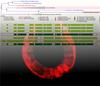
Bioinformatic identification and physiological analysis of ethanol-related genes in C. elegans
Richard Edwards, Vincent O'Connor, Lindy Holden-Dye (Investigators), Ben Ient
Investigating the broad molecular, cellular and systems level impacts of acute and chronic ethanol in the nematode, Caenorhabditis elegans, as a model.
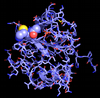
BioSimGrid
Jonathan Essex, Hans Fangohr (Investigators), Richard Boardman, Syma Khalid, Steven Johnston
The aim of the BioSimGrid project is to make the results of large-scale computer simulations of biomolecules more accessible to the biological community. Such simulations of the motions of proteins are a key component in understanding how the structure of a protein is related to its dynamic function.

Census 2022: Transforming Small Area Socio-Economic Indicators through Big Data
Patrick James, Ben Anderson (Investigators)
One of only 20 to be funded under the ESRC’s new ‘Transformative Social Science’ programme, this project will explore the feasibility of estimating small area (neighbourhood) census-like statistics from transactional ‘big data’ including large scale fine grained temporal energy monitoring data held by the Energy & Climate Change Division (FEE).

Centre for Doctoral Training in Next Generation Computational Modelling
Hans Fangohr, Ian Hawke, Peter Horak (Investigators), Susanne Ufermann Fangohr, Thorsten Wittemeier, Kieran Selvon, Alvaro Perez-Diaz, David Lusher, Ashley Setter, Emanuele Zappia, Hossam Ragheb, Ryan Pepper, Stephen Gow, Jan Kamenik, Paul Chambers, Robert Entwistle, Rory Brown, Joshua Greenhalgh, James Harrison, Jonathon Waters, Ioannis Begleris, Craig Rafter
The £10million Centre for Doctoral Training was launched in November 2013 and is jointly funded by EPSRC, the University of Southampton, and its partners.
The NGCM brings together world-class simulation modelling research activities from across the University of Southampton and hosts a 4-year doctoral training programme that is the first of its kind in the UK.

Characterisation of the Genomic Landscape in Splenic Marginal Zone Lymphoma
Sarah Ennis, Jane Gibson, Jon Strefford (Investigators), Carolina Jaramillo Oquendo, Helen Parker
This project aims to expand the catalogue of mutated genes in splenic marginal zone lymphoma (SMZL) and construct a detailed characterisation of the genetic landscape of this disease. Using next generation sequencing, we aim to identify somatic mutations in over 100 samples, and enrich clinical data with this information to improve patient treatment and prognosis.
Data Science and HPC
Are Data science and HPC really different fields or are people just repackaging old ideas with new words.
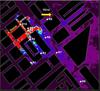
DIPLOS - Dispersion of Localised Releases in a Street Network
Trevor Thomas, Ian Castro (Investigators)
The security threat level from international terrorism, introduced by the UK Security Service, has been classified as either "severe" or "critical" for much of its six-year history, and currently remains as "substantial" (source: MI5 website). Part of the risk posed by terrorist threats involves potential releases of air-borne chemical, biological, radiological or nuclear (CBRN) material into highly populated urbanised areas. Smoke from industrial accidents within or in the vicinity of urban areas also pose risks to health and can cause widespread disruption to businesses, public services and residents. The Buncefield depot fire of 2005 resulted in the evacuation of hundreds of homes and closure of more than 200 schools and public buildings for two days; consequences would have been much more severe if prevailing meteorological conditions had promoted mixing or entrainment of the smoke plume into the urban canopy. In both these scenarios it is crucial to be able to model, quickly and reliably, dispersion from localised sources through an urban street network in the short range, where the threat to human health is greatest. However, this is precisely where current operational models are least reliable because our understanding and ability to model short-range dispersion processes is limited. The contribution that DIPLOS will make is:
1. to fill in the gaps in fundamental knowledge and understanding of key dispersion processes,
2. to enable these processes to be parametrized for use in operational models,
3. to implement them into an operational model, evaluate the improvement and apply the model to a case study in central London
Most of the existing research on urban dispersion has focused on air quality aspects, with sources being extensive and distributed in space. Scientifically, this research is novel in focusing on localized releases within urban areas, and on dispersion processes at short range. Through a combination of fundamental studies using wind tunnel experiments and high resolution supercomputer simulations, extensive data analysis and development of theoretical and numerical models, DIPLOS will contribute to addressing this difficult and important problem from both a scientific research and a practical, operational perspective.
Graphical Simulation of Archaeological Environments
Graeme Earl (Investigator)
This project defines an emerging area of interest in physically accurate rendering within the Archaeological Computing Research Group. Sub-projects include analysis of Roman spaces at herculaneum, Neolithic buildings at Catalhoyuk and simulation of a range of artefacts.
Identification of phage DNA, common insertion sites and their effect on genes within S.pneumoniae
Richard Edwards, Amy Dean
This study seeks to find if there are any common insertion sites across different strains of S.pneumoniae and discover genes that undergo frequent mutation due to phages and if these mutations can be linked to virulence of the strains.
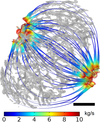
Image Based Modelling of Fluid Flow through Lymph Nodes
Tiina Roose, Bharathram Ganapathisubramani, Geraldine Clough (Investigators), Laura Cooper
In this project we are using images of mouse lymph nodes to investigate the fluid transport pathways through it. The images of the nodes are taken using selective plane illumination microscopy, and synchrotron micro computed tomography. The fluid flow is modelled using Darcy's law in COMSOL Multiphysics and the models are run on the Iridis cluster.
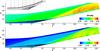
Laminar to Turbulent Transition in Hypersonic Flows
Neil Sandham, Heinrich Luedeke
Understanding of laminar to turbulent transition in hypersonic boundary-layer flows is crucial for re-entry vehicle design and optimization. The boundary-layer state directly affects the temperatures on the vehicle surface and its viscous drag. Therefore transition has to be considered to correctly compensate for drag and to properly design the thermal protection system.
For the proposed study, in order to obtain a clear understanding of the transition process, the configuration is kept as simple as possible by varying only a minimum number of parameters affecting transition on a simple test geometry such as a swept ramp at different sweep angles. To investigate the influence of such sweep angles on the transition process in the hypersonic regime, Direct Numerical Simulations (DNS) of the turbulent flow field are carried out on the Iridis cluster.

Life assessment methods for industrial steam turbine blade to disc interfaces
Katherine Soady (Investigator)
This is an EngD project sponsored by E.ON New Build and Technology Ltd. which aims to develop the methods currently implemented in life assessment of industrial steam turbine blade to disc interfaces to take account of the surface treatment process (shot peening) which is applied to component before service and after repair.

Mathematical tools for analysis of genome function, linkage disequilibrium structure and disease gene prediction
Andrew Collins, Mahesan Niranjan, Reuben Pengelly (Investigators), Alejandra Vergara Lope
This iPhD project uses a Gaussian Bayesian Networks approaches framework through machine learning approach to predict which genes are involved in the development of different diseases.
Modelling Macro-Nutrient Release & Fate Resulting from Sediment Resuspension in Shelf Seas
Chris Wood
This study involves adapting a previously-published model to take into account the effect resuspension events (both natural and anthropogenic) may have on nutrient dynamics at the sediment-water interface, and hence produce better estimates for the total nutrient budgets for shelf seas.
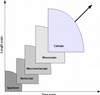
Multiscale Modelling of Cellular Calcium Signalling
Hans Fangohr, Jonathan Essex (Investigators), Dan Mason
Calcium ions play a vitally important role in signal transduction and are key to many cellular processes including muscle contraction and cell apoptosis (cell death). This importance has made calcium an active area in biomedical science and mathematical modelling.

MXL Project
Mark Taylor, Junfen Shi (Investigators)
‘MXL’ is short for “Enhanced patient safety by computational Modelling from clinically available X-rays to minimise the risk of overload and instability for optimised function and Longevity”. This is an international EU-funded project which the Bioengineering Sciences Research Group at Southampton is involved in. For more information, visit http://www.m-x-l.eu
Network Analysis of Roman Transport Routes in the Imperial Roman Mediterranean
David Potts
This research is designed to explore the nature of the relationships between Portus, Rome, and other selected ports in the Mediterranean and to establish patterns and the changing nature of trading networks derived from the distribution of known Roman artefacts.
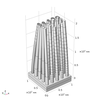
Optical Characterisation of Black Silicon for Photovoltaics Using the Finite Element Method
Jack Tyson (Investigator)
Here we present a novel method of simulating the reflectance spectra of black silicon solar cells using the finite element method. Designed in COMSOL Multiphysics is a new set of algorithm-controlled-geometries rendering a vast array of different structural permutations of silicon nanowires. Our model focused on the variation of this geometry within customisable predefined conditions in large output quantities, collated and averaged to reliably determine the reflectance of an entire black silicon solar cell.
Population24/7: space-time specific population surface modelling
Samantha Cockings, David Martin, Samuel Leung (Investigators)
Project funded by Economic and Social Research Council to compute time-specific geographical representations of population distribution.
Prediction of Psychopathology by MRT data
We aim to predict psychopathological outcomes in adults by functional brain data using multilevel regression and crossvaligdation strategies.
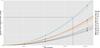
Sample tracking in whole-exome sequencing projects
Andrew Collins, Sarah Ennis (Investigators), Reuben Pengelly
Whole-exome sequencing is entering clinical use for genetic investigations, and it is therefore essential that robust quality control is utilised. As such we designed and validated a tool to allow for unambiguous tying of patient data to a patient, to identify, and thus prevent errors such as the switching of samples during processing.

SAVE: Solent Achieving Value through Efficiency
Patrick James, Ben Anderson (Investigators), Luke Blunden
Analysis of 15 minute electricity consumption and 10 second instantaneous power data from 4,000+ households in the Solent region collected over 3 years of a randomised control trial study.
Software Sustainability Institute
Simon Hettrick (Investigator)
A national facility for cultivating world-class research through software
Software helps researchers to enhance their research, and improve the speed and accuracy of their results. The Software Sustainability Institute can help you introduce software into your research or improve the software you already use.
The Institute is based at the universities of Edinburgh, Manchester, Oxford and Southampton, and draws on a team of experts with a breadth of experience in software development, project and programme management, research facilitation, publicity and community engagement.
We help people build better software, and we work with researchers, developers, funders and infrastructure providers to identify key issues and best practice in scientific software.
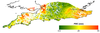
Spatial variability of the atmosphere in southern England
Joanna Nield, Jason Noble, Edward Milton (Investigators), Robin Wilson
No-one really knows how variable key atmospheric parameters such as Aerosol Optical Thickness and Water Vapour content are over relatively small areas. This study aims to find out!
Statistical model of the knee
Mark Taylor (Investigator), Francis Galloway, Prasanth Nair
Development of methods for large scale computational testing of a tibial tray incorporating inter-patient variability.

Study of global instability in separated flows at high Mach number
Neil Sandham, Zhiwei Hu (Investigators), Kangping Zhang
Flow instability is observed when extending two-dimensional (2D) stable flow into three-dimensional (3D). Development of instability varies along different spanwise length. Thresholds are also discovered for the flow studied to become instable.
Supernova Rates in the Local Universe
Mark Sullivan (Investigator), Christopher Frohmaier
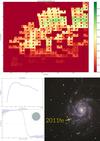
This project will calculate the frequency of exploding stars -- or supernovae -- in the nearby universe. We simulate a 'toy universe' by exploding billions of stars in a computer, and then artificially 'observing' these explosions by replicating a real astronomical sky survey, the Palomar Transient Factory (PTF). The results of this simulation allows us to discover the rate at which supernovae occur in the local universe each year.
The application of automated pattern metrics to surface moisture influences on modelled dune field development
Robin Wilson, Joanna Nield (Investigators)
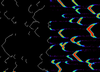
Areas of sand dunes (known as dunefields) develop complex patterns over time. These are influenced by both the past and present environmental conditions, including surface moisture, vegetation distribution and human impact. This project develops a method of automated pattern analysis which allow the patterns produced by a large number of sand dune evolution simulations (performed using the DECAL model) to be quantified over time.
Uncovering extensive post-translation regulation during human cell cycle progression by integrative multi-’omics analysis
Gregory Parkes (Investigator), Mahesan Niranjan
Analysis of high-throughput multi-’omics interactions across the hierarchy of expression has wide interest in making inferences with regard to biological function and biomarker discovery. Expression levels across different scales are determined by robust synthesis, regulation and degradation processes, and hence transcript (mRNA) measurements made by microarray/RNA-Seq only show modest correlation with corresponding protein levels.
In this work we are interested in quantitative modelling of correlation across such gene products. Building on recent work, we develop computational models spanning transcript, translation and protein levels at different stages of the H. sapiens cell cycle. We enhance this analysis by incorporating 25+ sequence-derived features which are likely determinants of cellular protein concentration and quantitatively select for relevant features, producing a vast dataset with thousands of genes. We reveal insights into the complex interplay between expression levels across time, using machine learning methods to highlight outliers with respect to such models as proteins associated with post-translationally regulated modes of action.
We uncover quantitative separation between modified and degraded proteins that have roles in cell cycle regulation, chromatin remodelling and protein catabolism according to Gene Ontology; and highlight the opportunities for providing biological insights in future model systems.

Validation of GPS-derived water vapour estimates
Joanna Nield, Jason Noble, Edward Milton (Investigators), Robin Wilson
Measurements from GPS base stations can be processed to provide estimates of the water vapour content in the atmosphere. These are lots of these base stations across the world and they take measurements very frequently, making them perfect data sources for scientific use. However, we need to understand their accuracy - and this project aims to do this.
µ-VIS Computed Tomography Centre
Ian Sinclair, Richard Boardman, Dmitry Grinev, Philipp Thurner, Simon Cox, Jeremy Frey, Mark Spearing, Kenji Takeda (Investigators)
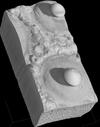
A dedicated centre for computed tomography (CT) at Southampton, providing complete support for 3D imaging science, serving Engineering, Biomedical, Environmental and Archaeological Sciences. The centre encompasses five complementary scanning systems supporting resolutions down to 200nm and imaging volumes in excess of one metre: from a matchstick to a tree trunk, from an ant's wing to a gas turbine blade.