Fortran
For queries about this topic, contact Chris-Kriton Skylaris.
View the calendar of events relating to this topic.
Projects
A Fast Multipole Method for the Bessel potential
Marc Molinari, Simon Cox (Investigators), Neil O'Brien
The fast multipole method (FMM) proposed by Greengard and Rokhlin provides a method by which the O(N-squared) many-body problem can be reduced to O(N) complexity. In this project, a multipole method is developed to calculate the energy of a system of vortices in a high temperature superconductor, where the many-body interactions give rise to rich and complex physics. The method developed here is suitable for systems where the interactions are governed by a Bessel potential rather than the usual logarithmic potentials occurring in gravitational and electrostatic problems. We derive and apply vectorised forms of the Gegenbauer addition formulae in order to achieve the O(N) scaling associated with fast multipole methods.

A Fortran Based Mesh Viewer
Gabriel Amine-Eddine
During my final year as an undergraduate, I developed a fully functional software program for visualising geometries, grids and grid quality metrics, for and in-house CFD software tool (HARTREE CFD).
Ab initio simulations of chemical reactions on platinum nanoparticles
Chris-Kriton Skylaris (Investigator), Álvaro Ruiz-Serrano, Peter Cherry
•Use first principles calculations to study the relationship between shape and size of nanoparticle and the oxygen adsorption energy.
• Investigate the effect of high oxygen coverage on the catalytic activity of the nanoparticles.
Advanced modelling for two-phase reacting flow
Edward Richardson (Investigator)
Engine designers want computer programs to help them invent ways to use less fuel and produce less pollution. This research aims to provide an accurate and practical model for the injection and combustion of liquid fuel blends.
Advanced simulation tools for prediction of flash-back in hydrogen-rich gas turbine combustion
Edward Richardson (Investigator), James Bailey
The project involves the numerical simulation of hydrogen-rich flows using Direct Numerical Simulation (DNS) and Large Eddy simulations. Hydrogen rich fuels offer the opportunity to reduce the carbon intensity of energy supply. Hydrogen-rich fuels and other low-carbon energy sources are expect to become increasingly important in this regard. Hydrogen is more reactive and diffusive than conventional hydrocarbon fuels requiring advanced computational methods to optimise the use of these fuels in gas turbines.
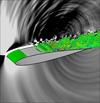
Aerofoil noise
Richard Sandberg (Investigator)
High-performance computing is used to identify noise sources on aerofoils.

B-meson coupling with relativistic heavy quarks
Jonathan Flynn (Investigator), Ben Samways, Dirk Broemmel, Patrick Fritzsch
We non-perturbatively compute the coupling between B* and B pi meson states relying on relativistic heavy quarks and domain wall light fermions. The coupling is of importance for an effective description of hadronic heavy meson decays.
Body Forces in Particle Suspensions in Turbulence
Gabriel Amine-Eddine (Investigator)
The behaviour of multiphase flows is of primary importance in many engineering applications. In the past, experimental observations have provided many researchers with the ability to understand and probe the phenomena and physical processes occurring in such flows. With advancements in modern day computational power, we now have the ability to gain an even greater wealth of knowledge, from what used to be a physical experiment, is now a virtual simulation.
Amine-Eddine, G.H. (2015) Body forces in particle suspensions in turbulence. University of Southampton, Faculty of Engineering and the Environment, Doctoral Thesis , 283pp.
Can we calculate the pKa of new drugs, based on their structure alone?
Chris-Kriton Skylaris (Investigator), Chris Pittock, Jacek Dziedzic
The pKa of an active compound in a pharmaceutical drug affects how it is absorbed and distributed around the human body. While there are various computational methods to predict pKa using only molecular structure data, these tend to be specialised to only one class of drug - we aim to generate a more generalised prediction method using quantum mechanics.

Centre for Doctoral Training in Next Generation Computational Modelling
Hans Fangohr, Ian Hawke, Peter Horak (Investigators), Susanne Ufermann Fangohr, Thorsten Wittemeier, Kieran Selvon, Alvaro Perez-Diaz, David Lusher, Ashley Setter, Emanuele Zappia, Hossam Ragheb, Ryan Pepper, Stephen Gow, Jan Kamenik, Paul Chambers, Robert Entwistle, Rory Brown, Joshua Greenhalgh, James Harrison, Jonathon Waters, Ioannis Begleris, Craig Rafter
The £10million Centre for Doctoral Training was launched in November 2013 and is jointly funded by EPSRC, the University of Southampton, and its partners.
The NGCM brings together world-class simulation modelling research activities from across the University of Southampton and hosts a 4-year doctoral training programme that is the first of its kind in the UK.

Computational Fluid Dynamics of Compressor Blades Within a Gas Turbine Engine (HiPSTAR)
Richard Sandberg (Investigator), John Leggett
As modern engines become more and more efficient, the importance of understanding the finer details of the physics involved grows, if further gains are to be achieved. In such harsh enviroments, such as within a gas turbine engine, there are few means of studying them physicaly and we are left with little choice but to use super computers to model the flow.
Computational Methods for Aircraft Noise Prediction
Gwenael Gabard (Investigator), Albert Prinn
The aim of this project is to develop and test an efficient flow acoustics solver based on the finite element method and the potential flow theory.

Control and Prediction of the Organic Solid State
Richard Boardman
This project aims to produce a computer technology for the prediction of the crystal structure(s) of an organic molecule, that could be used even prior to the synthesis of the compound.
Such a computational study could be done relatively quickly to predict the dangers and opportunities of the solid phases of a molecule under development. Our project will develop the methods of experimental screening for polymorphs and their characterisation, and hence the combination will provide a major new technology for aiding industrial formulation.
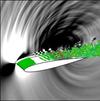
Coupled multi-scale simulation of high Reynolds number airfoil flows
Neil Sandham, Nicola De Tullio (Investigators), David Lusher
Application of multi-scale nested direct numerical simulations to high Reynolds number aerofoil flows.
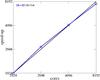
Development of a novel Navier-Stokes solver (HiPSTAR)
Richard Sandberg (Investigator)
Development of a highly efficient Navier-Stokes solver for HPC.
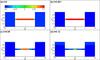
Diffusion at solute/solvent interfaces
Anatoliy Vorobev (Investigator), Ruilin Xie
We aim to develop the theoretical model that would provide an accurate description for the mixing process of two miscible liquids, and, in particular, would reproduce our experimental optical observations. The model based on the phase-field (Cahn-Hilliard) approach is adopted for the mixture of two miscible liquids. The model takes into account the surface tension effects, the non-Fickian diffusion across the liquid/liquid interface, and hydrodynamic flows that might be generated near the interface by the concentration gradients.
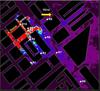
DIPLOS - Dispersion of Localised Releases in a Street Network
Trevor Thomas, Ian Castro (Investigators)
The security threat level from international terrorism, introduced by the UK Security Service, has been classified as either "severe" or "critical" for much of its six-year history, and currently remains as "substantial" (source: MI5 website). Part of the risk posed by terrorist threats involves potential releases of air-borne chemical, biological, radiological or nuclear (CBRN) material into highly populated urbanised areas. Smoke from industrial accidents within or in the vicinity of urban areas also pose risks to health and can cause widespread disruption to businesses, public services and residents. The Buncefield depot fire of 2005 resulted in the evacuation of hundreds of homes and closure of more than 200 schools and public buildings for two days; consequences would have been much more severe if prevailing meteorological conditions had promoted mixing or entrainment of the smoke plume into the urban canopy. In both these scenarios it is crucial to be able to model, quickly and reliably, dispersion from localised sources through an urban street network in the short range, where the threat to human health is greatest. However, this is precisely where current operational models are least reliable because our understanding and ability to model short-range dispersion processes is limited. The contribution that DIPLOS will make is:
1. to fill in the gaps in fundamental knowledge and understanding of key dispersion processes,
2. to enable these processes to be parametrized for use in operational models,
3. to implement them into an operational model, evaluate the improvement and apply the model to a case study in central London
Most of the existing research on urban dispersion has focused on air quality aspects, with sources being extensive and distributed in space. Scientifically, this research is novel in focusing on localized releases within urban areas, and on dispersion processes at short range. Through a combination of fundamental studies using wind tunnel experiments and high resolution supercomputer simulations, extensive data analysis and development of theoretical and numerical models, DIPLOS will contribute to addressing this difficult and important problem from both a scientific research and a practical, operational perspective.
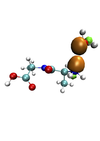
Dipole moment and theoretical spectroscopy: a computational approach
Chris-Kriton Skylaris (Investigator), Valerio Vitale
The present project represents a first step towards the implementation of a new technique to calculate the whole vibrational spectra of molecules in a formally exact way, which fully takes into account anharmonicity and conformational transitions, at a finite temperature, both in gas phase and in solution in a single ab initio molecular dynamics simulation.

Direct Numerical Simulations of transsonic turbine tip gap flow
Richard Sandberg (Investigator)
Direct Numerical Simulations are conducted of the transsonic flow through the tip gap at real engine conditions.
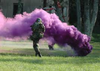
Dispersion of Small Inertial Particles in Characteristic Atmospheric Boundary Layer Flows
Zheng-Tong Xie (Investigator), Thorsten Wittemeier
This project aims at improving the near-field accuracy of short term predictions of the dispersion of particulate matter in the atmospheric boundary layer. For this purpose a variety of LES and DNS modelling approaches is used.

Eddy-resol?ving Simulation?s for Turbomachi?nery Applicatio?ns
Richard Sandberg (Investigator), Li-Wei Chen
Traditionally, the design of turbomachinery components has been exclusively accomplished with steady CFD, with Reynolds Averaged Navier-Stokes (RANS) models being the predominant choice. With computing power continuously increasing, high-fidelity numerical simulations of turbomachinery components are now becoming a valuable research tool for validating the design process and continued development of design tool.
In the current project, Direct Numerical Simulations (DNS) and other eddy-resolving approaches will be performed of turbomachinery components to establish benchmark data for design tools, and to investigate physical mechanisms that cannot be captured by traditional CFD approaches.
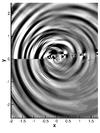
Effects of trailing edge elasticity on trailing edge noise
Richard Sandberg (Investigator), Stefan C. Schlanderer
This work considers the effect of trailing edge elasticity on the acoustic and hydrodynamic field of a trailing edge flow. To that end direct numerical simulations that are fully coupled to a structural solver are conducted.
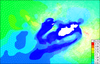
Feasibility Study of the Impacts of Proposed Tidal Array Installations in Channel Islands
Luke Blunden (Investigator), William Batten
Open source hydrodynamic modelling software TELEMAC is being used to see whether putting a large number of tidal turbines in the sea near a headland-associated sandbank will affect the feature's long term equilibrium.
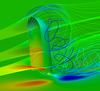
Fluid Structure Interactions of Yacht Sails
Stephen Turnock (Investigator), Daniele Trimarchi
The research is the main subject of the PhD topic. It regards the application of fluid structure interaction techniques to the domain of yacht sails simulation
Gravitational waves from neutron stars
Ian Hawke (Investigator)
Gravitational waves, once detected, will give information about the extremes of space and time. Compact objects such as neutron stars are perfect locations for generating such waves.
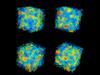
Hadronic structure on the computer
Jonathan Flynn (Investigator), Dirk Broemmel, Thomas Rae, Ben Samways
In experiments at the Large Hadron Collider (LHC) at CERN, Geneva, the interactions that occur between the colliding particles (protons in this case) can be factorised into a simple scattering between two constituent particles, called quarks, followed by a hadronisation process, which describes the dynamics of forming the bound proton states. Quarks are particles within the proton that bind to form composite particles (hadrons) such as a proton. The scattering process can be computed relatively easily, but hadronisation is intrinsically non-perturbative and hard to calculate. Lattice QCD (computer simulation of QCD on a discrete space-time lattice) provides our only known first-principles and systematically-improvable method to address problems like hadronisation. This project uses Iridis to extract parton distribution amplitudes which are experimentally inaccessible, but needed to describe the quark structure of hadrons.

How sensitive is ocean model utility to resolution?
Kevin Oliver (Investigator), Maike Sonnewald
One of the most intriguing problems in recent ocean modeling research is the impact of varying model resolution on model accuracy. Increasing model resolution one includes more of the important processes. However, the increase in accuracy with resolution is unlikely to be linear. Thus, as computational cost increases with resolution, a critical assessment of achieved benefits is prudent. Here we analyse a suite of realistic and compatible global ocean model runs from coarse (1o, ORCA1), eddy-permitting (1/4o, ORCA025) and eddy resolving (1/12o, ORCA12) resolutions. Comparisons of steric height variability (varSH) highlight changes in ocean density structure, revealing impacts on mechanisms such as downwelling and eddy energy dissipation. We assess vertical variability using the covariace of the deep and shallow varSH. Together with assessing isopycnal movements, we demonstrate the influence of deep baroclinic modes and regions where the barotropic flow sheds eddies. Significant changes in the deepwater formation and dispersion both in the Arctic and Antarctic are found between resolutions. The varSH increased from ORCA1 to ORCA025 and ORCA12, particularily in the Southern Ocean and Western Boundary Currents. However, there is no significant covariance between the surface and deep in ORCA1, while ORCA025 and ORCA12 show significant covariance, implying an important missing energy pathway in ORCA1. Comparing ORCA025 and ORCA12 we see significant differences in eddy energy dissipation. We assess the impact of varying model resolution on the mean flow, discussing implications to dissipation pathways on model accuracy, with reference to stochastic parameterisation schemes.
Is fine-scale turbulence universal?
Richard Sandberg (Investigator), Patrick Bechlars
Complementary numerical simulations and experiments of various canonical flows will try to answer the question whether fine-scale turbulence is universal.
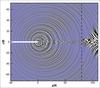
Jet noise
Richard Sandberg (Investigator), Neil Sandham
Direct numerical simulations are used to investigate jet noise.
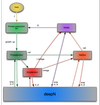
Lagrangian modelling of ecosystem dynamics at the Bermuda Atlantic Time-series Study station
Tom Anderson, Seth Bullock (Investigators), Melissa Saeland
Focus in the marine ecosystem modelling community is starting to shift towards the use of Lagrangian, agent-based models as these are believed to produce more realistic results. The basic assumptions behind these models have not been thoroughly tested, and this project aims to undertake a detailed study of Lagrangian marine ecosystem models, before creating one to investigate the dynamics at the Bermuda Atlantic Time-series Study station (BATS).
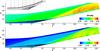
Laminar to Turbulent Transition in Hypersonic Flows
Neil Sandham, Heinrich Luedeke
Understanding of laminar to turbulent transition in hypersonic boundary-layer flows is crucial for re-entry vehicle design and optimization. The boundary-layer state directly affects the temperatures on the vehicle surface and its viscous drag. Therefore transition has to be considered to correctly compensate for drag and to properly design the thermal protection system.
For the proposed study, in order to obtain a clear understanding of the transition process, the configuration is kept as simple as possible by varying only a minimum number of parameters affecting transition on a simple test geometry such as a swept ramp at different sweep angles. To investigate the influence of such sweep angles on the transition process in the hypersonic regime, Direct Numerical Simulations (DNS) of the turbulent flow field are carried out on the Iridis cluster.
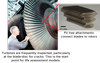
Life assessment methods for industrial steam turbine blade to disc interfaces
Katherine Soady (Investigator)
This is an EngD project sponsored by E.ON New Build and Technology Ltd. which aims to develop the methods currently implemented in life assessment of industrial steam turbine blade to disc interfaces to take account of the surface treatment process (shot peening) which is applied to component before service and after repair.
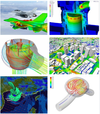
Massively-Parallel Computational Fluid Dynamics
Simon Cox, Stephen Turnock, Alexander Phillips (Investigators), James Hawkes
Computational Fluid Dynamics (CFD) is a numerical method for modelling fluid flows and heat transfer - and is used in many industries. It can be used to model dynamics around aircraft, ships and land vehicles; and also has uses in engine design, architecture, weather forecasting, medicine, computer-generated imagery (CGI) and much more. To harness the full power of CFD, it is necessary to utilise the full power of modern supercomputers. This project aims to improve the scalabilty of existing CFD codes so that more complex problems can be tackled efficiently.
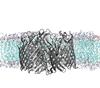
Membrane-Protein Interactions: The Outer Membrane of Gram-Negative Bacteria
Syma Khalid (Investigator), Pin-Chia Hsu
The aim of the project is to looking for the interaction sites, which may responsible for turning on/off activity in outer membrane protein with gram-negative bacteria membrane using molecular dynamic (MD) approach.
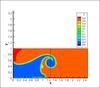
Miscible multiphase systems with phase transition
Andrea Boghi
We aim to develop the computational model for the miscible displacement of liquid occupying a porous bulk, as, for instance, in the processes of vegetable solvent extraction, soil remediation or enhanced oil recovery. All these process includes the dissolution of solute and the displacement of solution from porous media. The focus of our current research work is, therefore, twofold: (i) to develop and verify a theoretical model for an evolving miscible displacement, by taking into account dynamic surface tension and mass diffusion through the interphase boundary, and (ii) to provide a model for the solute/solvent displacement from the porous volume.
Modelling Macro-Nutrient Release & Fate Resulting from Sediment Resuspension in Shelf Seas
Chris Wood
This study involves adapting a previously-published model to take into account the effect resuspension events (both natural and anthropogenic) may have on nutrient dynamics at the sediment-water interface, and hence produce better estimates for the total nutrient budgets for shelf seas.
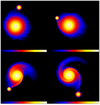
Modelling of neutron star interactions in X-ray binary systems
Malcolm Coe (Investigator), Rory Brown
Investigating the X-ray production mechanisms of binaries containing neutron stars and the decretion disks of Be stars using Smoothed Particle Hydrodynamics (SPH).
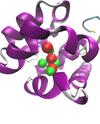
Molecular Fragments in Inhibitor Design
Jonathan Essex (Investigator), Michael Bodnarchuk
Fragment-Based Drug Discovery (FBDD) has emerged as an important tool in the drug discovery process. Instead of screening entire drug molecules, FBDD screens molecular fragments; constituents which make up drug molecules. A computational approach to identifying fragment binding is currently being sought which also yield binding free energy estimation.

MXL Project
Mark Taylor, Junfen Shi (Investigators)
‘MXL’ is short for “Enhanced patient safety by computational Modelling from clinically available X-rays to minimise the risk of overload and instability for optimised function and Longevity”. This is an international EU-funded project which the Bioengineering Sciences Research Group at Southampton is involved in. For more information, visit http://www.m-x-l.eu
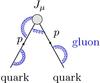
Non-Perturbative Renormalisation on the Lattice
Jonathan Flynn (Investigator), Dirk Broemmel, Thomas Rae
In this project we compute renormalisation factors for various physical observables in a non-perturbative lattice framework. Renormalisation hereby arises due to a fundamental scale dependence of the physical processes.
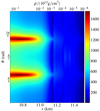
Numerical Elastic Neutron Stars
Ian Hawke, Ian Jones (Investigators), Andrew Penner
We study the astrophysical effects of the crust on a neutron star using an elasto-hydrodynamic model.
Porcupine Basin Project
Louise Watremez
The Porcupine Basin is a narrow failed rift, offshore SW Ireland, featuring extreme crustal thinning. The M61/2 survey (May 2004, T. Reston and B. O'Reilly) allowed for the acquisition of seismic refraction data across and along the basin, along 5 transects. The processing of the data along these transects will give us information about the crustal structure across the basin, faulting due to the crustal extension, nature of the upper-mantle, etc. This project is funded by Petroleum Infrastructure Programme (PIP).
Pushing the Envelope of Planetary Formation and Evolution Simulations
Peter Bartram
A full understanding of the formation and the early evolution of the Solar System and extrasolar planetary systems ranks among natural science's grand challenges, and at present, even the dominant processes responsible for generating the observed planetary architecture remain elusive.
Sensitivity of the critical depth to the choice of particle movement rules in Lagrangian models and the consequences for the predicted timing of the spring bloom
Tom Anderson (Investigator), Melissa Saeland
Individual-based (Lagrangian) models lend themselves to the study of the controls of the spring bloom in the ocean, due to their ability to represent both the turbulence and the phytoplankton motion. Here, we use a Lagrangian phytoplankton model to test some of the most prevalent hypotheses (e.g. critical depth and critical turbulence).
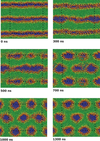
Simulation of biological systems at long length and distance scales
Jonathan Essex (Investigator), Kieran Selvon
This project aims to shed light on cell membrane mechanisms which are difficult to probe experimentally, in particular drug permiation across the cell membrane. If one had a full understanding of the mechanism, drugs could be designed to target particular embedded proteins to improve their efficacy, the viability of nano based medicines and materials could also be assessed, testing for toxicity etc.
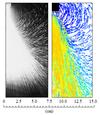
Simulations investigating droplet diameter-charge models, for predicting electrostatically atomized dielectric liquid spray chracteristics
Gabriel Amine-Eddine (Investigator)
Liquid sprays are atomized using electrostatic methods in many scienti fic, industrial and engineering applications. Due to jet and droplet breakup mechanisms, these spray plumes contain a range of drop diameters with differing droplet charge levels. Using an transient charged spray CFD code, simulations have been performed to investigate charge-diameter relationship models for predicting dynamics of poly-disperse and electrostatically atomized hydrocarbon sprays.
The methodology developed can be readily extended towards high-pressure spray applications, where secondary atomization plays a dominant role within the spray dynamics and subsequent performance of the spray itself.
Amine-Eddine, G. H. and Shrimpton, J. S. (2013), On simulations investigating droplet diameter–charge distributions in electrostatically atomized dielectric liquid sprays. Int. J. Numer. Meth. Fluids, 72: 1051–1075. doi:10.1002/fld.3776
Software Sustainability Institute
Simon Hettrick (Investigator)
A national facility for cultivating world-class research through software
Software helps researchers to enhance their research, and improve the speed and accuracy of their results. The Software Sustainability Institute can help you introduce software into your research or improve the software you already use.
The Institute is based at the universities of Edinburgh, Manchester, Oxford and Southampton, and draws on a team of experts with a breadth of experience in software development, project and programme management, research facilitation, publicity and community engagement.
We help people build better software, and we work with researchers, developers, funders and infrastructure providers to identify key issues and best practice in scientific software.
Statistical model of the knee
Mark Taylor (Investigator), Francis Galloway, Prasanth Nair
Development of methods for large scale computational testing of a tibial tray incorporating inter-patient variability.
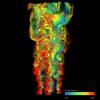
Stratified combustion physics and modelling
Edward Richardson (Investigator)
Full-resolution simulation data for turbulent combustion are used to investigate the fundamental impact, and practical modelling, of fuel-air stratification.

Study of global instability in separated flows at high Mach number
Neil Sandham, Zhiwei Hu (Investigators), Kangping Zhang
Flow instability is observed when extending two-dimensional (2D) stable flow into three-dimensional (3D). Development of instability varies along different spanwise length. Thresholds are also discovered for the flow studied to become instable.
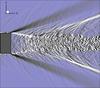
Supersonic axisymmetric wakes
Richard Sandberg (Investigator)
Direct numerical simulations are used to shed more light on structure formation and evolution in supersonic wakes.
Sustainable domain-specific software generation tools for extremely parallel particle-based simulations
Chris-Kriton Skylaris (Investigator)
A range of particle based methods (PBM) are currently used to simulate materials in chemistry, engineering, physics and biophysics. The 4 types of PBM considered directly in the proposed are molecular dynamics (MD), the ONETEP quantum mechanics-based program, discrete element modelling (DEM), and smoothed particle hydrodynamics (SPH).
The overall research objective is to develop a sustainable tool that will deliver, in the future, cutting edge research applicable to applications ranging from dam engineering to atomistic drug design.
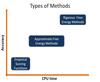
The application and critical assessment of protein-ligand binding affinities
Jonathan Essex (Investigator), Ioannis Haldoupis
A method that can accurately predict the binding affinity of small molecules to a protein target would be imperative to pharmaceutical development due to the time and resources that could be saved. A head-to-head comparison of such methodology, ranging from approximate methods to more rigorous methods, is performed in order to assess their accuracy and utility across a range of targets.
The effect of roughness upon turbulent supersonic flows
Neil Sandham (Investigator), Christopher Tyson
Understanding the interaction between surface roughness and supersonic air flows are crucial in the design of high speed vehicles, including space re-entry vehicles. Numerical simulations of these flows has been conducted in order to examine and understand how the surface roughness interacts with high speed flows in terms of drag prediction and heat transfer to the wall surface.
The ONETEP project
Chris-Kriton Skylaris (Investigator), Stephen Fox, Chris Pittock, Álvaro Ruiz-Serrano, Jacek Dziedzic
Program for large-scale quantum mechanical simulations of matter from first principles quantum mechanics. Based on theory and algorithms we have developed for linear-scaling density functional theory calculations on parallel computers.

Towards biologically-inspired active-compliant-wing micro-air-vehicles
Richard Sandberg (Investigator), Sonia Serrano-Galiano
Despite a good knowledge of the physiology of bats and birds, engineering applications with active dynamic wing compliance capability are currently few and far between. Recent advances in development of electroactive materials together with high-fidelity numerical/experimental methods provide a foundation to develop biologically-inspired dynamically-active wings that can achieve "on-demand" aerodynamic performance. However this requires first to develop a thorough understanding of the dynamic coupling between the electro-mechanical structure of the membrane wing and its unsteady aerodynamics. In this collaborative initiative between the University of Southampton and Imperial College London, we are developing an integrated research programme that carries out high-fidelity experiments and computations to achieve a fundamental understanding of the dynamics of aero-electro-mechanical coupling in dynamically-actuated compliant wings. The goal is to utilise our understanding and devise control strategies that use integral actuation schemes to improve aerodynamic performance of membrane wings. The long-term goal of this project is to enable the use of soft robotics technology to build integrally-actuated wings for Micro Air Vehicles (MAV) that mimic the dynamic shape control capabilities of natural flyers.

Transition to turbulence in high-speed boundary layers
Neil Sandham (Investigator), Nicola De Tullio
This work is focused on the numerical simulation of hypersonic transition to turbulence in boundary layers. We use direct numerical simulations of the Navier-Stokes equations to analyse the effects of different flow conditions and external disturbances on the transition process. The main objective is to gain insight into the different aspects of transition to turbulence at high speeds, which can lead to the design of new transition models and transition control techniques for high-speed flows.
Vibrational spectroscopy from ab initio molecular dynamics
Hans Fangohr, Chris-Kriton Skylaris (Investigators), Valerio Vitale
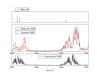
In this project I used the Fourier transform of the time correlation function (FTTCF) formalism, that allows to compute the vibrational spectra of molecules both in gas and condensed phase, at finite temperature, in a single ab initio molecular dynamics simulation.

Vortices in Spinor Bose-Einstein Condensates
Janne Ruostekoski (Investigator), Justin Lovegrove
We numerically study the effect of spin degrees of freedom on the structure of a vortex in an atomic superfluid. Such objects are of interest as macroscopic examples of quantum phenomena, as well as for their analogies in other fields, such as cosmology and high energy physics.
Water molecules in drug development: can we predict drug affinity when water molecules are involved?
Jonathan Essex (Investigator), Hannah Bruce Macdonald, Christopher Cave-Ayland
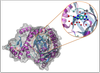
Water molecules are often found to be involved in drug-protein binding and can influence the effectiveness of a drug. We aim to aid drug design by calculating the energies involved with complexes of drugs, proteins and water molecules to predict the affinities of drug molecules.
Water Molecules in Protein Binding Sites
Jonathan Essex (Investigator), Michael Bodnarchuk
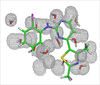
Water molecules are commonplace in protein binding sites, although the true location of them can often be hard to predict from crystallographic methods. We are developing tools which enable the location and affinity of water molecules to be found.
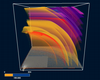
Whisky Code
Ian Hawke (Investigator)
A 3D finite volume code for simulating compact relativistic hydrodynamics.
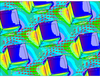
Wind direction effects on urban flows
Zheng-Tong Xie, Ian Castro (Investigators), Jean Claus
Numerical simulations of turbulent air flow are conducted on Iridis to investigate the effects of different wind directions on the flow within and above an urban-like canopy.
People
 Seth Bullock
Professor, Electronics and Computer Science (FPAS)
 Malcolm Coe
Professor, Physics & Astronomy (FPAS)
 Andrew Collins
Professor, Medicine (FM)
 Simon Cox
Professor, Engineering Sciences (FEE)
 Graeme Day
Professor, Chemistry (FNES)
 Jonathan Essex
Professor, Chemistry (FNES)
 Hans Fangohr
Professor, Engineering Sciences (FEE)
 Jonathan Flynn
Professor, Physics & Astronomy (FPAS)
Carsten GundlachProfessor, Mathematics (FSHS)
 Janne Ruostekoski
Professor, Mathematics (FSHS)
 Richard Sandberg
Professor, Engineering Sciences (FEE)
 Neil Sandham
Professor, Engineering Sciences (FEE)
John ShrimptonProfessor, Engineering Sciences (FEE)
 Mark Taylor
Professor, Engineering Sciences (FEE)
 Stephen Turnock
Professor, Engineering Sciences (FEE)
 Zheng-Tong Xie
Professor, Engineering Sciences (FEE)
 Peter Horak
Reader, Optoelectronics Research Centre
 Prasanth Nair
Senior Lecturer, Engineering Sciences (FEE)
 Joanna Nield
Senior Lecturer, Geography (FSHS)
 Edward Richardson
Senior Lecturer, Engineering Sciences (FEE)
 Gwenael Gabard
Lecturer, Institute of Sound & Vibration Research (FEE)
 Ian Hawke
Lecturer, Mathematics (FSHS)
 Ian Jones
Lecturer, Mathematics (FSHS)
 Denis Kramer
Lecturer, Engineering Sciences (FEE)
 Kevin Oliver
Lecturer, National Oceanography Centre (FNES)
 Chris-Kriton Skylaris
Lecturer, Chemistry (FNES)
 Trevor Thomas
Lecturer, Engineering Sciences (FEE)
 Anatoliy Vorobev
Lecturer, Engineering Sciences (FEE)
 Tom Anderson
Principal Research Fellow, National Oceanography Centre (FNES)
 Syma Khalid
Principal Research Fellow, Chemistry (FNES)
 Richard Boardman
Senior Research Fellow, Engineering Sciences (FEE)
 Reno Choi
Senior Research Fellow, Geography (FSHS)
Rie SugimotoSenior Research Fellow, Institute of Sound & Vibration Research (FEE)
 Philip Williamson
Senior Research Fellow, Biological Sciences (FNES)
 William Batten
Research Fellow, Civil Engineering & the Environment (FEE)
Luke BlundenResearch Fellow, Civil Engineering & the Environment (FEE)
 Andrea Boghi
Research Fellow, Engineering Sciences (FEE)
Petros BogiatzisResearch Fellow, Ocean & Earth Science (FNES)
Dirk BroemmelResearch Fellow, Physics & Astronomy (FPAS)
Nicola De TullioResearch Fellow, Engineering Sciences (FEE)
 Aleksander Dubas
Research Fellow, Engineering Sciences (FEE)
 Jacek Dziedzic
Research Fellow, Chemistry (FNES)
Jia HuoResearch Fellow, Chemistry (FNES)
 Heinrich Luedeke
Research Fellow, Engineering Sciences (FEE)
Otello RoscioniResearch Fellow, Chemistry (FNES)
Louise WatremezResearch Fellow, Ocean & Earth Science (FNES)
 Gabriel Amine-Eddine
Postgraduate Research Student, Engineering Sciences (FEE)
 Jordi Arranz
Postgraduate Research Student, Electronics and Computer Science (FPAS)
 James Bailey
Postgraduate Research Student, Engineering Sciences (FEE)
Peter BartramPostgraduate Research Student, University of Southampton
 Patrick Bechlars
Postgraduate Research Student, Engineering Sciences (FEE)
 Ioannis Begleris
Postgraduate Research Student, Engineering Sciences (FEE)
Michael BodnarchukPostgraduate Research Student, Chemistry (FNES)
 Rory Brown
Postgraduate Research Student, Civil Engineering & the Environment (FEE)
 Hannah Bruce Macdonald
Postgraduate Research Student, Chemistry (FNES)
 Christopher Cave-Ayland
Postgraduate Research Student, Electronics and Computer Science (FPAS)
 Paul Chambers
Postgraduate Research Student, Engineering Sciences (FEE)
 Peter Cherry
Postgraduate Research Student, Chemistry (FNES)
 Jean Claus
Postgraduate Research Student, Engineering Sciences (FEE)
 Nicola De Tullio
Postgraduate Research Student, Engineering Sciences (FEE)
 Robert Entwistle
Postgraduate Research Student, Engineering Sciences (FEE)
Stephen FoxPostgraduate Research Student, Chemistry (FNES)
Francis GallowayPostgraduate Research Student, Engineering Sciences (FEE)
 Stephen Gow
Postgraduate Research Student, Engineering Sciences (FEE)
 Joshua Greenhalgh
Postgraduate Research Student, Engineering Sciences (FEE)
 Ioannis Haldoupis
Postgraduate Research Student, Chemistry (FNES)
 James Harrison
Postgraduate Research Student, Engineering Sciences (FEE)
Matthew HarrisonPostgraduate Research Student, Civil Engineering & the Environment (FEE)
 James Hawkes
Postgraduate Research Student, Engineering Sciences (FEE)
 Quintin Hill
Postgraduate Research Student, Chemistry (FNES)
Aditya KarnikPostgraduate Research Student, Engineering Sciences (FEE)
 Justin Lovegrove
Postgraduate Research Student, Mathematics (FSHS)
 David Lusher
Postgraduate Research Student, Engineering Sciences (FEE)
 Sam Mangham
Postgraduate Research Student, Electronics and Computer Science (FPAS)
 Vincent Marmion
Postgraduate Research Student, Psychology (FSHS)
Nicholas McCawPostgraduate Research Student, Engineering Sciences (FEE)
 Neil O'Brien
Postgraduate Research Student, Engineering Sciences (FEE)
Sanjay PantPostgraduate Research Student, Engineering Sciences (FEE)
 Alvaro Perez-Diaz
Postgraduate Research Student, Engineering Sciences (FEE)
Maximillian PhippsPostgraduate Research Student, Chemistry (FNES)
Richard PichlerPostgraduate Research Student, Civil Engineering & the Environment (FEE)
 Chris Pittock
Postgraduate Research Student, Chemistry (FNES)
 Daniel Powell
Postgraduate Research Student, Engineering Sciences (FEE)
Thomas RaePostgraduate Research Student, Physics & Astronomy (FPAS)
 Craig Rafter
Postgraduate Research Student, Engineering Sciences (FEE)
 Hossam Ragheb
Postgraduate Research Student, Engineering Sciences (FEE)
Watchapon RojanaratanangkulePostgraduate Research Student, Engineering Sciences (FEE)
 Álvaro Ruiz-Serrano
Postgraduate Research Student, Chemistry (FNES)
 Melissa Saeland
Postgraduate Research Student, National Oceanography Centre (FNES)
 Ben Samways
Postgraduate Research Student, Physics & Astronomy (FPAS)
 Stefan C. Schlanderer
Postgraduate Research Student, Engineering Sciences (FEE)
 Kieran Selvon
Postgraduate Research Student, Engineering Sciences (FEE)
Samuel SeniorPostgraduate Research Student, Engineering Sciences (FEE)
 Sonia Serrano-Galiano
Postgraduate Research Student, Engineering Sciences (FEE)
 Ashley Setter
Postgraduate Research Student, Engineering Sciences (FEE)
 Katherine Soady
Postgraduate Research Student, Engineering Sciences (FEE)
 Maike Sonnewald
Postgraduate Research Student, National Oceanography Centre (FNES)
 Massimo Stella
Postgraduate Research Student, Electronics and Computer Science (FPAS)
 Daniele Trimarchi
Postgraduate Research Student, Engineering Sciences (FEE)
Jacob TurnerPostgraduate Research Student, Engineering Sciences (FEE)
Christopher TysonPostgraduate Research Student, Engineering Sciences (FEE)
 Valerio Vitale
Postgraduate Research Student, Electronics and Computer Science (FPAS)
 Jonathon Waters
Postgraduate Research Student, Engineering Sciences (FEE)
 Thorsten Wittemeier
Postgraduate Research Student, Engineering Sciences (FEE)
Chris WoodPostgraduate Research Student, Ocean & Earth Science (FNES)
Ruilin XiePostgraduate Research Student, Engineering Sciences (FEE)
 Emanuele Zappia
Postgraduate Research Student, Engineering Sciences (FEE)
 Kangping Zhang
Postgraduate Research Student, Engineering Sciences (FEE)
Jess JonesTechnical Staff, iSolutions
 Elena Vataga
Technical Staff, iSolutions
 Petrina Butler
Administrative Staff, Research and Innovation Services
 Susanne Ufermann Fangohr
Administrative Staff, Civil Engineering & the Environment (FEE)
 Erika Quaranta
Enterprise staff, Engineering Sciences (FEE)
 Li-Wei Chen
Alumnus, Osney Thermo-Fluids Laboratory, Oxford University
 Jan Kamenik
Alumnus, University of Southampton
Kondwani KanjereAlumnus, Engineering Sciences (FEE)
Simon LewisAlumnus, Engineering Sciences (FEE)
 Gunnar Mallon
Alumnus, Geography (FSHS)
 Marc Molinari
Alumnus, Engineering Sciences (FEE)
John MuddleAlumnus, Mathematics (FSHS)
Alkin NasufAlumnus, Engineering Sciences (FEE)
Andrew PennerAlumnus, Mathematics (FSHS)
Albert PrinnAlumnus, Institute of Sound & Vibration Research (FEE)
 Moresh Wankhede
Alumnus, Dacolt International B.V.
 Ian Bush
External Member, NAG Ltd, Oxford
 Shanthi Nagarajan
External Member, Korea Institute of Science and Technology
 Mark Vousden
External Member, University of Southampton
Ian CastroNone, None
Simon HettrickNone, None
Pin-Chia HsuNone, None
Zhiwei HuNone, None
John LeggettNone, None
Alexander PhillipsNone, None
Daisuke SasakiNone, None
Junfen ShiNone, None
Doroteya StaykovaNone, None